
Bullying and cyberbullying
Bullying: An Overview
Find a list of schoolsBullying—we've all seen it. Some of us have been targets. Some of us have been part of it. Some of us have even instigated it and led it repeatedly. Read more

Bullying—we've all seen it. Some of us have been targets. Some of us have been part of it. Some of us have even instigated it and led it repeatedly. Read more

"No other high school in the world has developed more Elite, Junior, Collegiate, USPORT, NCAA, National, Olympic or Pro athletes with over 215 in the NHL alone. ND graduates attend top ranked universities worldwide.
—From the school
|

"Whytecliff is a safe, empathetic & supportive place for teens with a diverse range of learning needs / personal challenges. Our positive community & high-growth environment pulls each child up to be their very best!
—From the school
|

"Our Beyond the Books approach provides opportunities for success in class & beyond; nurturing the growth of students' confidence & self-esteem, to take risks when learning, to reach their personal & academic potential.
—From the school
|
|
Toronto, Ontario "Located in the heart of Toronto, McDonald International Academy offers programs for grades 9 to 12 . Our average class size is 10 to 20 students." —From the school
|
|
Victoria, British Columbia "We identify the experiences that facilitate education that empowers the individual and fosters a community of collaborative contributors through interdisciplinary, integrated integrated projects." —From the school
|
|
Toronto, Ontario Yonge St/Sheppard Ave "Ontario Virtual School is an Ontario Ministry-inspected credit-granting institution offering Grades 7-12 courses in an interactive online format. Students can start anytime with 24/7 access." —From the school
|
|
Toronto, Ontario York Mills/Leslie "Hawthorn School is located in Toronto. We offer a co-ed toddler-SK program and an all girls program for grade 1- grade 12. Our unique mentoring program is tailored to help students reach their full potential." —From the school
|
|
Belleville, Ontario "We are a therapeutic boarding school for Gr. 3-12 students requiring individualized academic, clinical, and behaviour-management solutions in small class sizes and professional home stay or boarding environments" —From the school
|
|
Toronto, Ontario Yonge/Eglinton "We go beyond curriculum expectations to provide opportunities for students to earn admission into their university of choice using our AP accreditation, staff expertise and individualized goals in small classes." —From the school
|
|
Victoria, British Columbia "Brookes Westshore is an IB World School on beautiful Vancouver Island, BC, offering grades 4 to 12 in both day and boarding programmes (from grade 8 for boarding). We have an average class size of 15 students." —From the school
|
|
Wellandport, Ontario "Robert Land Academy, established in 1978, is a private military-inspired boarding school (Gr 5-12) helping boys to experience validation, realize their potential and gain admission to post-secondary programs." —From the school
|
|
Scarborough, Ontario Kennedy Road/Progress Avenue "Enquiring Minds Montessori is a one-of-a-kind Montessori Art School. We have created a unique learning experience that fosters academic and artistic excellence in a nurturing environment while challenging young minds." —From the school
|
|
Brampton, Ontario "Ontario eSecondary School (OES) offers fast, flexible and fully online courses supported by certified staff with free 24/7 tutoring. 8/10 of our students achieve over 85% in their course(s)." —From the school
|
|
Mississauga, Ontario "Meadow Green Academy provides a strong Christian education in a nurturing environment. Strong academics combined with sports, enriched music, visual arts, and dramatic arts programs provide a well-rounded experience" —From the school
|
|
Milton, Ontario "At Oxford Learning Academy, our teachers will use the proven scientific approach of Cognitive Development to teach our students new ways of thinking and understanding what they are learning and how they are learning." —From the school
|
|
North York, Ontario Bathurst/Wilson "Magnificent Minds Inc. caters to students whose needs are not being met in traditional school environments, pursuing personal best through a balanced approach to education." —From the school
|
|
Etobicoke, Ontario Bloor St./Jane St. "Blyth Academy Etobicoke, located in Toronto's west end, focuses on personalized education, small class sizes, and experiential learning." —From the school
|
|
Oakville, Ontario QEW Highway/403 Highway "Walden International School is the only private school in Halton region that is authorized to deliver the IB PYP and MYP programmes. Walden is committed to Making Good People. And, from goodness arises greatness." —From the school
|
|
St. Catharines, Ontario Ridley Road/Henrietta Street "Ridley College is an acclaimed co-educational IB boarding and day school that prepares meaningful and flourishing lives by teaching the habits of mind, body and spirit, and the values needed to lead in a global society." —From the school
|
|
St. Catharines, Ontario Ontario St./Welland Ave. "Heuristic & autodidactic, inspired by Sudbury & democratic models. Students are self-directed, and holistically empowered. Voluntary attendance, year-round calendar, agency, & consent inspire free learning. Also Forest" —From the school
|
|
Bayfield, Ontario "After 22 years of teaching courses online, VHS is unrivaled in experience, credibility, and expertise. Our student-centred model provides a world-class educational experience for thousands of Ontario students each year." —From the school
|
|
North York, Ontario Avenue Road/Lawrence Avenue "Through our dynamic individual education plans, mentorship, and therapeutic counselling we ensure all students feel comfortable, respected and cared for, so they stay actively engaged in their educational journey." —From the school
|
|
North Vancouver, British Columbia W 22nd/Phillip "As a Reggio Inspired School in North Vancouver, Sunflower engages daily in rigorous reflective practice - collaboratively designing curriculum and environment around the emerging interests and curiosities of the children" —From the school
|
|
Toronto, Ontario Lower Spadina/Bathurst "At Free Spirit MDT, we are dedicated to creating a nurturing, stimulating and welcoming environment. Learning in a intimate setting, we are able to take into consideration and encourage the free spirit of each child." —From the school
|
|
Amaranth, Ontario "The Maples is an established private IB World School in Orangeville, Ontario providing exemplary education for students (Pre-School to Grade 8). Daily French instruction in PS and Kindergarten with an academic focus." —From the school
|
|
Cambridge, Ontario Franklin Blvd/Myers Road "OAK BRIDGE ACADEMY is an alternative, not-for-profit school. Our highest priority is to provide financially accessible, highly specialized education to every child with learning exceptionalities." —From the school
|
|
London, Ontario Richmond Street/King Street "A Canadian Private Secondary Boarding school, located in the heart of London, Ontario. LIA is authorized to grant the Ontario Secondary School and International Baccalaureate Diploma Programme." —From the school
|
|
Oakville, Ontario Burnhamthorpe Rd. W/Neyagawa Blvd. "King’s Christian Collegiate is an independent Christian high school providing superb instruction in a safe, stimulating academic environment. Caring staff set the tone for a positive, up-beat culture." —From the school
|
|
Etobicoke, Ontario Bloor/Shaver "Kingsley's small classes and personal approach help students reach their unique potential. Each child is seen, heard, and respected. French, music, and phys-ed round out a program which includes plenty of time outdoors." —From the school
|
|
Ottawa, Ontario Baseline Rd./Woodroffe Ave. "Bishop Hamilton Montessori School, a not-for-profit independent school in Ottawa, provides an authentic Christian Montessori approach for children 3 months to 14 years." —From the school
|
|
Toronto, Ontario University Ave./Dundas street "Cornerstone students love to shape the future. They INSPIRE learning, DISCOVER their potential, EMPOWER themselves to be innovative citizens. Our boundless learning strategies open doors for successful learning." —From the school
|
|
Vancouver, British Columbia "HongDe Elementary School provides Kindergarten-Grade 5 students a Chinese (Mandarin) / English bilingual education in a safe and supportive learning environment that recognizes the individual needs of each student." —From the school
|
|
Rosthern, Saskatchewan "RJC is a Grades 10-12 boarding school accredited by the Saskatchewan Ministry of Education. RJC is student and community-focused all while offering excellent academics and exceptional athletic and fine arts programs." —From the school
|
|
Mississauga, Ontario Dundas St. W/Erin Mills Pkwy "We offer a specialized program and teaching; focusing on the core subjects of language and math, incorporating cognitive activities and therapies for students with learning difficulties to help them learn and succeed." —From the school
|
|
Breslau, Ontario "Students receive an excellent education which prepares them well for university, college and a wide variety of workplaces." —From the school
|
|
Markham, Ontario Denison/Warden "Our curriculum are designed to build essential skills and concepts that help with the cognitive, social, creative, emotional, and physical development of your child with the aim to be a successful learner for life!" —From the school
|
|
Toronto, Ontario Bathurst St./Eglinton Ave. West "NOW WITH LICENSED DAYCARE! Bring your child for a free trial to let him or her experience the difference. Don't be surprised if he or she doesn't want to go home at the end of the day! SUMMER CAMP PROGRAMS AVAILABLE!" —From the school
|
|
North York, Ontario Finch Ave. W./Bathurst St. "CAA has been serving the GTA for 70 years. Our students learn through a strong academic curriculum, community engagement and alumni mentorship – with a 98% acceptance rate to the University of their first choice." —From the school
|
|
Woodbridge, Ontario Kipling/Highway 7 "Each student is unique. Why be just a number when you can be valued for who you are? We enfold, engage and empower every student in a safe, friendly, and supportive learning community. You belong here!" —From the school
|
|
Unionville, Ontario Brimley Road/14th Ave "Founded in 1990, Yip's Montessori Program cater to children from 1.5 to 6 years old. Yip's campuses are located in Markham and Unionville." —From the school
|
|
Gretna, Manitoba "Faith is at the center of all we do at MCI- from the court, to the stage, to the classroom. We work to provide a safe space for students to ask questions, dig deeper, grow into who God is calling them to be." —From the school
|
|
Aurora, Ontario St. John Sideroad/Yonge St. "Aurora Montessori offers an enriched Montessori program for students, Toddler to Grade 8, with an option of an OSSD credit in Grade 9 Math. A unique Mindfulness and Technology program develops key 21st-century skills!" —From the school
|
|
Toronto, Ontario Queen/Silver Birch "The Cole Academy welcomes students of all genders and orientations and their families. Using stories of under-represented communities, TCA prepares students socially, emotionally, and academically for future schooling." —From the school
|
Bullying is any repeated act of aggression toward another person. Bullies like to exert power over others. Bullying among teens and preteens is often physical but can also take numerous other forms.
Some ways in which bullying can take place will include the following types:
Physical bullying can include any physical aggression such as hitting, pinching, poking, unwanted sexual touching or destroying property or belongings.
Verbal bullying, which can include name-calling, teasing, rumour-mongering, threats and any negative references to children's culture, skin colour, ethnicity, race, religion, gender, or sexual orientation. Any unwanted sexual comments are also a form of verbal bullying.
Social bullying takes many forms: exclusion, shunning, humiliating others in front of others, including through physical abuse.
Cyber bullying is any use of the Internet to denigrate others, including the creation of websites and Facebook pages, intimidating text messaging, spreading rumours or making fun of someone.
<a data-cke-saved-href="/images/opt/kids-help-phone.png" href="/images/opt/kids-help-phone.png" target="rel" nofollow"="" style="text-decoration: underline; line-height: 28.799999237060547px; cursor: pointer; font-size: 18px;">
Bullying of lesbian, gay, bisexual and transgendered (LGBT) teens is particularly troublesome and nefarious and has been shown to be as tragic as any other form. In late 2010, this issue rose to the forefront of the North American consciousness with several high profile suicides of teens and young people who had been bullied in relation to their sexuality. In response to the epidemic of bullycides, the campaign for It Gets Better received wide media attention.
| Bullying.org/ Safe Schools and respect (from the government of Ontario) Cybertip.ca Myths about bullying (from the government of Alberta) |
Wired Safety Wired Kids Stop Text Bullying Stop Cyberbullying |


How school size impacts the student experience at TCS [Read more]
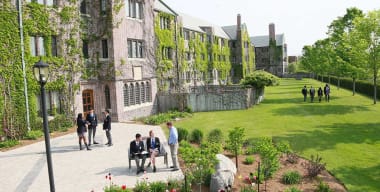
TCS’s service learning program provides the hands-on experience of giving back [Read more]

What language education at Alexander von Humboldt German International School Montreal provides [Read more]

How HTS is building a state-of-the-art online education platform that focuses on student relationships [Read more]

How The Linden School paves the way for global change through their STEM programs [Read more]

How a new on-site theatre will support Villanova College’s rich arts programming [Read more]
School size matters
How school size impacts the student experience at TCS (April 4, 2024)
La critique de l'éditeur de Our Kids: La Citadelle International Academy.
(March 19, 2024)
Out of the class and into the community
TCS’s service learning program provides the hands-on experience of giving back (February 13, 2024)
The benefits of multilingualism
What language education at Alexander von Humboldt German International School Montreal provides (February 1, 2024)
Profile of Carrie Hughes-Grant, Head of School, Holy Name of Mary College
“It’s all about giving the girls a voice.” (December 14, 2023)