1
Camp Basics
It’s every parent’s concern: What’s the best way for your child to spend free time during summer and school breaks? To some, it’s a time for children to play and have fun. For others, it’s an opportunity for kids to hone their studies or learn new skills -- or even subjects, from arts to architecture.
There’s a single destination that gets kids outside having fun, experts say, while teaching them lifelong skills. It’s called camp.
The benefits of camp are plenty, from life lessons beyond the classroom and the value of playtime to appreciating nature and building confidence and leadership skills.
"The major changes in [campers’] growth speaks tremendously of the summer camp experience," says Troy Glover, the director of the University of Waterloo’s Healthy Communities Research Network.
Glover spearheaded the Canadian Summer Camp Research Project, a nationwide study on the effects of camp on kids. The results demonstrated that for "bubble-wrapped" youth who have been over-programmed and overprotected, camp provides a safe environment to freely learn, grow and develop their capabilities. Summer camp, according to the study, fosters emotional intelligence (or EQ), self-confidence, independence, healthy living, environmental awareness, learning, leadership and other skills that prove beneficial long into adulthood.
At camp, you can have your cake, flavoured with a mix of fun and learning, and eat it too.
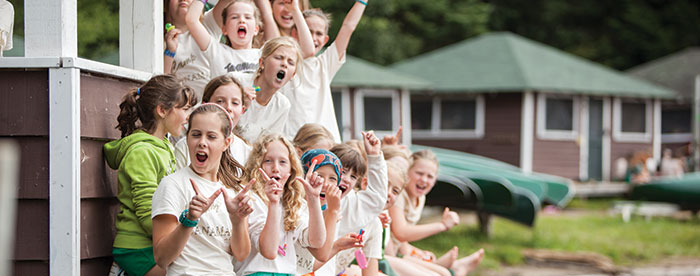
Talk to any camp alumni, and you’ll likely hear how some of their most meaningful friendships and lessons on how to get along with others came from camp. That's because camp provides the perfect environment for children to take social risks.
It may seem scary at first to enter a whole new social world at camp. However, camp offers a crash course on meeting new people -- helping children build social skills, explore their independence, and improve their self-esteem, says Stephen Fine, research chair for the Ontario Camps Association. “Teamwork, co-operation and negotiation are inherent to the camp experience,” Fine explains. “Kids’ confidence levels and their ability to be in social situations increase.”
At camp, children boost their self-esteem and develop risk-taking and conflict-resolution skills as they learn to make their own decisions without their parents’ help.
Camp provides children with a 'blank slate', allowing them to try on different behaviours and identities. And the relatively short duration of a camp session decreases the cost of making mistakes.
Camp provides children with a “blank slate”, allowing them to try on different behaviours and identities. The transitory nature of a camp session decreases the cost of making mistakes.
One of the Canadian Summer Camp Research Project’s most significant findings was in the area of emotional intelligence, often referred to as EQ (emotional quotient). With EQ, which involves recognizing, understanding and managing emotions, children learn how to work, play, relate, get along, empathize and connect with others.
One of the major benefits of camp is the social skills that develop, especially around interacting with other people in a positive way, says Glover. "The camping experience really develops emotional intelligence in children by making them more empathetic.
"It's not just about IQ in children,” Glover says. Research supports how EQ is more important in terms of future success. . . . This is an essential component of the maturation process and a skill that camp is successfully developing.
Perhaps it is not surprising, then – given that camp is such a hothouse for social development and experimentation – that many children form life-long friendships and networks with their fellow campers.
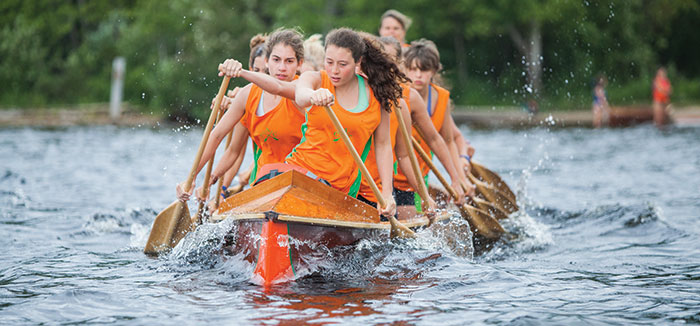
It's time to unwrap the "bubble-wrapped" generation. Saturated with 24-hour news highlighting crimes in their communities, many parents today are overprotective of their children, "bubble-wrapping" them in order to keep them safe and sheltered (see free-range parenting expert Lenore Skenazy's article for more on the "kidsickness" phenomenon). While Glover says statistically it's safer now than it was when he was a child, parents are not as willing to let their kids out of their sight. This is where camp proves to be extremely beneficial.
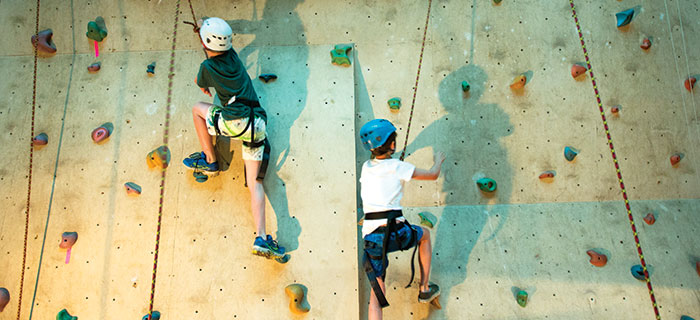
At camp, children are encouraged to go outside their comfort zone through activities such as high ropes courses, dramatic and musical performances, or wilderness camping.
Camp does a really good job of teaching kids it's okay to fail and helps them recognize their limitations, and see these are things that are not fixed and can be improved upon.
Camp does a really good job of teaching kids it's okay to fail and helps them recognize their limitations and see these are things that are not fixed and can be improved upon," says Glover.
By letting children take risks and face challenges, camp helps children build their independence, resiliency, and self-esteem in a safe, supervised and supportive environment, the study found.
These invaluable life skills often translate into improvements at home and at school, says Mike Pearse, director of Camp Tawingo, a traditional overnight camp in Muskoka, Ont.
Pearse says that the camp experience can be divided into the hard skills – for example, learning how to paddle a canoe, tie a knot, identify an edible plant and play a team sport – and accompanying soft skills such as perseverance, creativity, responsibility, and courage. "At camp, every child has an opportunity to succeed," he says.
This translates into increased self-confidence and, in many cases, an improved school experience. "I've had parents come to me and say, 'My child is doing so much better in math class this year because of the confidence boost he got from camp,'" Pearse says.
At camp, obstacles can be seen as challenges that kids can overcome. About four years ago, Samuel travelled from Montreal to Vancouver to join his cousins at Pedalheads camp in hopes of learning how to ride a bike. Then six years old, Samuel was born with only three fingers on one hand and didn’t have the confidence to ride a two-wheeler for the first time.
"On the third day of camp, his training wheels came off - he was extremely proud," says Jacqueline Fefer, Samuel's aunt who lives in Vancouver. "His father told me that for the rest of the summer, all he wanted to do was ride his bike."
With video games, social media, and smartphones vying for a young person's attention, the national epidemic of obesity and inactivity won't be easy to overcome.
A recent Statistics Canada study found that only seven percent of youth aged six to 19 got the recommended hour a day of exercise they need.
Enter summer camp, where physical activity is well-disguised in the form of fun and games, allowing youth to adopt a healthy lifestyle, often without even realizing it.
"Our study found that campers' attitudes toward physical activity really improved toward the end of the camping session," Glover says. "When given a choice, these campers will now choose physical activity because they realize it makes them feel good and contributes to their well-being."
Along with banning the use of electronics, many camps provide a daily routine that involves waking up early, getting lots of physical activity, eating regular meals and spending extended periods of time outdoors.
Along with banning the use of electronics, many camps provide a daily routine that involves waking up early, getting lots of physical activity, eating regular meals, and spending extended periods of time outdoors.
"At camp, you're always on your feet, always on the move, even if you're just walking to a meal," Glover says. "So, it's not about forcing kids to spend 20 minutes on a treadmill, but rather easing them into an active lifestyle that includes lots of walking, engaging in team sports and playing outside with other kids."
At many camps like Base de Plein Air Mont-Tremblant, in Quebec, campers have access to activities such as boating and waterskiing, mountain climbing, archery, forest games, and camping—all providing exercise but disguising it as play.
"Camp life is much different than city life," says the camp's director, Jean-Pierre L'Heureux. "Here, we have no TV, no Internet access and no cellphones, so kids have no choice but to socialize with their friends while participating in activities."
Video games and social media may prove to be tough competition, but once kids realize how much fun and accessible physical activity can be, it's much easier to get them off the couch and out the door.
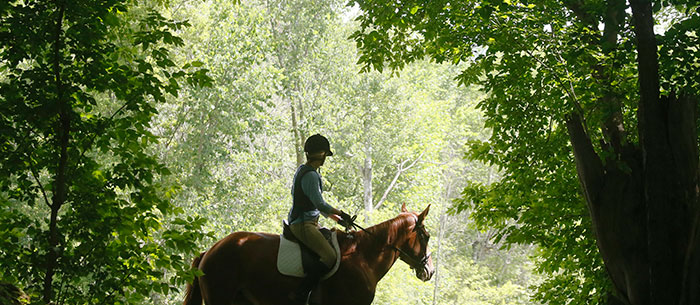
A bond with nature is sorely missing in the lives of many children today, unlike a generation ago, Richard Louv writes in his book, Last Child in the Woods: Saving Our Children from Nature-Deficit Disorder. It’s a world where kids may be all too aware of environmental problems, yet rarely venture out to experience the natural world, he writes.
One effective cure to this outdoors aversion? Camps.
"Camps have their own pressures, but the healing quality of nature is always there, just beyond the screen door," Louv says.
At camp, kids are given the opportunity to see what they’re missing and form lifelong bonds and connections with the natural world they may have never experienced before. "Even camps in the city usually have an outdoor dimension to them," says Glover.
Children need nature for the healthy development of their senses, and therefore, for learning and creativity.
"Children need nature for the healthy development of their senses, and therefore, for learning and creativity," Louv adds.
All the more reason to disconnect digitally (even for a day) and connect to outdoor adventures that exist outside of computer screens.
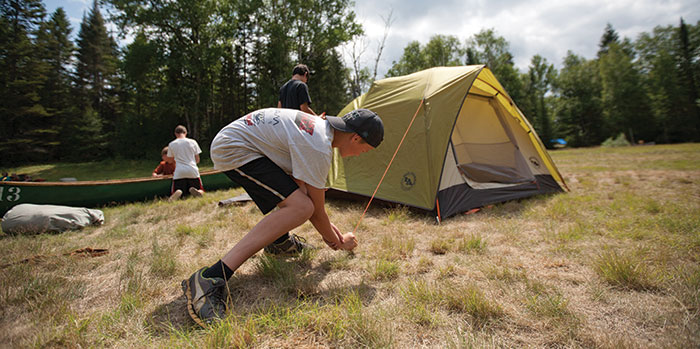
A leader isn’t always the loudest person in a group, or the most active.
Many leaders share a range of skills and qualities that help them take charge: confidence, creativity in their decision-making, and an understanding of teamwork, to name a few. It takes practice to become a good leader, too.
That’s where camp comes in, says Moira MacDougall, who heads teen and young adult strategies for the YMCA of Greater Toronto, a charity providing community support programs. Camp helps gradually build leadership skills, MacDougall says.
You’re often having to rely on your teammates or cabin mates to complete an activity. That builds in-group bonding, and in that process what you hope the young person’s learning is either to have some voice within that group … or how to be persuasive.
“You’re often having to rely on your teammates or cabin mates to complete an activity,” MacDougall says. “That builds in-group bonding, and in that process what you hope the young person’s learning is either to have some voice within that group … or how to be persuasive.”
As camp counsellors, youth get a chance to truly lead in a non-judgmental environment. “It allows a young person the opportunity to be creative and to test their particular approach to teaching and being a leader,” says Fine. “We want to build better leaders at camp, so we’re not going to come down hard on them if they make a mistake.”
According to the Canadian Summer Camp Research Project, most campers demonstrated an increase in emotional intelligence and self-confidence, both characteristics attributed to good leaders.
"Kids don't go to camp wanting to be better leaders or more self-aware—they go because it's fun and the positive outcomes happen as a result," Glover says.
As campers enter their teenage years, there are more opportunities to obtain explicit leadership skills. Most camps offer an LIT (leader-in-training) or CIT (counsellor-in-training) program that walks young people through the skills they need to plan activities and programs, care for younger campers and communicate effectively.
Whether it's by cleaning their cabins without being asked, helping younger campers find their way to the dining hall, or contributing their talents to a play or talent show, youth of all ages learn to take initiative at camp.
They learn that ... nothing happens if you sit back and wait for someone else to act
Learning how to take the lead essentially teaches youth how to be good citizens—a skill that has become increasingly valuable in the 21st century, Glover says. "They learn that we all have a role to play to contribute to a better society, and nothing happens if you sit back and wait for someone else to act."
For 11-year-old Maddy, the skills she acquired at the camp last summer are now being put to use in the schoolyard. At her school in Oakville, Ont., she joined a program set up by her principal to mentor younger students during recess. "Camp taught me that age doesn't matter when it comes to being a leader," Maddy says. "It also gave me a huge confidence boost. Before I was very shy, and now I'm one of the most outgoing people."
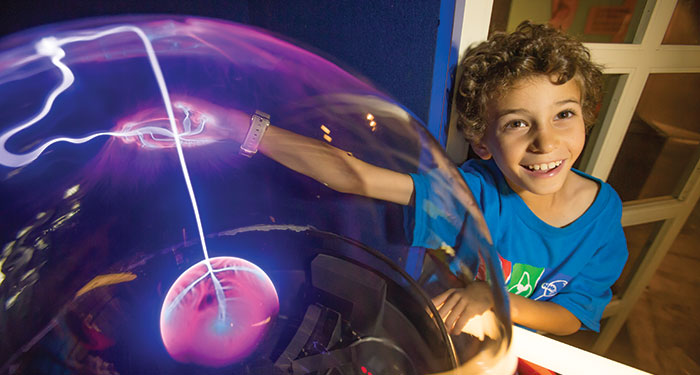
Learning is more than textbooks and tests. Fun meets education in the classrooms of camp.
“It’s not only cognitive learning, it’s emotional learning,” says Tom Potter, associate professor at Lakehead University in Thunder Bay, Ontario. Potter has been involved in outdoor adventure education for more than 30 years. “(Kids) are connecting to (camp) at the emotional level, so it can go pretty deep and they can learn more.”
Camp is the kind of place where children can learn canoeing, archery, and life skills such as teamwork and apply the lessons they learned during the school year in many enjoyable activities. Geocaching lessons offered at some camps, for example, teach kids scientific and math skills.
"They’re getting instant and immediate feedback, so if they do something well, they’ll get feedback; if they’re sailing a sailboat and it’s going in the right direction, they’ll get feedback on that,” Potter says. “But if the boat turns upside down, that’s okay … it’s all part of it.”
The best part about camp? Kids will be too busy having fun, they won’t even notice they’re learning.

Kids just want to have fun—and they need more of it, too.
Many children today simply don’t get enough of unstructured playtime. “If you look at time in school, time at home, time watching TV, those things have either stayed consistent or gone up,” says Michelle Brownrigg, chief executive of Active Healthy Kids Canada. “But active playtime has decreased.”
Canadian children are reportedly spending an average of four to six hours a day with TVs, computers, and cellphones.
Camp gives children the playtime they need while encouraging creativity and social engagement. “What’s really unique about the camp environment—whether it’s a day camp or an overnight camp—is the opportunity for kids to explore being active in creative ways that aren’t as adult-driven,” Brownrigg says.
Play not only offers children the tools to entertain themselves, it also builds their imagination. “Kids learn to set their own boundaries, to develop in an environment that’s not necessarily focused on a competitive end, to interact with one another, to determine how to win and lose, and to trade roles and be involved in an active way with their peers,” she says.


Summer camp is more than a seasonal activity. [Read more]

CIBC Grouse Snow School programs combine fun, learning, and adventure for every skier and snowboarder. [Read more]

How Adventure Valley promotes a close-knit camp community [Read more]

How one charitable organization helps send kids to summer camp[Read more]
Canlan Sports camps offer first-rate hockey instruction in a fun and inclusive environment [Read more]


|

|

|

|

|

|

|

|
 |
 |
 |
 |
 |
By logging in or creating an account, you agree to Our Kids' Terms and Conditions. Information presented on this page may be paid advertising provided by the advertisers [schools/camps/programs] and is not warranted or guaranteed by OurKids.net or its associated websites. By using this website, creating or logging into an Our Kids account, you agree to Our Kids' Terms and Conditions. Please also see our Privacy Policy. Our Kids ™ © 2023 All rights reserved.