Is a private, religious-affiliated school right for your child?
Our guide is meant to help you with this important decision. We cover the different kinds of private, religious-affiliated schools in Canada and discuss the many issues parents face when considering one of these schools. We then provide a comprehensive list of religious-affiliated schools and tools for comparing those schools by their program offerings.
Religious-affiliated schools, also known as faith-based schools, are associated with a specific religion.
The most common religious-affiliated schools are Christian and Catholic, but there are also Islamic, Jewish, Sikh, and Buddhist schools, among others. In Canada, other than some Catholic schools (which receive full funding from the government), these schools are private.
Religious-affiliated schools have a dual-track curriculum: they teach both secular and religious subjects. Most schools require students to take at least two religion courses a year, but in some schools, religion courses make up more than a third of the curriculum.
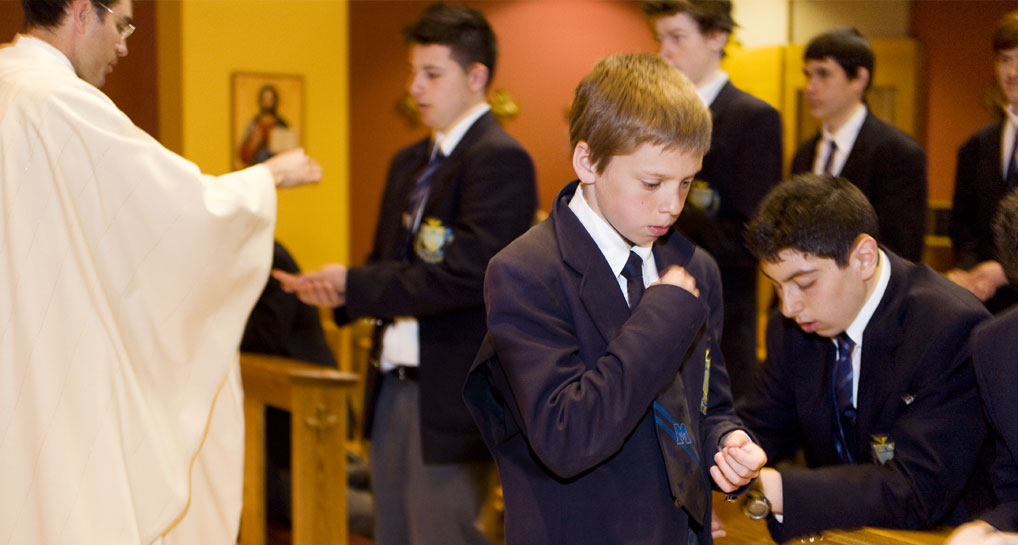
In many religious-affiliated schools, students engage in religious practices, such as prayers and rituals. Most schools, though, don’t require students to engage in them. In fact, many of these schools don’t require their students to belong to or practice the religion at all.
Religious-affiliated schools have lots of benefits. For instance, they can allow kids to develop their religious and cultural identity, and form bonds with peers with similar backgrounds, interests, and values.
We list religious-affiliated private schools on this site, and provide tools for comparing those schools. Moreover, our parent discussion forum allows you to discuss options and get answers to your questions.

1 | List of religious-affiliated schools |

"No other high school in the world has developed more Elite, Junior, Collegiate, USPORT, NCAA, National, Olympic or Pro athletes with over 215 in the NHL alone. ND graduates attend top ranked universities worldwide.
—From the school
|

"We strive to take the best aspects of Catholic teaching & interpret it in a modern context for the confident young woman of today. They are imbued with a strong work ethic, sense of purpose & a desire to change the world
—From the school
|

"Havergal has been preparing young women to make a difference since 1894 through its innovative curriculum and future-ready programming with a focus on wellbeing and student agency.
—From the school
|
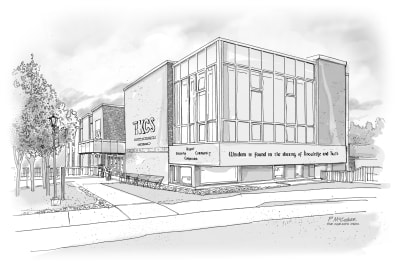
"Kingsway College School's (KCS) goal is to provide environments where a student’s wellness is supported as they become lifelong learners who are good people. Spend an hour at KCS to see how we do this every day.
—From the school
|
|
Toronto, Ontario York Mills/Leslie "Hawthorn School is located in Toronto. We offer a co-ed toddler-SK program and an all girls program for grade 1- grade 12. Our unique mentoring program is tailored to help students reach their full potential." —From the school
|
|
King City, Ontario Keele St./King Rd. "Villanova College is York Region's only independent Catholic school offering Grades 4 to 12 in King City, Ontario. Average class size is 18 students. Specialty programs include STEM, AP and Domestic ESL." —From the school
|
|
Toronto, Ontario Spadina/St Clair Ave W "The Bishop Strachan School is a leading independent JK-Grade 12 day & boarding school for girls. Students build the academic skills to thrive at university and beyond. Over $2 million available in financial assistance." —From the school
|
|
Toronto, Ontario York Mills Road/Don Mills Road "We value partnership with parents, creating a genuinely warm and friendly community. We raise the academic bar on academic excellence, and expectations of character, helping the boys become the best that they can be." —From the school
|
|
Fort Erie, Ontario Townline Rd./Niagara Parkway "Niagara Christian Collegiate offers both middle school and secondary school programs from Grades 6-12. Graduating students achieve top university placements around the world. We accept both day and boarding students." —From the school
|
|
Brantford, Ontario Colborne/Clarence "At Haven, we equip our students with critical thinking skills, a global perspective, and a respect for core values of honesty, loyalty, perseverance, and compassion." —From the school
|
|
Etobicoke, Ontario "Quo Vadis, through a Polish-English bilingual program, aims to assist in the formation of well-rounded, responsible individuals, promotes academic excellence and encourages self-esteem within a Catholic environment." —From the school
|
|
Mississauga, Ontario "Guiding Light Academy is a Catholic private elementary school in Streetsville, Mississauga. We offer an enriched curriculum for JK, SK and Grades 1 to 8. We are located just minutes away from the Streetsville Go Station." —From the school
|
|
Toronto, Ontario Bathurst St./St. Clair West "Canada’s only independent, Catholic school for boys in Grades 7-12, taught in the Basilian tradition of forming the mind, body, and soul. Since 1852, we have educated students in goodness, discipline, and knowledge." —From the school
|
|
Victoria, British Columbia Quadra Street/Burdett Avenue "Our students learn in a progressive, authentic, inspiring, welcoming, nurturing and in a safe, child-centred environment. Our small size, with one class for each grade, gives a sense of being part of a close-knit family." —From the school
|
|
Sudbury, Ontario Attlee Street/Dublin Street "Total student growth -- academically, athletically, spiritually, and with a heart for community." —From the school
|
|
Rosthern, Saskatchewan "RJC is a Grades 10-12 boarding school accredited by the Saskatchewan Ministry of Education. RJC is student and community-focused all while offering excellent academics and exceptional athletic and fine arts programs." —From the school
|
|
Toronto, Ontario Avenue Road/St. Clair Ave. "De La Salle College is a Catholic, co-educational, university preparatory school in Toronto from Grade 5 to 12, with an average class size of 20 students and tuition at $16,300 - $16,900." —From the school
|
|
Mississauga, Ontario "Meadow Green Academy provides a strong Christian education in a nurturing environment. Strong academics combined with sports, enriched music, visual arts, and dramatic arts programs provide a well-rounded experience" —From the school
|
|
Calgary, Alberta 162 Ave SW/24 St SW "Glenmore Christian Academy (GCA) is a private school in Calgary with specialist educators in academics, arts, and athletics. Our mission is to Teach Truth, Inspire Excellence, Experience Christ and Serve through Love." —From the school
|
|
Etobicoke, Ontario Burnhamthorpe Road/Kipling Avenue "At Olivet School, we focus on building the "whole child". We create a warm, caring environment for our students through small class sizes and integrating Christian values and character development into all that we do." —From the school
|
|
Ottawa, Ontario Baseline Rd./Woodroffe Ave. "Bishop Hamilton Montessori School, a not-for-profit independent school in Ottawa, provides an authentic Christian Montessori approach for children 3 months to 14 years." —From the school
|
|
Markham, Ontario Woodbine Ave/Hooper Rd "Early Learning Centre to Grade 12. Discipline. Character. Respect. Complete your child's academic and spiritual foundation. Discover why PCA students excel!" —From the school
|
|
Oakville, Ontario Burnhamthorpe Rd. W/Neyagawa Blvd. "King’s Christian Collegiate is an independent Christian high school providing superb instruction in a safe, stimulating academic environment. Caring staff set the tone for a positive, up-beat culture." —From the school
|
|
Montreal, Quebec The Boulevard/Côte-des-Neiges Road "The Priory School specializes in early childhood education, a place where childhood is cherished, and where meaningful learning takes place in an enriched and nurturing learning environment." —From the school
|
|
North York, Ontario Finch Ave. W./Bathurst St. "CAA has been serving the GTA for 70 years. Our students learn through a strong academic curriculum, community engagement and alumni mentorship – with a 98% acceptance rate to the University of their first choice." —From the school
|
|
Toronto, Ontario "We welcome children from all families, Christians, or non-Christians. We tailor make k-12 curriculum to fit each kid’s unique characteristics. our teachers are professional with truthful love & highly responsible." —From the school
|
|
Woodbridge, Ontario Kipling/Highway 7 "Each student is unique. Why be just a number when you can be valued for who you are? We enfold, engage and empower every student in a safe, friendly, and supportive learning community. You belong here!" —From the school
|
|
Hamilton, Ontario Rymal Road West/Glancaster Road "HDCH, founded in 1956, is imaginative, innovative learning environment. Our programs are designed to challenge a wide range of learners. We welcome local and international students into our Christ-Centred community!" —From the school
|
|
Kitchener, Ontario "Incorporating academic excellence, service and peace-making, Rockway is a diverse learning community of students in Grades 7 to 12 including a dynamic international student exchange program." —From the school
|
|
Toronto, Ontario University Ave./Dundas street "Cornerstone students love to shape the future. They INSPIRE learning, DISCOVER their potential, EMPOWER themselves to be innovative citizens. Our boundless learning strategies open doors for successful learning." —From the school
|
|
Rigaud, Quebec Rue Saint-Pierre/Rue Bourget "Collège Bourget is a day & boarding school located between Montreal and Ottawa. French and English high school programs are offered. Bourget aims to foster personal autonomy, academic development, and perseverance." —From the school
|
|
Gretna, Manitoba "Faith is at the center of all we do at MCI- from the court, to the stage, to the classroom. We work to provide a safe space for students to ask questions, dig deeper, grow into who God is calling them to be." —From the school
|
|
Caledon, Ontario "Brampton Christian School in Caledon, Ontario, offers an academic-based, JK to Grade 12 program, with average class sizes from 18 to 24 students and a one-student tuition cost of $11, 780." —From the school
|
|
Calgary, Alberta Crowchild Trail/Flanders Ave. SW "Clear Water Academy is the only private Catholic school in Alberta. We offer a rigorous academic program from Jr. Kindergarten to Grade 12 for students of all faiths. 100% of our students pursue post-secondary education." —From the school
|
|
Richmond Hill, Ontario Bayview Avenue/Weldrick Road "Christ is the center of Richmond Hill Christian Academy. To know Him and to make Him known is our mission while at the same time, preparing the next generation for academic excellence in His service is our goal!" —From the school
|
|
Belleville, Ontario "At Albert College, every student is an 'A' student. From Pre-Kindergarten to Grade 12, our students experience all 5 of the Albert 'A’ s: Academics, Arts, Athletics, Active citizenship and Adventure programming." —From the school
|
|
Breslau, Ontario "Students receive an excellent education which prepares them well for university, college and a wide variety of workplaces." —From the school
|
|
Mississauga, Ontario Dundas St. W/Erin Mills Pkwy "We offer a specialized program and teaching; focusing on the core subjects of language and math, incorporating cognitive activities and therapies for students with learning difficulties to help them learn and succeed." —From the school
|
|
Montreal, Quebec Atwater/Docteur-Penfield "Since 1861, The Sacred Heart School of Montreal, the city’s only all-girls English Catholic high school, has been preparing girls to change the world. We offer grades 7 to 12, day school and boarding." —From the school
|
|
Orleans, Ontario "Ottawa Victory Christian Academy becomes an extension of your family. Staff and teachers know each child and work with students and their family to achieve success academically, socially, physically, and spiritually." —From the school
|
|
Kitchener, Ontario "Carmel New Church School provides a loving, peaceful place with indoor and outdoor classrooms where students are taught to become productive and caring people, both in this life and the next." —From the school
|
|
Ottawa, Ontario Donald St/Frances St "Promote academic excellence that stimulates the acquisition of language skills, the development of scientific and artistic competencies as well as the formation of a critical mind, in a multicultural environment." —From the school
|
|
Toronto, Ontario 404/DVP/Sheppard Avenue "North Toronto Christian School offers a full day, co-educational program from junior kindergarten to grade 12." —From the school
|
|
Mississauga, Ontario Hurontario/Queensway "Shepherd Montessori Private Catholic School in Mississauga offers Casa Montessori programs for children a ged 2.5 to 6. Before- and after-school care and summer camps also available." —From the school
|
|
Richmond Hill, Ontario "HTS offers a remarkable opportunity for students from JK-12 to shape their own experience through our comprehensive academic and co-curricular programming, led by our incredible faculty and staff." —From the school
|
|
Halifax, Nova Scotia "With a global network of schools around the world, a rich and proud history, and a strong and unique set of core values, Sacred Heart offers not just an education but an experience that is unparalleled in Nova Scotia." —From the school
|
|
Oakville, Ontario Lakeshore/Third Line "Oakville Christian School is committed to instilling confidence in young lives during their formative years, and cultivating in its students solid Christian character traits and values." —From the school
|
|
Regina, Saskatchewan "Luther College prepares students to be compassionate, creative, and critical thinkers who go on to create a more grace-filled, just, and joyful world. Luther College is the only IB World School in southern Saskatchewan." —From the school
|
|
Markham, Ontario McCowan Road/Highway 7 "Wesley Christian Academy offers programs from Toddler to Grade 8 in Markham. As we are a Christian school, we share our beliefs with all our students but we warmly welcome families from ALL faiths and backgrounds!" —From the school
|
|
Toronto, Ontario Dufferin St/Lawrence Ave W "Leonardo Da Vinci Academy provides exceptional schooling for the formative years. Our unique curriculum aims to instil a love of learning and challenges students to develop their full potential." —From the school
|

"Our goal is for SCS students to understand learning as an outcome in and of itself. Learning that doesn't follow a straight path. And if it gets messy, that's okay, because at SCS it's safe to explore and be who you are.
—From the school
|

"Appleby College in Oakville is recognized globally as one of Canada's leading independent schools. Breadth, excellence, innovation and caring are the characteristics that define the essence of the Appleby experience.
—From the school
|

"Oakville's SMLS continues to be a premier independent school for girls Junior Kindergarten to Grade 12 since 1891. "Millie" graduates take on the world with confidence and the knowledge that they can do anything.
—From the school
|

"At TCS, an excellent education means students remain open to learning throughout life and doing something positive with what they have learned.
—From the school
|
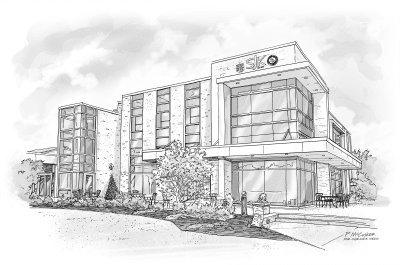
"SJK offers an enriched environment of exploration and experiential learning. Through its IB curriculum, SJK provides exciting experiences and guides students to discover their talents and passions. Go beyond at SJK.
—From the school
|

"Our vision: Encourage life-long Georgians ready to use their scholarship, compassion, conscience and courage to make a difference. Our mission: To challenge and inspire each boy to become the best version of himself.
—From the school
|
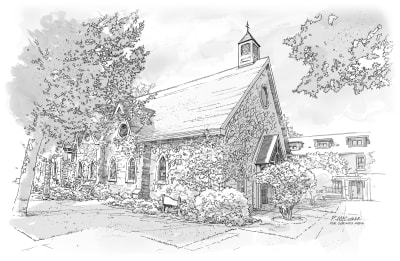
"Focussed on Community First, Outdoors Every Day, and Authentic Learning, LCS offers a world-class, individualized, day/boarding program (Grades 9 -12) designed for students to be leaders who care, connect and contribute.
—From the school
|
|
"Kingsway College School's (KCS) goal is to provide environments where a student’s wellness is supported as they become lifelong learners who are good people. Spend an hour at KCS to see how we do this every day.
—From the school
|
|
St. Catharines, Ontario Ridley Road/Henrietta Street "Ridley College is an acclaimed co-educational IB boarding and day school that prepares meaningful and flourishing lives by teaching the habits of mind, body and spirit, and the values needed to lead in a global society." —From the school
|
|
Duncan, British Columbia Brownsey Avenue/Government Street "Queen Margaret's School is a gender inclusive independent day/boarding university preparatory school in Duncan, BC that focuses on preparing young trailblazers...no two journeys are the same." —From the school
|
2 | Religious schools and religious affiliation |
Many parents consider sending their child to a religious-affiliated or faith-based school (we’ll use these two terms interchangeably). When making this decision, it’s important to start with the basics. What is a religious-affiliated school? And, how are these schools different from non-religious affiliated schools?
Well, as you might expect, religious-affiliated schools are associated with a religion or faith. There are several forms this association can take. We’ll go through each of these forms:
Religiously affiliated schools have what’s called a “dual-track curriculum.” Students must take a full range of secular courses (that is, traditional academic courses), such as math, science, and English. In addition to these courses, though, they typically also take required religion courses in the faith of the school.
In some schools, there will be one or two required religion courses per term, while in others more than a third of the curriculum might focus on religion (with the rest of the curriculum focused on secular subjects). In either case, the dual-track curriculum can be both challenging and rewarding for students.
Schools without a religious affiliation, on the other hand, don’t have a religious curriculum (at least a required one). Though they may have one or two religion classes, students won’t be required to take them.
Due to the separation of church and state, in Canada, the United States, and elsewhere, public schools can’t require students to take a religion course or engage in any religious practice. The one exception is public Catholic schools in Canada, some of which require students to take religion classes.
In some religiously-affiliated schools, students may observe religious customs, rites, and rituals. Whether students are asked to do this (and if so, what they’re asked to do), depends on how traditional a school is.
In more traditional schools, students might be asked to do the following things:
Even in traditional schools, though, students may not be required to engage in these practices, or to profess their belief in God. In fact, many schools don’t even require students to belong to the religion the school is associated with.
For instance, Northmount, a private Catholic school in Toronto, Ontario, has many students who aren’t Catholic. Chris Ruch, their director of admissions, estimates that 47% of their students aren’t Catholic. While Northmount focuses on Catholicism, and basic Christian values, students come from a wide range of backgrounds. And, it’s open to a wide range of views.
Jeremy Belanger, whose daughter Haylee goes to Burlington Christian Academy in Burlington, Ontario, values this kind of openness and flexibility in a faith-based school. And he appreciates these qualities in his daughter’s school. “There’s a theology and a set of beliefs they subscribe to. But there’s also some flexibility. They’re willing to talk about different views and beliefs. They’re also open to debate about some controversial issues.”
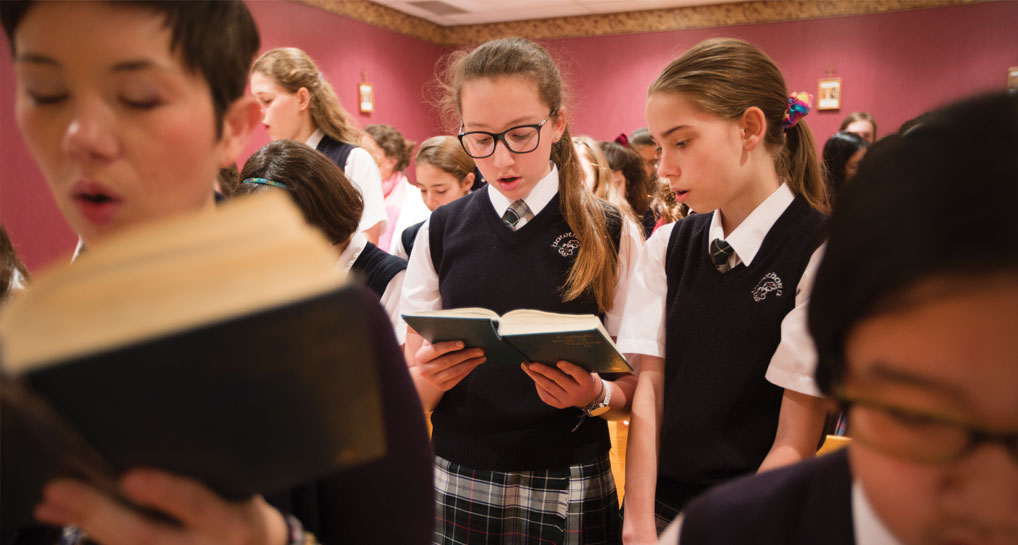
Many schools have regular prayers, scripture readings, religious reflections, assemblies, and other religious events. Attendance might be required or optional. These events are likely to be teacher led at most levels. At the upper levels, though, they’re sometimes student led.
Kids also often take part in and celebrate religious holidays. For instance, in some Christian and Catholic schools, kids take part in nativity scene reenactments during Christmas and celebrate the resurrection of Jesus Christ during Easter.
3 | Different kinds of religious-affiliated schools |
There’s a wide variety of religious-affiliated schools in Canada. Each is associated with a particular faith. Some of these are common, and some aren’t so common.
Beyond their religious affiliation, faith-based schools can be distinguished in several other ways. Some of the main ways are outlined below.
Living arrangements
Some faith-based schools are regular day schools, where students go to school each day, and then return home. Some, on the other hand, are boarding schools, where students live on campus. And, other schools offer both day and boarding school options.
Gender
The majority of faith-based schools are coed, meaning they admit both boys and girls. Some are boys’ schools, though. And, others are girls’ schools.
Private and public
Due to the separation of church and state, almost all faith-based schools in North America are private. The exception is Catholic schools in Canada, many of which are public. Some Catholic schools, in numerous provinces in Canada, are fully funded by the government. They are part of the Catholic school board and considered public. Other Catholic schools aren’t funded, or aren’t fully funded, and so are considered private.
Parents need to pay for private Catholic schools (or at least pay for part of them), unlike public Catholic schools. That said, private Catholic schools can be a great option for many families.
Lauren Lowry moved her two kids, Oliver (age 11) and Thomas (age 7), from a public to a private Catholic school—Northmount school. She’s been extremely happy with the change.
“At Northmount, the curriculum is more demanding, and the teachers are more dedicated and passionate. There are also more enrichment opportunities than in the public school system. My kids now have better work habits and are more engaged in school.”
Beth Duffy also enjoys the unique advantages of a private Catholic school. Her kids, Rachel (grade 11) and Eddy (graduated) have thrived at Villanova college, a private Catholic school in King City, Ontario. “Villanova is a home away from home. The teachers are incredibly passionate and have helped my kids grow as persons. They experience life triumphs and defeats; that presents a lot of learning opportunities.”
This is not to say that private Catholic schools are a better fit than public Catholic schools for all families. But private Catholic schools do have some unique advantages, such as smaller class sizes, lower teacher-to-student ratios, more specialized instruction, and more extracurricular resources.
To learn more about private Catholic schools, see our guide to Catholic education. For a discussion of the pros and cons of private vs. public Catholic schools, see our coverage of private vs. public school.
In countries around the world, this specialized education is handled variously. For example, in Poland there are social schools where parents play a much larger role in their children's education. Many of these szkoly spoleczne w Polsce are associated with religious associations, as well as other non-profit organizations. Read more about social schools in Poland.
Most common
Somewhat common
Less common
4 | Religious studies: different approaches |
Religious-affiliated schools have a dual-track curriculum: they focus on both secular and religious studies. But how significant is the religious component of the curriculum? This varies between schools.
Here are some of the main options:
In addition to the question of how much of a school’s curriculum is focused on religious studies and how much on secular studies, there’s a separate question. This is the question of how a school delivers its content.
Unsurprisingly, different schools deliver content in different ways. That is, they have different approaches to teaching courses. Regardless of the approach, though, students still face the challenging task of mastering two kinds of subjects—secular and religious subjects.
Some of the main ways to deliver secular and religious curricula are discussed below.
One approach to curriculum delivery is to segregate or separate the religious and secular curricula: part of each day is devoted to teaching religious subjects, and another part to teaching secular subjects. For instance, in a Christian school, a third of the day might be reserved for Christian studies, and two-thirds for secular studies, where subjects such as math, science, English, and French are taught.
One approach to curriculum delivery is to segregate or separate the religious and secular curricula: part of each day is devoted to teaching religious subjects, and another part to teaching secular subjects. Another approach to curriculum delivery is to integrate religious and secular curricula or teach them together (throughout the day).
Another approach to curriculum delivery is to integrate religious and secular curricula, or teach them together (throughout the day). For instance, at the lower levels, bible studies might involve counting the commandments, as a way to incorporate math. Or at the higher levels, the bible might be taught in a way that incorporates science—for instance, the concepts of space, time, or causality. Even on the integrated approach, though, it’s common for some subjects and concepts (both religious and secular) to be taught on their own.
Mark Kennedy, regional director of the Association of Christian Schools International (ACSI), believes that Christian schools should use the integrated approach whenever possible. “It’s important that some secular courses be taught from a Christian perspective. Or at the very least, this Christian faith should be in the background when teaching secular courses.”
Peter Bacardi, teacher and chaplaincy coordinator at Northmount School, agrees with this standpoint. Every attempt is made at Northmount to integrate the Catholic perspective into both the overall curriculum and into student life:
“We integrate the use of scripture with other areas of school life, such as the liturgies, character lessons, and daily prayer. Catholicism is a ‘comprehensive way of life’ that should animate every aspect of its activities and its curriculum. To deliver on the promise to provide students with a Catholic education, we must foster love for wisdom and truth, and must integrate this with faith, culture, and life.”
Usually, schools use a combination of segregation and integration. In this case, part of the religious curriculum is integrated with the secular curriculum, and part isn’t.
Another important part of curriculum delivery, separate from the issue of segregation, concerns how certain subjects are taught. The two main approaches to teaching subjects are traditional instruction and inquiry instruction.
On the traditional approach, there’s lots of direct instruction: teachers lecture to the whole class or large groups of students. The teacher’s main role is to impart knowledge to their students. The student’s main role is to acquire this knowledge and demonstrate they’ve done this.
On the inquiry approach, on the other hand, there’s less focus on direct instruction. Instead, students are encouraged to explore, solve problems, and make discoveries on their own.
Schools use either the traditional or the inquiry approach, or a combination of the two. Some schools use the traditional approach for some subjects (such as math), and the inquiry approach for other subjects (such as science). And, some schools use both the traditional and inquiry approach for some subjects.
Another important part of curriculum delivery concerns the way religion is taught. Some schools teach religion more descriptively. For instance, the bible might be taught as a factual text that is literally the word of God. The task, then, is to understand and clarify its meaning.
Other schools have a more interpretive approach to teaching religion. For instance, the bible, or any religious text, might be taught as something that’s open to interpretation, discussion, or even debate. In this case, there’s a lot of focus on critical thinking, and arriving at conclusions based on one’s own reasoning. Some schools may even encourage students to debate the merits of their religion.
5 | Reviewing religious-affiliated schools |
Religious-affiliated schools are a great option for many families. There are plenty of reasons to seek one out. Below, we discuss some of the main ones.
| Level of special needs support | All schools (361) | Faith-based schools (54) |
|---|---|---|
| Limited | 39% | 35% |
| Mild difficulties | 17% | 9% |
| Moderate | 8% | 12% |
| High | 19% | 33% |
| Very high | 17% | 11% |
| Level of gifted support | All schools (361) | Faith-based schools (54) |
|---|---|---|
| None | 55% | 46% |
| Moderate | 12% | 15% |
| High | 16% | 19% |
| Accelerated curriculum | 11% | 16% |
| Very high | 6% | 4% |
Religious-affiliated schools have plenty of benefits. And there are lots of reasons families seek them out. That said, there are some potential issues to be on the lookout for when selecting a religious-affiliated school. Below, we outline these issues.
Religious-affiliated schools have plenty of benefits. And there are lots of families who seek them out. That said, there are some potential issues to be on the lookout for when selecting a religious-affiliated school.
| Approach to teaching evolution (Our Kids schools) | All schools (157) | Religious-affiliated schools (24) |
|---|---|---|
| Evolution as consensus theory | 55% | 46% |
| Evolution as one of many viable theories | 25% | 41% |
| Evolution not taught | 20% | 13% |
Religious-affiliated schools have numerous virtues. And, they’re a great fit for many students.
Below, we outline which students seem especially suitable for these schools. Just remember: there’s more to picking a school than just the points below. This table is meant to stimulate your thinking, not replace it. Moreover, what’s most important is to look closely at any prospective school, to gauge whether it’s a good fit for your child and family.
Religious-affiliated school may be suitable for students who:
To discuss whether religious-affiliated school is right for your child, go to our parent discussion forum, frequented by other parents, school officials, and education experts.
To start looking at schools, see our list. You can also compare schools by their programs and curriculum.
6 | Choosing a religious-affiliated school |
In your search for the right faith-based school, it’s important to speak with teachers, educators, and your child.
Start looking at schools early, as much as a year before applying. You can research them here on this site (starting with our list of schools), on school websites, at open houses, during on-site visits, at our annual school expos, and other venues.
Questions to ask religious schools
There are some key questions to ask schools you’re looking into.
Beyond these, there are also specific questions to ask faith-based or religious schools. These include:
Questions for faith-based schools
It’s best to discuss these questions with the school head, as well as teachers. It’s also a good idea to do a classroom visit and talk to other parents, to get a sense of teaching philosophies, school culture, and the like.
Beth Duffy found it very reassuring to meet with school officials and teachers at the Villanova College campus. This cinched her decision to send her children to this school.
“We were looking for a school that provided our children with both spiritual and academic instruction. We couldn’t find this before. After talking to teachers and the principal, we knew it was a special place. They took an interest in our children. It became clear they would be part of a caring community where they received much-needed guidance and wonderful instruction.”
The role of teachers
The quality of any religious-affiliated school is closely linked to the quality of its teachers. Teachers with proper training and strong abilities can often provide the right learning environment for your child. On the other hand, teachers lacking these traits often can’t.
You should inquire, then, about the training and credentials of teachers. Ask school officials what training and education their teachers have. You should also ask whether teachers are offered any form of ongoing professional development, such as classes, workshops, or seminars in religious or secular education.
7 | Funding for religious-affiliated schools |
Many religious-affiliated schools, like other private schools, offer some form of funding. The two main kinds of funding they offer are needs-based and merit-based financial aid.
Needs-based aid
If you can demonstrate need, some schools help finance your child’s education. They might offer you a subsidy (also called a “bursary”) to help you cover tuition, and possibly even room and board (if your child is in a boarding school).
Needs-based financial aid is not tied to any merit-based criteria. Moreover, applying for needs-based aid won’t affect your child’s chances of admission. Usually, a school will first decide who they want to admit, and only then turn to the question of aid. Also, most schools will have a third party assess your financial aid application.
If you’re unsure whether you’re eligible for aid, you should ask. Schools tend to offer aid to more families than many people think.
Merit-based aid
Some schools offer merit-based financial aid. Based on certain criteria, such as academic performance, athletic achievements, and extracurriculars, students may be awarded a scholarship that helps subsidize their education.
Scholarships tend to provide less support than bursaries. But every little bit helps. So if your child is eligible, don’t be afraid to apply. We list available scholarships on our website, and update the list frequently.
Tax relief
Religious schools, like all other private schools, don’t offer tax deductions or credits. Some, though, allow you to reduce your taxes indirectly. Since some of these schools are registered as charities or associated with a charity, you may be able to claim a tax credit for tuition, as a charitable contribution. Check with prospective schools for more details.
To learn more about tax breaks for private schools in general, see our tax relief guide. For general advice on affording private school, see our paying guide.
8 | Frequently asked questions about religious-affiliated schools |
There are some questions commonly asked about religious-affiliated schools. Some of these have already been answered, and so won’t be addressed here. We’ll only answer those that haven’t yet been answered or fully answered.
Does my child need to be religiously observant?
Not usually. Most schools aren’t interested in a child’s religious practices outside of school. Some more traditional schools, though, require or encourage some kinds of religious observance outside of school.
Does my child need to believe in God?
Not typically. The vast majority of schools don’t require kids to believe or profess belief in God. On the other hand, some very traditional schools may assume their students believe in God. It’s unlikely, though, they’ll require them to profess their belief.
How strong is the secular curriculum?
While this varies somewhat, most schools provide just as broad or rigorous of a secular education as some schools without a religious affiliation. They tend to provide very strong instruction in secular subjects such, such as math, science, and English. In fact, most schools meet and surpass the curriculum standards set by the government of Ontario.
Moreover, some kids find the dual-track curriculum of these schools challenging, especially if it involves learning a second language. Some also find it enriches their secular studies in a way that can’t be achieved at many schools without a religious affiliation.
You need to look for a good match between your child and the school in terms of religion, academics, culture, values, and the like.
Do these schools have required religion courses?
Most do. Some, though, have only optional religion courses. These particular schools, though, are usually at the secondary level, and have lots of extracurricular religious activities, such as prayers, scripture readings, and assemblies.
How do I know if a school is the right fit for my child?
You need to look for a good match between your child and the school in terms of religion, academics, culture, values, and the like. It helps if your child values community. It also helps if your child is interested in developing their religious education and cultural identity.
Barbara Bierman, executive director of the Ontario Federation of Independent Schools, answers the question this way:
“Parents have to look for what best matches the environment in their home. That may be a cultural, religious, or pedagogical decision. They should be asking themselves: How does my child learn best? What sorts of schools match up to our faith system? Parents also need to consider the spectrum of different religious orders. For instance, Christianity has several denominations, so they need to look into that detail when considering faith-based schools.”
How much is tuition?
This varies, just as it does for all types of private schools. That said, on average, the tuition at these schools tends to be lower than other types of private schools. And, despite this fact, these schools tend to have many of the same benefits as other private schools, both big and small.
Are these schools accredited?
High schools must meet provincial curricular requirements in order to award provincial graduation diplomas. And, some schools are accredited by independent institutions.
What kind of training should teachers have?
This varies based on the school and the subjects taught. To teach math and science, a strong background in these subjects is needed. To teach both secular and religious subjects, or teach either secular or religious subjects as part of an integrated curriculum, a proper secular and religious education (in the relevant subjects) is needed. Teacher’s college and specialized training in education are also pluses.
Is French offered?
Private schools in Canada aren’t required to offer French. That said, almost all private schools, including religious-affiliated schools, do offer French, beginning in the early grades. And, most schools make French a required course up until grade 9, like public schools in Ontario.
9 | Compare religious-affiliated schools |
| Tuition (boarding school) | Students receiving financial aid | Grade eligibility for financial aid | Avg. aid package size (annual) | |
|---|---|---|---|---|
St. Clement's School | 6% | 7 - 12 | ||
Appleby College | $79,280 to $85,970 | 20% | 7 - 12 | $31,250 |
St. Mildred's-Lightbourn School | 9% | |||
Trinity College School | $57,000 to $83,000 | 33% | 5 - 12 | $20,000 |
St. John's-Kilmarnock School | $75,840 | 8% | JK - 12 | $8,000 |
Athol Murray College of Notre Dame | $23,100 to $53,550 | 30% | 8 - 12 | $10,000 |
Holy Name of Mary College School | 15% | 5 - 12 | $1 | |
Royal St. George's College | 5% | 7 - 12 | $16,000 | |
Lakefield College School | $73,500 to $82,400 | 30% | 9 - 12 | $30,000 |
Havergal College | $75,905 to $79,905 | 10% | 7 - 12 | $16,000 |
Hawthorn School | 35% | JK - 12 | $1,800 | |
Villanova College | 4 - 12 | |||
The Bishop Strachan School | $66,125 to $69,145 | 10% | 7 - 12 | $21,000 |
Northmount School | 5% | JK - 8 | $2,500 | |
St. Michael's College School | 20% | 7 - 12 | ||
Christ Church Cathedral School | 6% | K - 8 | $3,925 | |
Sudbury Christian Academy | 10% | JK - 8 | $2,000 | |
Rosthern Junior College High School | $15,000 to $32,750 | 30% | 10 - 12 | $2,500 |
De La Salle College | 18% | 5 - 12 | $12,500 | |
Meadow Green Academy | ||||
Bishop Hamilton Montessori School | Nursery/Toddler - 8 | |||
Peoples Christian Academy (PCA) | JK - 12 | |||
King's Christian Collegiate | 15% | 9 - 12 | ||
The Priory School | ||||
Crawford Adventist Academy | 18% | JK - 12 | $900 | |
Community Life Christian School | ||||
Toronto District Christian High School | 9 - 12 | |||
Hamilton District Christian High | 10% | 9 - 12 | $5,000 | |
Rockway Mennonite Collegiate | 25% | 7 - 12 | $3,000 | |
College Bourget | ||||
Mennonite Collegiate Institute | $11,535 to $26,435 | 25% | 9 - 12 | $1,997 |
Ridley College | $74,745 to $82,975 | 21% | 5 - 12 | $15,892 |
Clear Water Academy | 20% | 1 - 12 | $5,000 | |
Albert College | $64,200 to $85,500 | 15% | JK - 12 | $7,746 |
Woodland Christian High School | 20% | 9 - 12 | $2,500 | |
The Sacred Heart School of Montreal | $42,863 to $64,500 | 22% | 7 - 11 | $8,350 |
Ottawa Victory Christian Academy | ||||
Academie Providence | 35% | 1 - 8 | $40 | |
Holy Trinity School | 2% | SK - 12 | $5,000 | |
Sacred Heart School of Halifax | 13% | 1 - 12 | $7,120 | |
Luther College High School | $32,030 to $42,910 | 10% | 9 - 12 | $2,500 |
Queen Margaret's School | $62,880 to $79,230 | 25% | SK - 12 | $3,000 |
Leonardo Da Vinci Academy of Arts & Sciences | 15% | 1 - 8 | $5,000 |
10 | Important resources |
To discuss religious-affiliated schools and private school education in general, go to our parent discussion forum.
The following associations provide support to faith-based schools:
The following articles provide more information about faith-based schools: