

The 2026 OUR KIDS Private School Expo is coming to cities near you. Get your family pass


Heritage Academy of Learning Excellence THE OUR KIDS REVIEW
Verified Review
OUR KIDS verifies every review by confirming the reviewer’s identity and their firsthand experience with the school. Learn more
The 50-page review of Heritage Academy of Learning Excellence, published as a book (in print and online), is part of our series of in-depth accounts of Canada's leading private schools. Insights were garnered by OUR KIDS editor visiting the school and interviewing students, parents, faculty and administrators.
Introduction
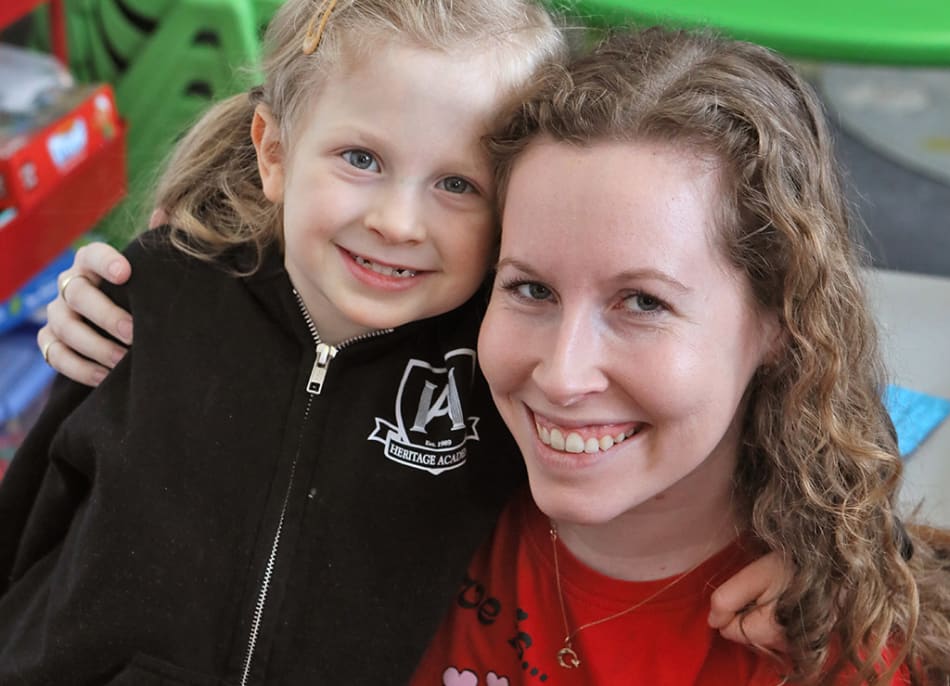
Imagine being introduced to an enticing world of education and learning, only to be debarred from that world through no fault of your own. You try your hardest to learn, but you can’t access things the way others do, and nobody seems to understand. You feel isolated and alone. Now, imagine a place that welcomes you into that world and helps you to succeed there, with full understanding and support. A place where you belong to a caring, supportive community. That place is Heritage Academy of Learning Excellence in Ottawa, Ontario.
Founded in 1989, Heritage Academy is a not-for-profit private day school that specializes in education for students with dyslexia and other language-based exceptionalities. It is a warm and welcoming school, alive with the energy of its bright scholars and enthusiastic teachers. Students with ADD/ADHD also benefit from the unique learning environment at Heritage Academy, where individualized education plans enable every student to thrive.
Heritage Academy was established by Louise Brazeau-Ward out of a compelling desire to help her own profoundly dyslexic son succeed academically. Louise (as she’s known at the school) was frustrated by the lack of understanding and support in the public school system for students with dyslexia and knew that special-education streams in that environment were not the answer. Her desire to find effective alternative means of education for students with learning exceptionalities grew and inspired Louise to do more to help countless other children with similar disabilities, as well as provide a solution for parents stymied by the public school system. This led her to develop the Simultaneous Multisensory Teaching (SMT) method presently used at Heritage Academy, and today Louise is an internationally recognized expert in dyslexia.
The strong foundation established by Brazeau-Ward is now maintained and nurtured by her daughter, Cheryl Ward, Director and Principal of Heritage Academy. Under her leadership the school has flourished, and programming has expanded to include affiliation with compatible service partners, all while staying true to the Heritage Academy’s founding mission – to provide a comfortable environment that motivates all students to reach their full potential.
Ranked the top private school in Ottawa in both 2023 and 2024, Heritage Academy has been acknowledged as one of the best private schools in the Ottawa area since its inception. Delivering the Ontario Ministry of Education curriculum from Grade 1 to Grade 12, Heritage Academy utilizes engaging approaches to education specifically geared for those with unique learning abilities. So successful is the school that plans are in place to expand its physical real estate in order to better accommodate the needs of the student body.
The students are, of course, what it’s all about at Heritage Academy. Their journey from the time they enter the school as an often underserved or misunderstood student, to when they leave as a confident, enthusiastic scholar is nothing short of transformative. Everyone fits in here, and everyone “gets” it.
Everyone feels accepted and understood. The support network within the school is one of its strongest assets, along with its individualized education plans and specialized programming. At Heritage Academy of Learning Excellence, every staff member cares about each and every student at the school, and they take the time to know and understand that student as an individual.
Key words for Heritage Academy of Learning Excellence: Inclusive. Respectful. Transformative.
The basics

Housed in a mid-20th century school building, Heritage Academy of Learning Excellence is a private, not-for-profit day school teaching Primary grades 1 to 8, and Secondary grades 9 to 12. The school serves students with exceptionalities such as dyslexia and ADD/ADHD, and other learning and behavioural profiles. With about 40 staff and a student population of approximately 170, class sizes are small and there is a low student-teacher ratio across all grades. What makes Heritage Academy unique, however, are the welcoming inclusivity extended to every student enrolled at the school, and the individualized learning plan developed for each.
As Principal Cheryl Ward observes, when parents discover and turn to Heritage Academy, “they are often at their wits’ end trying to find a way to help their child learn.” In most cases, they have found that mainstream educational institutions are not equipped, or not willing, to devote time and resources to a student with learning disabilities, and it is very challenging for their child to learn in that environment. Many parents have found that trying to find solutions within that system is nearly impossible, and their child may be overlooked or set aside, labelled as difficult or slow, or unnecessarily placed in an alternative educational stream. Parents are frustrated, and their child may feel confused or anxious, like they don’t fit in. “In a world where only 35% of people have dyslexia, Heritage Academy is a safe haven,” says Ward.
Anyone associated with Heritage Academy knows that “the school is very safe and accepting,” says one of the two Vice Principals, Morgan McKendry.
“Bullying of any kind is not tolerated at Heritage. Its staff understands the importance of addressing student relationship concerns promptly and effectively. Vice Principal Dylan Graves agrees that Heritage Academy offers a “very positive student experience. Here students can be themselves, because they don’t feel different or isolated.” Both VPs say that new students feel accepted right away due to immediate recognition within their peer group. When speaking to a group of junior students they said much the same thing – that it is easier to understand others because you always have something in common. And as one student, Katherine, insightfully said, “you don’t have to deal with that part where you feel awkward when you meet someone new, because you don’t have to explain anything.”
“At Heritage Academy we look at the whole student – their educational needs and challenges, as well as how they fare socially, mentally, and emotionally,” says Ward. In some cases this might mean gradually undoing behaviour that has been mismanaged in the past, but more often than not it is about teaching coping mechanisms to help a student learn how to self-manage. Significantly, it is also a student’s classmates who help bring about transformative changes because the comfort level among peers is so high. As teacher Sarah Foster relates, “there is an immediate, positive comfort level for a student when they come to Heritage Academy, and along with that comes increased self-esteem.” This sentiment is amplified by teacher Patti-Jane Stanley, who says that as a student’s self-esteem grows, “so does their ability to take risks,” personally, socially, and educationally.
Academics are of course especially important, and Heritage Academy follows the Ontario Ministry of Education curriculum, with engaging, innovative approaches. “We provide an excellent learning foundation based on individualized learning plans, tailored teaching, and support from external service providers where appropriate,” Ward explains. The teachers are closely involved with each student, both Vice Principals note, helping to find solutions to facilitate learning. This frequently involves one-on-one instruction, which is often a new experience for a student, along with small class sizes. “There is a very supportive environment at Heritage Academy because we are addressing individuals,” says Ward. Here, nobody falls through the cracks or is left out.
Smaller class sizes are seen by the students as a big benefit to going to school at Heritage Academy. As senior student Ysabelle points out, with smaller classes “the teachers are more with you,” and there’s more one-on-one instruction. “It’s what the public school system fails to be,” adds Chase, another senior. Junior students agree, saying they love that the classes are so much smaller and quieter than in regular schools and that they like the extra attention they receive from their teachers.
There is a clear community-based approach to instruction at Heritage Academy, McKendry and Graves explain, and a real “community” mentality. Everyone is involved in helping every student succeed, from the teachers to the education assistants, to the parents and the administrative staff. Support is also provided by external service providers such as behaviour consultants and speech pathologists (among others). Collaboration and clear communication are key to making it all work and every person connected to the education of a particular student is included in relevant correspondence – an approach that ensures that everyone is in the loop.
Mike Lance, teacher and SMT Director, has been with Heritage Academy since 1996. He says that “the school is pushing forward all the time,” improving its teaching and programming, and “helping kids to learn and grow.” The teachers have a tremendous influence, he continues, and while a few students may initially struggle to adapt to the new environment, “it is very rare for a student to not do well here within one year.” At Heritage Academy students with various learning exceptionalities are able to find their voice, build their confidence, and develop a work ethic at all levels. It is an inclusive environment, where students feel they belong, and everyone is helpful and supportive.
Facilities
The building that Heritage Academy calls home has been a school of some type since it was built in the mid-20th century. It was originally Notre Dame de Bon Conseil, then briefly an unrelated private school, and finally opened as Heritage Academy of Learning Excellence in 2005. Though not modern, the school gives the impression of being solid and substantial, reassuringly sturdy and dependable. The halls and classrooms feel close and familiar, but not claustrophobic, which is precisely the type of environment in which the students at Heritage Academy thrive. As Frank Hall, parent of a 2020 Heritage Academy graduate puts it, “the school is not fancy, but of course, the building itself is not their primary focus.”
To provide surroundings that are conducive to learning for students with dyslexia and other learning exceptionalities, many of the original classrooms have been modified and tailored to meet student needs. This means that, in keeping with smaller class sizes, many of the rooms are smaller, with some subdivided into quiet zones used for tutoring, coaching, therapy, individual study, and one-on-one sessions with external service providers. In general, the classrooms have fewer distractions than is typical in comparable primary and secondary schools, with less sensory input and softer lighting. There is minimal visual material on the walls, and what is there is grade-appropriate and geared to specific learning outcomes. Classrooms are also equipped with assistive learning technology as appropriate.
From a bricks-and-mortar perspective Heritage Academy has undergone some recent upgrades and renovations, including a separate entrance for students in senior grades “to provide them with greater autonomy,” says Ward. The staggered, multi-level layout of the building also lends itself to partial separation of the seniors from the juniors, though all the students across all grades still know and support one another. While the intent is to keep the student population manageable, the school is also very well attended – so much so that Ward is anticipating taking over a neighbouring school for more space, with the expectation that it will be for students in senior grades. Security-wise there is a monitored front entry, and video surveillance has recently been introduced in key areas as well. Taken as a whole, Heritage Academy is clean, safe, and warmly welcoming.
Leadership
Heritage Academy of Learning Excellence was established by Louise Brazeau-Ward in 1989, and the school rests on the foundational learning platform and philosophy she put in place from the start. Following extensive research into learning disabilities and alternative modes of teaching, Brazeau-Ward developed the Simultaneous Multisensory Teaching (SMT) method, an adaptation of the Orton-Gillingham multisensory approach, of which she is a proponent. The SMT method is the cornerstone of instruction at Heritage Academy and is one of the keys to its ongoing success, but it is also the character of the leadership that makes the school stand out.
Heritage Academy owes much of its success to the strength of its leadership, as exemplified by Principal Cheryl Ward and her dedicated staff and teachers. Ward became part of the school community in 1995, after studying education and psychology at college. She earned her Principal’s Certificate in 2008 through the Ontario Federation of Independent Schools and may be the only principal in Ontario who oversees all grades within a school. Where most schools will have two principals splitting the Junior and Senior student bodies, Ward oversees all grades, 1 to 12. This makes a significant difference to the student experience because, as Ward says, “there is unity and continuity for the student throughout their career here. I know every single student, and my interactions with them are built on sometimes years of previous experience. Comfort levels are very high.”
Unique, workable solutions are the norm at Heritage Academy, not only for learning disabilities, but for social, emotional, and mental exceptionalities as well. “We address individuals here,” says Ward, “and no on is left out in the cold or falls through the cracks.” In cases where some kind of discipline is necessary, it is always approached with the particular circumstances and ability-based behaviours of the student in mind. As VP McKendry relates, everyone at Heritage Academy has some knowledge of behaviours on the spectrum, and “we always ask ourselves whether something that happened was within the student’s control. It’s conscious discipline with kindness,” but it is hardly ever an issue.
Parents agree that the administration responds to problems and disciplinary issues quickly and appropriately, with compassion and empathy. The parent of a Grade 6 student relates that, “Heritage has a very positive environment that deals very openly and directly with put-downs, bullying, and disrespectful behaviour.” Likewise, Kim Bridgeman’s son attended Heritage Academy and she notes that the school does not permit any bullying, or foul or abusive language, and actively promotes respect for others. “At times this has meant the expulsion of students who would not follow these rules. [The staff’s] active management meant that the environment remained supportive.” This kind of support filters down to the students as well, who always stand up for one another, fostering a real sense of community. The environment is very positive and respectful, and parents attribute this to the leadership at the school.
There is a genuine, information-forward, team orientation at the school, with an emphasis on communication and an open-door policy. Collaboration is important here, with administrators, teachers, educational assistants, and parents all working together to create individualized learning solutions. Parents also know that for Ward, and by extension Heritage Academy as a whole, the success of the student always comes first, and that she always tells it like it is. This means full disclosure with respect to any issues a student may be having at the school, as well as with a student’s potential return to the public school system. That said, the school always works closely with parents to achieve the best for their child. “Cheryl is always fighting for you, not against you,” says Frank Hall, “which compared to the public school system is like chalk and cheese. Everything at Heritage Academy is done with honesty and integrity.”
Teachers at Heritage Academy also play integral leadership roles, in addition to educating the students. The small class sizes mean that “the teachers are very one-on-one with the students,” says VP Dylan Graves, and the close involvement of the teachers means that they have tremendous influence. This is often a new experience for the student, especially because there is nowhere for them to hide, but they soon respond positively to having a highly accessible teacher. It makes a difference, too, that several of the teachers (and the principal) have had their own struggles with dyslexia or other learning disabilities, and students quickly recognize that their teacher is coming to them from a similar background. In this way teachers are role models as well as educators.
The teachers at Heritage Academy have a lot of experience, collectively and individually, says alumna Shannon Hall, “so they’re able to try different approaches to teaching if something isn’t working out very well one way. They accept that not every kid learns the same way – and they do really neat stuff to help us learn.” Shannon goes on to say that the teachers are all “caring but tough, and will fight for student success.” This sentiment is echoed by the parents of a recent graduate of Heritage Academy, who note that the tone of the school is very different from other educational institutions. “Heritage Academy has definite expectations of the students, and our son was never coddled like he was in other situations,” says Richard Bridle. “He responded well to this approach and looked up to the staff, seeing the teachers as role models.” Another alumnus, Matt Diotte, offers this advice to new students: “Don’t be shy about introducing yourself to the teachers, and don’t be afraid to talk to them. They will become much more than your teachers; they’ll be your guides and mentors.”
It's not a one-way street at Heritage Academy though, and the teachers also work to develop leadership skills in the students. In such a small student body it’s important that everyone works together and gets along (and they do), and students are taught to recognize their own strengths and limitations. Diotte says that Heritage Academy helped him to develop good leadership skills, and that he now uses what he was taught there on a regular basis at work and elsewhere. Parent Charulata Prasada tells a similar story, saying that the school cultivates leadership abilities in all the students, instilling confidence as well as the ability to cooperate and work effectively with others. Likewise, Chantal Normand, parent of alumnus Samuel, observes that her son was always confident, but at Heritage Academy “he learned to be a good leader, by coming to understand how to manage that confidence better.”
The focus on student success at Heritage Academy is the theme that unites all effort within the school, and it is reflected in the strong leadership therein. From the administration to the teachers to the students, everyone works together to optimize the learning environment – a place where students succeed because of their disability, not in spite of it.

Academic environment
A question sometimes asked about Heritage Academy is whether the school follows the standard curriculum for all grades, and if students who stay until Grade 12 will graduate with their Ontario Secondary School Diploma. The answer to both questions is Yes. Students at Heritage Academy learn the same things as their peers in other schools, they just reach their destination along a slightly different path.
Though many students who attend Heritage Academy have dyslexia it is acknowledged that each student has his or her own unique learning exceptionality, and teachers at the school have a thorough understanding of the best ways to address each one. “It was a relief … to find staff who are knowledgeable about different learning styles, and who have the infrastructure and means to support my son without dumbing down the content,” says the parent of a student in Grade 6. At Heritage Academy every student is supported in their academic journey through the development of an educational accommodation plan that is tailored to their needs. Having an individualized program in place ensures that every student succeeds, regardless of the learning differences they exhibit in the classroom. Small class sizes facilitate this tailored approach, and teachers encourage each student in areas where they excel, which builds confidence in areas where they are less sure and may struggle. For example, the parent of a Grade 8 student says that her daughter’s “substantial abilities in math have finally been recognized” due to the small class setting, and “while reading will never be her passion or love … she is confident, secure in who she is, and is now an active and motivated student.” By building on each success students steadily gain academic confidence, as well as enhanced self-esteem.
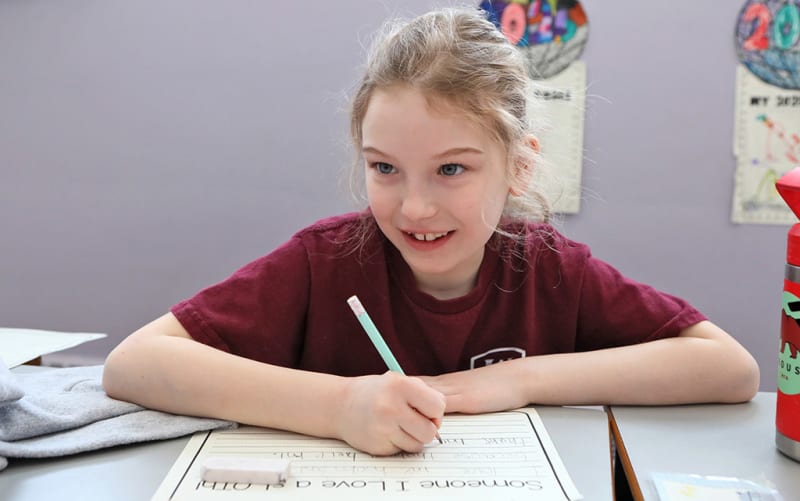
The elementary and intermediate school program (Grades 1-8) has been developed to follow Ontario curriculum guidelines, focusing on the core disciplines of Language, the Arts, Mathematics, Sciences, Social Studies & History, and Health & Physical Education. The rich curriculum at Heritage Academy stresses disciplined learning and skill development, and all classes emphasize the need to write, speak, and listen effectively. Learning to write also includes early instruction in cursive writing, which has been proven to have multiple benefits for language assimilation and reading for all learners, including (perhaps especially) those with dyslexia.

The senior school (Grades 9-12) program leads to the Ontario Secondary School Diploma (OSSD), and the courses at Heritage Academy have been developed according to the requirements of the Ontario Ministry of Education and Training. The OSSD requires compulsory and optional credits in English, French, Math, Science, Canadian Geography, Canadian History, Arts, Physical and Health Education, Civics, and Career Studies, and Heritage Academy offers many choices for students in each of these areas. Students are both challenged and supported throughout their studies, with their individualized education plan providing continuous structure on their academic journey.
Class sizes at Heritage Academy are small, and are key to student success. The average class size is 12 students, with 1 main teacher and 1 resource teacher in each classroom. Teaching support is further bolstered by behavioural interventionists and on-staff educational assistants who are available when required.
Students are united in liking the small class sizes, and enthusiastic when explaining why they appreciate them so much. Junior and senior students alike relate that classes are quieter, so it’s easier to stay focused and learn, and that they get more time and attention from the teacher. As senior student Madeleine states, “the teachers are more with you, they take the time to help and they really care.” When speaking with a group of junior students (Amy, Anabelle, Gareth, Luke, Roland, and Samuel) they were especially fervent in their praise of the teachers and small class sizes, saying variously that: “Here the teachers want to teach me (they love us)”; “Classes are a lot smaller and I love it”; “We get lots of personal time with the teachers”; “It’s ten times nicer than in public school”; “Here the teachers ‘see’ you as a person”; “The teachers here care and enjoy teaching, and are way nicer”; and the smaller classes allow the teacher to “slow down and be patient.” The students’ energy and enthusiasm for their classes is genuine and palpable.
Parents and alumni also praise the small class sizes at Heritage Academy and how beneficial they are for students. Frank Hall appreciated the collaborative approach to learning in the classroom, noting that students “are not afraid to say that they don’t understand, and that students often help each other.” His daughter, alumna Shannon, echoes this idea, saying that the small classes ensure that “there is no judgement, because you know everyone and everyone can empathise with each other.” She adds that the smaller class sizes were “very important to me as a student, because they allowed for extra time and individualized learning.” Engagement with teachers and peers in the smaller classes is also praised by parent Susan Ward, who says that the arrangement also results in “better exchange of information and explanation of concepts.” From a slightly different perspective, alumnus Matt Diotte says that the small, one-on-one classroom environment meant that “there was no goofing off in the background, and it helped you stay focused and on track.”
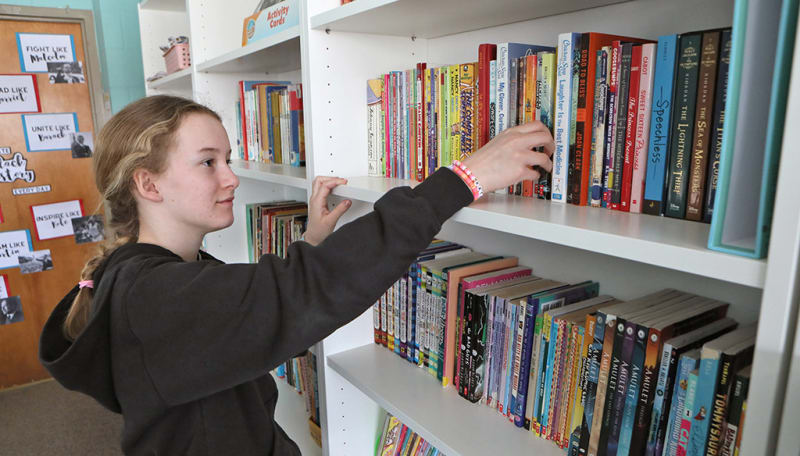
The academic environment at Heritage Academy is also such that teachers have great flexibility in how they approach and deliver material, while meeting the goals of the standard curriculum. As Grade 8 teacher Sarah Foster explains, if something isn’t working out, “curriculum modification is easy, and quick for teachers to implement. This might be along the lines of assignment accommodation, or using learning technology to adapt to student needs. What it means is that little time is lost waiting for approvals, as often happens in the public school system.” Grade 4 teacher Patti-Jane Stanley agrees, saying that there is great flexibility in teaching at Heritage Academy, so that “we’re able to teach based on student personality,” not just on the set curriculum. Stanley also points out that there are many different ways to access the curriculum material, such as reading books aloud and combining that with discussion about the literature. “The students get the same thing out of it, and it often inspires them to read further – perhaps the next book in a series, for example. Many students actually become excited about reading by the year’s end.”
A key factor in the success of students at Heritage Academy is the school’s use of the Simultaneous Multisensory Teaching method – known as SMT. This learning system was developed by Louise Brazeau-Ward after extensive study of how those with dyslexia and other learning exceptionalities best learn, and is based on the Orton-Gillingham method of teaching. At its base, SMT is a language re-education method that meets the needs of students who require a more thorough understanding of the structure of written language before taking on the challenge of learning to read and write. Students gain a solid grasp of the association of sounds and symbols before applying those associations to the concepts and rules of written language.
The Orton-Gillingham method uses all of the senses to educate an individual, not just the teaching method of direct instruction typically used in most school environments. (The direct instruction method is one in which students learn by observing and listening to their teacher, studying facts and concepts in textbooks, and completing both tests and written assignments. This method is often ineffective for students with dyslexia, making learning less accessible to them.) There are many successful Orton-Gillingham multisensory programs, and the SMT method is one of the most effective. SMT uses the fundamentals of the Orton-Gillingham method, but adds many additional components specially designed to assist with other difficulties related to dyslexia, such as tactile and other sensory cues. These may include: orientation, laterality, visual and auditory memory, and verbalization exercises. The SMT program also incorporates many exercises which help persons affected with dysphonia.
At Heritage Academy the SMT method is used as both an initial learning and re-education system for students of all ages. Along with the Heggerty program, a phonemic awareness curriculum designed to build foundational literacy skills, SMT is included in instruction in primary grades. The SMT Program is made up of a series of sequential lessons which teach reading, writing and spelling with an emphasis on reading accuracy in the early stages, followed by a thorough comprehension of written language and its structures. It is unique in that students learn using their visual, auditory, kinesthetic and tactile senses simultaneously. The SMT program begins with the most basic concepts of language, and moves on to the most complex in logical order. Importantly, SMT is not time-based learning, and students progress at their own pace. Movement through the program is based on comprehension and success in each stage, with each lesson based on the concepts taught in previous lessons. The SMT method is so successful that it has been adopted and it taught in several countries around the world.
Teacher Mike Lance is the SMT Director at Heritage Academy and is a firm believer in the program. “It really works,” says Lance, who has been with the school since its early days and who was in on the ground floor with the SMT program. “There’s a certain magic in helping ‘non-readers’ to read,” he says, “and it’s rewarding for everyone when the student recognizes that they have learned something.” The skills learned with the SMT method are readily transferrable to the regular class environment, and are the foundation of reading and writing skills for many students at Heritage Academy. “Really the goal with the SMT system, and with all instruction at Heritage Academy, is to help students succeed elsewhere.” Lance adds that, “It makes my day when a student recognizes that they have learned something and leaves each day with a smile.”
Students and alumni agree that the SMT program really helped them when they struggled with reading and writing. One alumnus says that SMT “taught me how to read in a different way,” and that they had an almost “immediate turnaround in my attitude towards school because of how they teach at Heritage Academy.” Junior student Anabelle says that she never liked writing, but “here they have a special program [SMT] where you can learn to spell. I love to write now!” Parents are also impressed with the program. Charulata Prasada and Richard Bridle chose Heritage Academy for their son partly because of the SMT method in use there, and relate that he soon picked up reading once he started at the school, a skill he had struggled with previously. (They also note, as an aside, that their son has lovely handwriting thanks to his time at Heritage Academy.)
Another feature of academics at Heritage Academy that is significant for both students and their parents is that nearly all work is completed during the school day, with very little work taken home. In fact, Heritage Academy guarantees that no new learning will ever be assigned as homework. While this might not seem like a big deal on the surface, it is a game changer for many. Parents relate that, prior to sending their child to Heritage Academy, trying to help their son or daughter with homework was frustrating and emotionally fraught, and that the stress of the process affected the entire family dynamic. As Margot Diotte says of their case, “we ended up paying more attention to Matthew because of his profound dyslexia and difficulty with learning, and much less to his sister. It was not a good situation.” This cycle was broken by not having homework to do, and with that stress taken away everyone’s homelife improved dramatically. “Later on there were sometimes projects that needed to be completed at home,” Diotte says, “but these were small, and we had fun with them.”
Chantal Normand, whose two sons went to Heritage Academy, also appreciated that there was very little homework. “Most assignments were done at school, which helped teach [our sons] discipline and division of tasks.” By not bringing work home, “they were allowed to just be kids away from school, which is really important.” Alumna Shannon Hall also relates that there was a positive change in her home dynamic after she started attending Heritage Academy, saying that there was “less frustration all around.” Once a student reaches Grade 11 there may be work taken home, but by that time the student has the tools and knowledge to complete assignments on their own without undue stress and frustration.

Student population
Heritage Academy of Learning Excellence is a co-ed institution that specializes in supporting students with dyslexia, as well as students with other language-based learning and other exceptionalities. The school offers instruction for junior and intermediate scholars in Grade 1-8, as well as for senior students in Grades 9-12. At this writing the student population is around 170 students across all grades.
According to Principal Cheryl Ward, for many parents, sending their child to Heritage Academy may be a short-term solution for some students–one that helps the student learn and gain confidence at a critical time of their education. Most of the students at Heritage Academy are there for Grade 4. About half of those enrolled at a young age stay on through high school. The other 50% usually want to return to the public school system once they reach the secondary grades, so that they can rejoin their local school, be with their other friends, and graduate with their cohort. And everyone at Heritage Academy is fine with that. At Heritage Academy the focus is entirely on student success and what is best for them. “So, part of what we do is enable a return to the public system if desired,” says Ward. “We have a genuine open-door policy with respect to that and offer full disclosure on what it may mean for a particular student.” Heritage Academy can be a stepping stone for some students, providing them with the opportunity to learn and build confidence during a critical stage of their education. The school’s primary focus is on student success and doing what is best for each individual. “Part of our mission is to support a smooth transition back to the public system if that’s the student’s goal,” says Ward. “We maintain an open-door policy on this, offering full transparency about what it might mean for each student.”
Having acquired the tools they need to succeed in school and elsewhere, a return to the public system is often viable. “We sometimes get returning kids though,” says teacher Sarah Foster, “who leave, go to public school, and come back to Heritage Academy because it’s more comfortable for them, and they really fit in here.”
The student population itself is notable for how well everyone gets along. When speaking with a group of senior students (Chase, Hayden, Lukas, Madeleine, Spencer, and Ysabelle), they all agreed that Heritage Academy has a very tight-knit community, where everyone at least recognizes everyone else (across grades), and it becomes like a family. Students come to recognize that everyone has unique qualities and something to contribute. As one alum puts it, “common struggles unite the students, and we were all very accepting of each other.” Respect is a big factor in ensuring harmony in the student population, with all students taught to respect their classmates, teachers, staff, and visitors to the school. Parents note the camaraderie, too. Citing the example of their son, who has multiple learning exceptionalities and who attended Heritage Academy for Grades 4-12, one set of parents relate how their son’s Grade 12 class organized their own end-of-year trip “almost completely on their own, from planning to execution, with little need for teacher support. Everyone helped out, and it was amazing.”
Heritage Academy is also a place where strong, enduring friendships are forged. Matt Diotte knows this firsthand. “Because the classes are so small, and you’re with the same people in all your classes, you get to know each other really well. I’m still friends with most of my classmates from Heritage.” His mother confirms this, saying that Matt made long-lasting friendships, including with those of different ages, and they all still get together when they can. Margot Diotte elaborates on the nature of the student population and its dynamic. “The social aspect of Heritage Academy was a game changer for Matt. All the students have to learn patience with each other, especially when communicating with those who have special needs. They are very sympathetic towards each other.”
Students in the junior grades are enthusiastic about the environment at Heritage Academy, too. In a place where most came from poor experiences at other schools, they quickly embrace the inclusivity. “Everyone feels like a big family,” notes Amy. Chantal Normand, parent of alums Simon and Samuel, says that juniors tend to look up to seniors, and seniors often acted like big brothers and sisters to their younger schoolmates. “It’s like a big family at Heritage Academy – everyone cares about everyone else.” Many parents also commented that when their child was first introduced to Heritage Academy, whether on a trial day or upon enrolment, they felt an immediate connection with the other students and a comfort level they had nowhere else. “Our son had no interest in going to any school at all, but after just half a day at Heritage Academy he was very decided that he wanted to go there,” says one parent. “The understanding and community made all the difference for him.” In a similar vein, a parent of a Grade 5 student says of their daughter’s experience that, “after the second day she told me she felt like she’d ‘come home’ – she felt so comfortable, and she was like everyone else.”
Athletics and co-curriculars
In addition to its specialized and individualized learning programs, Heritage Academy has a full and varied selection of athletics, social clubs, and extracurricular activities. There are also field trips to take education and activities out of the classroom. All students are required to take Health and Physical Education courses, and there are a number of school sports in which to participate. Clubs and extracurricular activities tend to change from year to year depending on staff availability to lead particular groups, but there are several very popular groups that are regularly on the roster. Most sports and activities are teacher-run, with assistance from Education Assistants and some senior students (depending on the activity).
Physical activity is an important part of student life at Heritage Academy. The Ontario curriculum emphasizes Health and Physical Education that focuses on building skills within various sports, and places emphasis on equity and fair play in sport, respect for diversity, sensitivity, and respect for individual requirements and needs, and overall good health and well-being. Heritage Academy follows these core precepts by encouraging participation in sports and other organized physical activities, and has a robust physical education program. Moreover, there is an understanding at Heritage Academy that many of its students require regular and frequent opportunities to burn off energy, so there are a number of supervised breaks for physical activity scheduled throughout the day. In addition to this, most classrooms have, for example, activity desks that incorporate physical activity devices for students who require them, limiting disruption in the classroom and allowing everyone to remain focused.
If there is a common thread with respect to what students and parents would change at Heritage Academy, it is that they would like to see more organized sports at the school. In the senior grades especially there is a feeling that being able to represent Heritage Academy in sports competitions would be a very good thing, and would be a point of pride for the students. That said, it is also acknowledged that the small population of the school, stretched across 12 grades, makes it difficult to field a team of any size for even one sport, let alone several. The school is a part of the Private School Sports Club and offers a variety of team sports throughout the year. If participation numbers in a certain sport are low, Heritage Academy students have the opportunity to join with students from other local private schools to form a team.
At the same time, it is agreed that a dearth of organized sport does not take away from the quality of the specialized education at Heritage Academy, which is paramount.
Extracurriculars are generally quite popular at Heritage Academy, and every student is expected to participate in at least one. There is enough variety in the clubs and groups that there is something to appeal to a range of ages and interests. Some co-curriculars and clubs that may be offered include: Student Council, Roots & Shoots, Archeology, Jiu Jitsu, Space & Science, Crochet, Morning Announcements, Running club, Badminton, Monster club, Basketball, Dungeons & Dragons (senior students), Reading, Ski & Snowboard, Positive Space club, Recycling club, Model U.N., Knex/Steam, and Videos for Change (among others).
Co-curriculars offer students the opportunity to engage with a different community than their immediate peers, and interact with others sharing a common interest. “It’s more relaxed than regular classes,” says senior Chase, “and you can chill and be more yourself in the clubs.” Students also appreciate that there is a different focus in the clubs, and “more energy,” according to one junior.
By far the most popular of the co-curriculars is Jiu Jitsu, led by Sensei Mike Lance (also Director of the SMT program). Jiu Jitsu has been offered at Heritage Academy for many years, and Lance says that it continues to grow and build. Somewhat surprisingly among a group with such disparate learning capacities and behavioural exceptionalities, the students respond incredibly well to the martial arts program. “Jiu Jitsu teaches all kinds of lessons,” says Lance, “including motor skills, confidence, respect, discipline, and understanding of chain of command.” The way Lance runs the program, students only advance when they have mastered all the skills of one level or belt. In this sense, much like the SMT program, the sport is progressive, not time based. “Jiu Jitsu teaches life lessons in that sense,” says Lance, “because I won’t advance a student until they’re ready, and they have to accept that.”
The majority of co-curriculars and sports take place during lunch breaks and after school. They are mostly teacher-directed, and Vice Principal Dylan Graves describes them as “hands-on, with structure,” in line with how regular courses are taught at Heritage Academy. Some extracurriculars are mostly run by students, says VP Morgan McKendry, “such as school socials, morning announcements, and Student Council. A lot of the students like to do those activities. Some students love to take the lead and help run one of the many clubs offered.” The co-curriculars help students develop their skills and succeed in ways different from what they experience in the classroom. Parent Frank Hall recounts that his daughter Shannon was involved in Student Council, and her participation there influenced her to become interested and active in social and political forums outside of school. “Her self-confidence bloomed,” and she has accomplished things she might never otherwise have attempted.

Wellness and pastoral care
It’s fair to say that Heritage Academy of Learning Excellence builds well-being for the student into every aspect of operations at the school. It is a welcoming place, especially for those who have had a tough time in other academic settings, and the aim of the school is to provide a comfortable environment that motivates all students to reach their full potential. Heritage Academy strives to foster a setting that allows for learning differences, and that nourishes academic excellence, personal growth, and a sense of community. All of this is achieved because the mindset of all staff and teachers is that the success of the student always comes first. At Heritage Academy “we address individuals, and look at the whole student,” says Principal Ward. “That includes their educational challenges and needs, as well as their social needs. The environment here is very supportive, and it comes from all the teachers and the students. We facilitate peer connections on every level so that no one is left out.”
Heritage Academy’s overarching philosophy is that every student ought to enjoy success as a learner, and they work hard to make the school a safe place where students can learn and develop socially and emotionally in a warm, nurturing environment. Heritage Academy values that: every student has unique learning needs, which require a variety of educational strategies and learning activities; each student should have their basic needs met to enhance their social, emotional, intellectual, and physical well-being; each student should feel worthy and competent, in order to achieve positive self-esteem in every aspect of their well-being; and every student is taught to think creatively and to problem solve, so that they develop habits of mind that promote success. By adhering to these values Heritage Academy creates a learning environment in which the students are relaxed and happy, where their needs are looked after, and where their intelligence is recognized.
In addition to creating individual learning plans tailored for each student, Heritage Academy partners with a number of outside service providers to support each student’s advancement. Heritage Academy understands that parents may need help figuring out what kind of program will be the best for their child, so the school helps them understand dyslexia, get their child assessed, and then find tutors or other programs that will be the most beneficial for the student if extra instruction is desired. At Heritage Academy, it’s not a “one-size-fits-all” solution, and the school has done the legwork to find products, assessors, and programs that are backed by science-based research and led by experts in their field, in order to find the best platform for each individual. Everything is aimed at helping every child to succeed according to their specific needs and abilities.
Some of Heritage Academy’s community support partners include: Emerging Minds, which works with students who may be struggling academically, behaviourally, or emotionally; The Possibilities Clinic, which offers evidence-based medical, coaching, and therapy services for those with neurodevelopmental disorders, as well as other coexisting disorders; Speech-Language Ottawa, which provides a variety of speech and language therapies to assist a child with their literary and social skills, language development, articulation, and fluency; Dyslexia Reading Well, which helps parents and teachers understand dyslexia and connect with helpful resources and Expanding Horizons Occupational Therapy, which focuses on developing positive mental and physical health while building skills for educational and everyday success. Heritage Academy partners with other organizations as well, and most community partners will provide services and sessions either at the school or in the home. There are additional fees for utilizing the services of the partner organizations, and their use is always at the discretion of the parents.
Of course, it is the environment at Heritage Academy itself that has the most impact on individual students. Created specifically to address the needs of students with dyslexia and other learning exceptionalities, as well as those with ADD/ADHD, it is a welcoming place and many (parents and students both) find it genuinely transformative. The school promotes the values of honesty, perseverance, respect, and teamwork, and by doing so fosters acceptance for others and their differences, as well as growth for the individual. There is zero tolerance for bullying at Heritage Academy, though it is rarely an issue, as students quickly develop a strong sense of recognition and acceptance from one another. Perhaps because they felt different or isolated due to their disability or in other schools, at Heritage Academy students are thrilled to discover their community and are simply happy to be able to be their true selves.
The well-being of the students is also supported by the small class sizes and one-on-one attention they receive from teachers. There is a great deal of comfortable familiarity and continuity, because the teachers are there for lunch breaks and for after-school activities. The scholars at Heritage Academy soon come to know that the school as a whole, and the teachers in particular, “really believe that every kid can learn – that the ability is there,” says one alum. “They have the experience to unlock that ability,” with understanding, empathy, and infinite patience. “They are truly there to help you.”

Getting in
Heritage Academy of Learning Excellence strives to help as many children struggling with dyslexia and other language-based exceptionalities as it can, because it believes that every student is capable of becoming a successful learner. Its mission is to provide each student with the support they need to enable them to reach their full academic potential. In an ideal scenario the school would enroll every applicant with dyslexia or other learning disabilities, but physical space, class sizes, and other factors mean that Heritage Academy has only a 75% acceptance rate for all grades.
There are no entrance exams, academic standing, or grade point average entrance criteria at Heritage Academy; after all, most students arrive there after having a difficult time in the public school system, where they struggled to learn in a traditional academic environment. The school understands that parents are often at their wits’ end trying to help their child when they turn to Heritage Academy for help, and they do what they can, but there is a defined process for candidate consideration and admission.
Heritage Academy carefully evaluates the following factors for each student: Special Needs or Accommodation, Behaviour and Character, Self-Regulation and Emotional Intelligence, Communication Skills, Personal Skills, and Academic Proficiency. (Details on each of these criteria can be found on the Heritage Academy website under “Admissions”.) Essentially, to qualify for admission students must have the ability to self-regulate their behaviour in and out of class, work well with their peers, work independently when required, and be able to follow along with the curriculum without significant additional support. It is recognized that most students do require some accommodations, but they should not require modified grade material.
The small class sizes at Heritage Academy are part of the magic that makes the school transformative for so many students. Thus, maintaining a low student-teacher ratio is important for the success of each individual. With only about 40 staff, including teachers, the total student population holds steady at around 170. (This would change, of course, if the school grew in both areas.) As well, there is limited support for full care within the school, which is another consideration when accepting new students. There are rolling admissions, with mid-year entry possible. Heritage Academy also supports students with no learning exceptionalities. These may be students who will benefit from smaller class sizes and a less stimulating school environment.
Heritage Academy’s focus with respect to student enrolment is on making sure that the school is a good fit for the student’s educational needs, and that the student is a good fit for the school. This is a major, defining component of every student’s success.

Money matters
In contrast to other private schools that serve students with learning exceptionalities, Heritage Academy of Learning Excellence is a non-profit institution. As a result, tuition costs are somewhat lower than some comparable private schools, but also higher than others. Tuition is paid through an initial deposit, followed by a number of equal payments to help make it manageable for parents.
Principal Ward acknowledges that cost can be a factor in how long parents have their child attend Heritage Academy. “Parents may be looking for a short-term solution for their child and looking at reintegration back to their public school when the child is ready. Most students are here for Grades 4 to 8. That said, many parents recognize the full benefits of attending Heritage and prefer that their child stay until graduation.
In some cases, “parents can usually only afford to send one sibling to Heritage Academy,” notes one teacher. In others, as with Margot Diotte’s two children, one stayed throughout primary and secondary school, while the other chose to return to the public system for high school. “We wouldn’t have stayed if we weren’t happy with their results, because of the cost,” says Diotte, “but we praise the school all the time.” Parent Frank Hall agrees that tuition costs could be an issue at times but says, “Heritage Academy tries to work with parents to make finances manageable. For them, the child is most important.”
The takeaway

Among a host of private schools that cater to students with dyslexia and other learning exceptionalities, what makes Heritage Academy stand out is their absolute dedication to student success on all fronts – academically, socially, and emotionally. For them the student always comes first, and the school addresses the needs of the individual, always looking at the whole student. The environment at Heritage Academy is warm and inviting, and it is very evident that the students are comfortable there – happy, full of energy, inquisitive, supportive of their peers, respectful, and intelligent. It is easy to tell that students have a real sense of belonging, and that they can be themselves as they pursue their education on terms that suit their needs. Once a student stops feeling isolated or different and feels they can safely come out of their shell, “you see that they can be very quirky and cool,” says Vice Principal Morgan McKendry, “and we love them.”
The environment at Heritage Academy has been deliberately crafted to address the needs of the students, and it can be transformative. For many students and parents, this is what makes the school so valuable. “I was totally amazed at the difference in my daughter, when in only a few days she felt valued, respected, and not alone!” writes the parent of a Grade 5 student. Its individualized teaching plans, specialized programming like SMT, small class sizes with one-on-one instruction, robust extracurriculars, and caring and dedicated teachers, all contribute to dramatic turnarounds in individuals’ learning and self-esteem. At Heritage Academy everyone fits in, and is provided with tools for success in school and beyond. If you are considering Heritage Academy for your child, says one alumnus, “Don’t think twice. It will make all the difference in the world.” The parents of a Grade 8 student confirm this – “Our decision to move our daughter to Heritage Academy was one of the smartest decisions we’ve made as parents.”