
The 2026 OUR KIDS Private School Expo is coming to cities near you. Get your family pass



Armbrae Academy THE OUR KIDS REVIEW
Verified Review
OUR KIDS verifies every review by confirming the reviewer’s identity and their firsthand experience with the school. Learn more
The 50-page review of Armbrae Academy, published as a book (in print and online), is part of our series of in-depth accounts of Canada's leading private schools. Insights were garnered by OUR KIDS editor visiting the school and interviewing students, parents, faculty and administrators.
OUR KIDS editor speaks about Armbrae Academy
Introduction
Armbrae Academy is a co-educational, independent school nestled in Halifax’s historic South End. It’s near many other noteworthy educational institutions, like Dalhousie University, the University of King’s College, NSCAD University, and Saint Mary’s University. In 1887, Armbrae was established by an act of the Nova Scotia Legislature in partnership with the Presbyterian Church of Canada, but it is now non-denominational. With regard to location, Armbrae is in the perfect spot. It’s in a residential area, near Halifax’s downtown core, which is both walkable and easily accessible via transit or by car, and near many facilities like museums, historic sites, hospitals, parks, and playgrounds.
Since its founding in 1749, Halifax has seen remarkable growth, especially in recent years. Between July 1, 2023, and July 1, 2024, the city’s population increased by 11,600, reaching 503,037—comprising 46.7 percent of the provincial population. Growth shows no signs of slowing. As the heart of the Halifax Regional Municipality, which also includes Dartmouth, Bedford, and Lower Sackville, the city is a vibrant and diverse centre of people, places, and experiences—a richness reflected within the close-knit community of Armbrae Academy.
“If you’re going to keep up with this ever-changing world, you’ve got to be anticipatory,” says Michael Maki, Director of Career and University Guidance at Armbrae. “Locally, a lot of people are migrating to Halifax, and it’s booming. People are looking for that East Coast lifestyle, and we can see the many multicultural events happening in the city. What I have appreciated about Armbrae is that they were ahead of the curve—reimagining how to “do school”—before the population growth began a few years ago. For me, that is a hallmark of a school that is doing it right,” he says.
Among the school’s early alumni was Anne of Green Gables author Lucy Maud Montgomery. She attended the school in its earlier iteration as Halifax Ladies College, from 1895 to 1896 and, through its partnership with Dalhousie, studied English literature. She would later say that this educational experience inspired her red-haired heroine’s adventures at the fictional Redmond College.
When we visited Armbrae, we were eager to learn more about the school’s longstanding history and much-talked-about innovation. While the school’s three small and interconnected campuses have an unassuming feel, there’s a lot to be discovered. The Oxford Campus, which is the main building, houses the administrative offices and is a brick and concrete structure with large windows, giving it a modern look.
The Oxford Campus also currently houses the Foundation Years and Lower School (Preschool to Grade 5), the main gymnasium, the Abby Bryant stage, and the library. The Middle School, for Grades 6 to 8, is at the South Campus, which contains classrooms, a dining hall, and offices. The Coburg Campus is home to the Upper School (Grades 9 to 12) and contains classrooms, a second gymnasium, and offices. The campuses are close enough to allow Middle and Upper School students to travel between them easily for classes.
On the day of our visit, the scene was typical of most schools: staff and students in uniforms moved between classes with a sense of purpose. Armbrae’s unique character really became apparent when a staff member, who recognized us from a previous interview, opened the door with a smile and welcomed us inside. Immediately, it felt like we were being enveloped by a familiar hug. The school has the air of a close-knit community steeped in tradition yet actively building toward its future. This sense of warmth and belonging extends to every aspect of the school, no matter what building we were in or who we were speaking with.
Basics
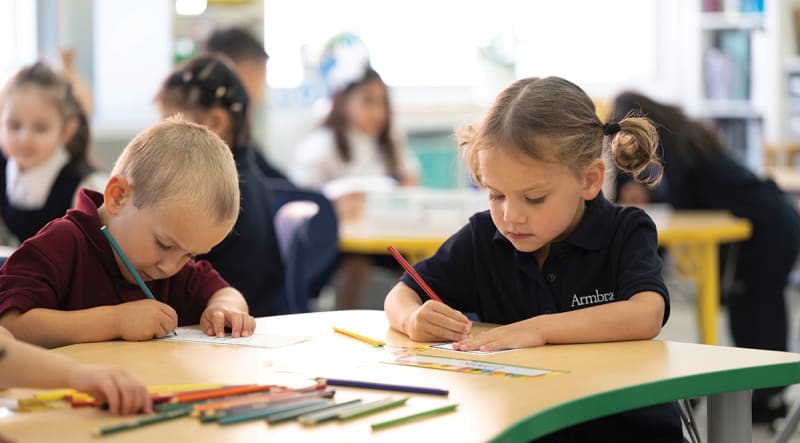
Armbrae is divided into four divisions: The Foundations Years (PreSchool and Pre-Primary, the only program of its kind in Halifax for ages 3 and 4), Lower School (Primary to Grade 5), Middle School (Grades 6 to 8), and Upper School (Grades 9 to 12). Each division has its own dedicated staff and leadership. There is also a school-wide prefect system, composed of Upper School students, and a house system. Upon joining Armbrae, students are welcomed into one of four houses—Laing, Dauphinee, Blackwood, and Salton—which compete in a friendly, points-based competition throughout the year. The houses are named after the school’s founder and former heads of school.
“My husband was concerned that, being at an independent school, our daughter might feel isolated from the real world,” says Stephanie Sajatovich, Director of Student Life and an Armbrae parent. “It was when he came to the school and saw how people talked about mistakes in such a caring way that he began to see things differently. Because you want kids to grow, and they grow by making mistakes. So, she’s growing and learning all the time, not just academically. She’s learning to be a good person. It was then that he said, ‘Yes, this is very special. We are very, very lucky!’”
Though it is quite small for a school that extends from preschool through Grade 12, Armbrae is able to successfully provide a challenging and well-rounded education. This is supplemented with a rich co-curricular program that includes clubs, activities, athletics, Advanced Placement (AP) courses, leadership opportunities, and community experiences, such as field trips and volunteer work. This intentional programming ensures that students not only excel academically but can also tailor their after-school activities to their interests. The ultimate goal is for each student to understand how they can become an engaged citizen in the wider world.
“Because of our small class sizes, the kids are so eager to learn, and the teachers are so eager to dig deep into these topics, that we’re really able to customize the learning for each child,” says Tara Burt, Director of Lower School. “I think we give them a lot of opportunities for hands-on activities, experiments in science and mathematics, and we also take advantage of a lot of the community around us. Students in the higher grades are visiting Dalhousie and Saint Mary’s to observe classes and science labs in action. Younger students are walking to nearby museums; the Lower School kids are learning about habitats, and they’re walking down to the beach at the end of the street. We have a link on our website called Armbrae’s 15-Minute Campus. It lists over 25 places and spaces that we walk or bus to with our kids, all within 15 minutes of our main (Oxford) campus. We are intentionally taking advantage of the resources around us and just trying to broaden that educational experience.”
Every aspect of Armbrae is carefully planned by staff to ensure students have a variety of options, not only in coursework but also in social, athletic, and co-curricular activities they may like or have never considered trying.
One Grade 12 student shared how joining the ski club opened the door to new opportunities: “That club will always hold a special place for me because it started out as a Friday evening activity, but it introduced me to skiing,” the student says. “I just did it with my friends at first, but now I work at Martock (a ski resort in Nova Scotia), and it is all because I was introduced to it when I was in Middle School.”
This seems to be central to the Armbrae experience. “I like to think we’re a small school with big opportunities,” says Ally Read, Deputy Head of School. “We don’t just focus on sports, we don’t just focus on academics, we don’t just focus on the arts. It requires creativity to provide programming in so many areas, but I think it’s what sets us apart. And I think that it also speaks to the nature of our people. We are not one-dimensional.”
Play is an important part of the Armbrae culture for students from PreSchool through Grade 8. There’s an emphasis on learning from your environment while interacting with it. This is facilitated through an extensive playground as well as a wooded area that gives children opportunities for free play using natural materials such as sticks, leaves, and pine cones to build and create. Parents are encouraged to dress their children in appropriate gear for all seasons.
Prioritizing daily outdoor play is important for building resilience, curiosity, and a sense of wonder,” says Suzanne Morisson, Director of Special Events and Annual Giving. “Our alumni come back every year, and they want to go down to the woods when they visit. It really brings back some pretty special memories.
Key words for Armbrae Academy: Community. Student-Centred. Future-Ready.
School culture
Community and belonging
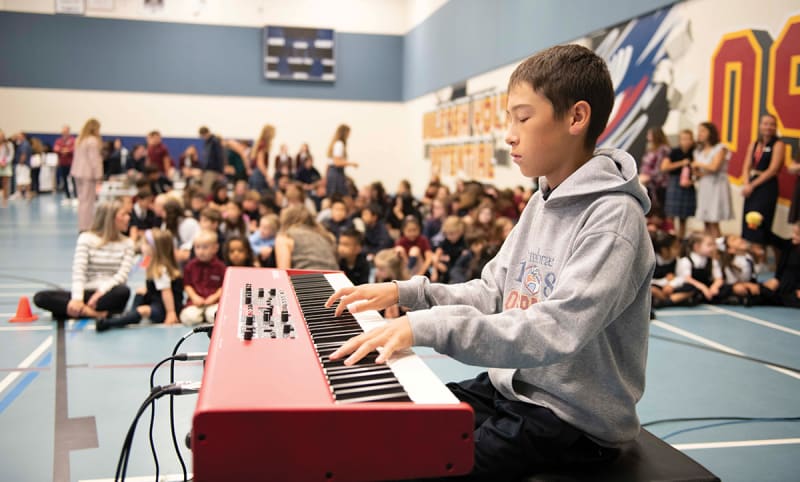
To describe Armbrae as simply a “community” doesn’t fully capture what it means to be part of the school. Because of its intentionally small size, everyone—from parents to staff and students across all grades—knows each other. During the visit, there were numerous high-fives, greetings, and hugs exchanged between students and staff. No one seemed isolated or ignored. A class of preschool children immediately started telling our tour guide, a member of the school staff, about their day, and it was evident that the staff already knew the details of what the students were sharing. They immediately responded with appropriate questions, genuinely interested in what they were learning and what they would be doing next.
The warmth of this interaction was not lost on us. The sense of connection among adults and children throughout the school feels truly familial. This familiarity, in turn, allows for a more integrated style of learning and a better educational support system.
“It’s like this magical, warm community where everybody knows each other; it has maintained this small feeling, even though now we’re spread across three campuses,” says Megan Sernyk, Director of Student Success, who is also an alumna and school parent. “It’s not unusual to find Grade 12 students who know the kids in Primary by name. You just get this real sense of belonging. While you may get lost in a big school, you cannot get lost here.”
“Research shows that children who feel like they belong can focus better on learning and perform at a higher level,” says Steve Clarke, Head of School. “Creating this culture of belonging is intentional.”
Individualized support
The intention at Armbrae is for no student to be left behind, and a number of resources have been put in place to ensure this. For example, Rebecca Cornick, a Primary teacher and Director of the Foundation Years Programme, has a full-time educational assistant (EA) in her class. Due to the small class size, Cornick can quickly identify if a student is struggling and immediately inform the EA. Even before the EA intervenes, Cornick has a potential plan in place for that child for the day’s learning.
“I’ll write things down and note, ‘This child might need a little extra support with this. Would you mind working on these skills with them?’ We’ll do it in a really fun way—through a game or an activity, like a memory game or even one they make up together. That way, the child can get caught up and be ready for the next lesson with the group,” she says. “I find that really helpful because it allows me to keep an eye on all the students in my class. When I give instructions, I can watch those who need closer attention to make sure they’re learning and have understood what I’m asking. They get a lot of attention and a lot of support.”
All students have the opportunity to work with faculty advisors on Wednesdays, during a predetermined advisory period. The role of the faculty advisor is to ensure that their students are engaged and feel connected with the community. They’re also there to advocate on the students’ behalf, when necessary, and work with students to promote self-advocacy skills. These advisory sessions are dedicated opportunities for the intentional delivery of age-appropriate social-emotional skills, including managing emotions, building positive relationships, making responsible decisions, and setting and achieving goals.
“The amazing thing about an independent school is, of course, that you can pivot when necessary,” says Morrison. “There may be a topical issue in the world—a current event—or something happening in the classroom that needs to be addressed. Much like a family conversation around the dinner table, the weekly advisory period gives us at Armbrae the space to discuss these issues in a timely and sensitive way.”
This family-like atmosphere is also evident in how students interact with each other, particularly through opportunities for older students to mentor younger ones. For example, each school prefect is assigned to a Foundation Years or Lower School classroom. As part of their role, they help guide the younger students to assemblies and other events. This is a chance for students to feel more connected to each other, despite being in different grades.
You don’t often see students walking alone at Armbrae. It seems everyone is welcome and included in the community, and it’s a lovely feeling.
“We’re creating a culture based on the idea that we’re part of a family. We belong together, and this is our school,” explains Clarke.
A Grade 12 student shared that by helping younger students with French, she also discovered more about herself and the areas she needed to review. “I think I was more inclined to go to French office hours after tutoring, because every time they asked me questions, I thought, ‘thank you—you’re showing me what you need help with, and what I need to work on too,’” she says.
Parental involvement
At Armbrae, parents and caregivers are deeply woven into the fabric of the school community. They don’t just attend parent-teacher nights or drop off and pick up their children. They are volunteers, board members, and even take part in school life by joining Wednesday assemblies. At times, they’re invited to share their expertise as guest lecturers in classes or at assemblies. Many parents are also teachers at the school, as well as alumni.
Some parents even provide job-shadow opportunities for students. “I think that being involved in this way is the right way for me to use my skillset and to help the school from a mentorship perspective, rather than just volunteering to hand out school lunches,” says a parent who has two students at the school and one waiting until they’re old enough to join. “It’s fun for me to be involved and to see kids who are interested in shadowing an entrepreneur for the day because they might be interested in design, and to put them into those real-life situations.”
Before- and after-school programs
In addition to supporting students, Armbrae also supports parents. Recognizing that school start and end times may not always align with working schedules, the school offers BeforeCare and AfterCare programs for an additional fee.
“We’re in the city, but we also have families in our community that drive into town. Their parents may work in town or elsewhere, so we have to have a wide range of hours so there is a safe place for students to be while their parents are at work,” says Ashley Matthews-Duffett, Director of Auxiliary Programmes.
The regular school day starts at 8:30 a.m. and ends at 3:15 p.m. BeforeCare begins at 7:30 a.m., a half-hour before regular drop-off, and AfterCare runs until 6:00 p.m. Many clubs, activities, and athletics also run until the early evening. These programs can often help students with their Creativity, Action, Service (CAS) credits (see the Academics section for more on CAS).
The school also hosts a spring Grandparents Day to honour the many caregivers and supporters who play a vital role in a student’s life.
Celebrations and traditions
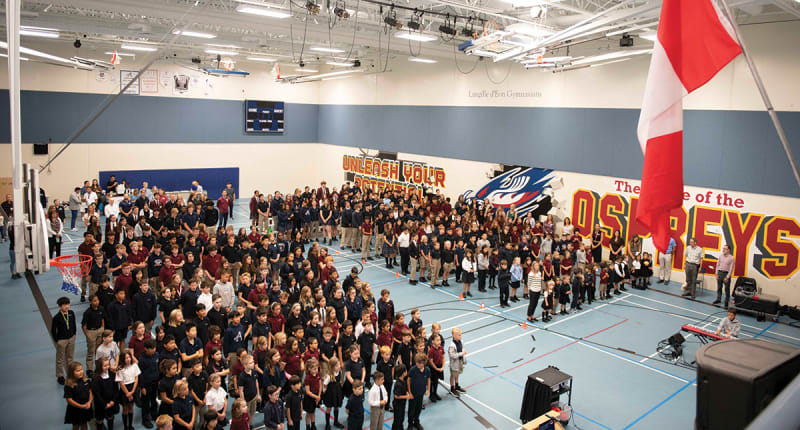
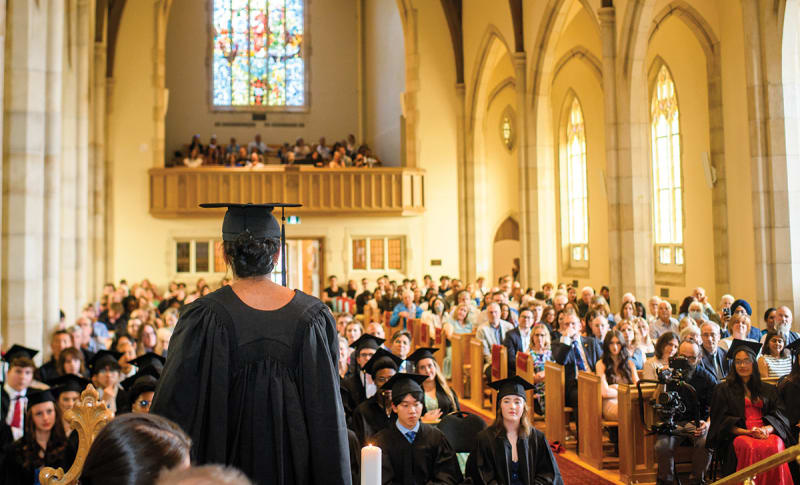
As the school year concludes, the focus shifts to the graduating Grade 12 class, but they are not the only ones celebrated. Armbrae holds three “Celebration of Learning” ceremonies on a single day: one for Foundation Years (PreSchool to Pre-Primary), one for Lower and Middle School (Grades Primary to 8), and a combined Celebration of Learning and Graduation ceremony for Upper School (Grades 9 to 12). These events are a cumulative celebration of the entire school, from the youngest students to the graduates in their caps and gowns.
One of the many important hallmarks of the day is the so-called “grad speeches.” Each member of the graduating class selects a faculty member who will be asked to talk about the graduate and their Armbrae journey.
It tends to be an emotional affair for everyone involved. “Students look forward to their graduation speech,” says Sernyk, who has been with Armbrae for 23 years as a staff member. “And, given that many students are ‘lifers’ at Armbrae, the speeches and stories that are shared are authentic and heartwarming.” Everyone is in their number one uniform, and the entire community comes together—students, faculty, staff, parents, families, and friends. The ceremonies are highlighted by short musical presentations: a song, an ensemble, or a choir performance. “It’s truly a whole-school community event that feels pretty magical,” Sernyk adds.
Uniform
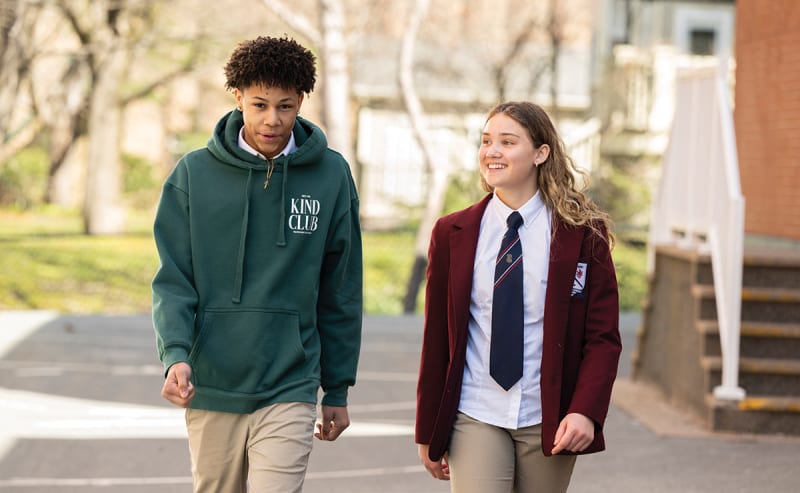
The Armbrae uniform has a traditional feel with a modern twist and is adapted for different age groups, grade levels, and activities. Walking through the halls, we noticed that while the uniform creates a sense of cohesion, students still have many opportunities to express their individuality.
PreSchool and Pre-Primary students can choose among navy, maroon, and white polos, khaki pants, or a navy skirt or jumper. They can also wear grey or navy Armbrae-branded sweaters and sweatpants.
Beginning in Grade Primary, the everyday outfits have some additions and changes. Along with khaki pants, a grey pants option is available, but both must be paired with dark socks. For those wearing a skirt or jumper, navy knee-high socks or tights are required. While there are no specific shoe requirements for PreSchool and Pre-Primary beyond a secondary pair of indoor shoes, black shoes are a requirement starting in Primary.
A special-occasion outfit, or “number one uniform,” is also introduced at this level. This more formal uniform requires a white, button-down shirt with the Armbrae crest and a tie, along with khaki or grey pants, a skirt, or a jumper. A navy sweater with the Armbrae crest is optional, and all-black shoes are required. In Middle School, the skirt option is replaced with a kilt for both everyday and special-occasion wear. In Upper School, the only difference is that prefects wear the Armbrae blazer for special occasions.
For Grades Primary to 12, there are also specific clothes for gym or yoga class. A grey or navy Armbrae T-shirt is required, along with navy Armbrae-branded shorts or black yoga pants. Students can also choose to wear grey or navy Armbrae-branded sweatpants or track pants and a sweater, as well as indoor-only sneakers. For these classes, students have a choice of sock colours: black, blue, grey, or white.
The school calendar also includes a number of “casual days.” On specific theme days, students can wear spirit wear, such as any Armbrae sweater. On “colour days,” they can wear what they choose, as long as it fits within school guidelines and is at least 50% of their house colour. Students earn house points for wearing their proper house colours and enthusiastically participating in various house competition events.
History
While its facilities are modern, Armbrae is deeply rooted in the history of Halifax. Initially known as Halifax Ladies College, it became affiliated with both Dalhousie University and the Halifax Conservatory of Music (now Maritime Conservatory) immediately after it was established. Classes were divided into three divisions: the Collegiate, the Preparatory, and the Primary Department. Kindergarten was introduced later on. The school was started as a “finishing school” for young ladies that were not pursuing a career, and as a University preparatory school for those that were. The school’s motto was “In Deo Spero”—in God I trust—and the Collegiate curriculum was as intentionally as broad as possible: including courses in maths, sciences, humanities, the Arts, and classical languages (Latin, French, and German). Sports played a prominent role from the beginning, with the day divided into morning studies and afternoon sports. Tennis, field hockey, curling, skating, and swimming were key to the athletic programme. Meantime, volleyball and basketball were played at the competitive level against King’s Edgehill and Sacred Heart.
While in its early days, it was not common for women to pursue higher education, this did not stop the Ladies College from establishing a relationship with Dalhousie University and the Halifax (now Maritime) Conservatory of Music. The school was originally incorporated by the Presbyterian Church of Canada, in partnership with the Government of Nova Scotia.
“When the school was started, it was what we could call a ‘finishing school,’ as its young ladies did not generally pursue careers in those days,” wrote Sandra MacLeod in A History of Halifax Ladies College. “The motto of our school was ‘That our daughters may be cornerstones, polished after the similitude of the palace.’ However, it has been necessary to modify these aims to suit the changing times. Currently, the school strives to prepare boys and girls for university entrance or a profession.”
The school’s motto is now “Be Kind, Work Hard,” and the idea that Armbrae is adaptable to change remains prominent. At the time, those who completed the classical course were allowed to enter Dalhousie as second-year students, while those who chose the literary route entered as first-year students. As needs changed, new courses were added, such as music, household science, and college prep.
After a couple of moves, the school came to Oxford Street in 1940. The location is the same today, but the original building, a large house called Armbrae House, was different. The name “Armbrae” is fitting, as the suffix “Brae” means hill or hillside, and “Arm” comes from the famous Northwest Arm, an inlet of the Atlantic Ocean two blocks south of the school. In a sense, Armbrae does overlook the Northwest Arm. The house was torn down in 1963 and replaced with a collection of buildings now called the Oxford Campus.
In 1979, the school became coed and officially changed its name to Armbrae Academy in 1980. In 2008, the school opened a new multi-purpose addition to the Oxford Campus, the Arts and Athletics Recreation Complex (AARC). With increasing enrollment, Armbrae has expanded even further. In 2020, they opened their Coburg Campus, and in 2025, they opened their South Campus. Both of these campuses are less than a five-minute walk from Oxford.
The new campuses reflect the school’s interest in being a good neighbour within the South End community and have resulted from partnerships developed over the past six years. Clarke explains that the school has grown from about 255 students to around 360 to 370 students over the past six years, justifying its need for more space.
“The space on our main campus is about 31,000 square feet in total. With a mandate to grow the school, we needed creative options for expansion. Fortunately, we were able to negotiate access to quite lovely, purpose-built spaces at two venerable South End institutions. The Beth Israel Synagogue is just two doors north of us, and we essentially occupy their former Hebrew school. That allowed us to move our Upper School classes there and free up space on our main campus. We call this our Coburg Campus because it’s on the corner of Oxford and Coburg,” says Clarke. “As growth continued, we launched our new South Campus, which houses our Middle School. Those students occupy the former Christian Education wing of First Baptist Church. We named this space our ‘South Campus’ for two reasons: firstly, it is only two doors south of us, and secondly, the next street down is called South Street. South Street also fronts onto the main campus of Dalhousie University.”
These new spaces also give students a chance to form their own smaller communities within the larger school. “It is exciting,” says Sajatovich about the South Campus. “The Middle School students are ready for a bit more freedom and independence. And they have their own space with their own dining hall, which is fabulous.”
School leadership
Armbrae’s leadership consists of three teams: The Board of Governors is responsible for the long-term strategic direction of the school and for evaluating the performance of the Head of School; the Strategy Group develops the implementation plan to execute on that strategy and ensures it is aligned with the Mission, Vision, and Values of the Strategic Plan; and the School Leadership Team is responsible for carrying out the implementation plan and delivering on the Mission, Vision, and Values of the school.
At the centre of this is Stephen Clarke, who joined Armbrae as Head of School in 2019 from Ridley College in St. Catharines, Ontario. He spent over 20 years at Ridley, finishing his tenure there as both Deputy Headmaster and Head of Lower School. While there, he spearheaded many initiatives, including launching the IB Programme, expanding the school by adding six new grades (initially a Grade 5 to 12 school, Ridley is now a Junior Kindergarten to Grade 12 school), advancing educational technology, and supporting the development of both their strategic and master campus plans.
After coming to Halifax, he was able to successfully guide Armbrae through a worldwide pandemic while also leading a number of changes designed to contribute to school life and student success.
As one parent says, “Steve’s leadership approach was crucial in our decision to send our kids to Armbrae. As two entrepreneurs, we understand the value of leading with intention and kindness. Steve’s personal and professional values are very much in line with our parenting. We want our kids to be helpful and kind when they are out in the world. We want them to approach others with empathy and also be confident in their decision-making.”
Part of Clarke’s mandate is to ensure Armbrae is more reflective of the larger community, both in staff and students. “Traditionally, Armbrae has been seen as lacking in socioeconomic diversity,” says Clarke, who is working to ensure that Armbrae is able to attract and retain students and staff from a variety of communities and backgrounds. In addition to expanding the school, he has overseen a number of key initiatives, including a new strategic plan, Unleash Your Potential, the addition of the school’s first mascot, “Ollie” the Osprey, the development of a more robust athletics program and enhanced academic programming, including an exciting partnership with Future Design School. He saw the school through the creation of the new O’Connor Family Student Success Centre, with its focus on learning support, providing better support for EAL students, improving counselling and university guidance, and providing Armbrae students with best-in-class co-curricular programming. He is not stopping there. As part of the strategic plan, he aims to consolidate the entire student body onto a single campus.
“Ideally, we will build a new campus on the site we own—the Oxford Campus—and then gradually bring all the kids back to this main campus, once we have space for everybody,” says Clarke. “So, the first phase (of my time here) was about finding creative ways to grow so that we could reach the critical mass we needed for excellence in programming. Now, it’s time to consult with the Armbrae community and decide what facilities we need to serve our children—both for today and for the next 100 years—on the site we own. It’s a real blessing to be a part of Armbrae at this point in its history.”
Clarke is an Ontario-certified Principal and holds an Honours Bachelor of Science, a Master of Science, and a Bachelor of Education from the University of Ottawa. Before joining Ridley, Clarke taught at other schools in Ontario, including four years at Crestwood School as their Director of Information Technology and as a science, biology, chemistry, and math teacher at various secondary schools in the Ottawa-Carleton District School Board.
Clarke’s Senior Leadership Team includes five other individuals who help guide Armbrae. On the academic side of the school, Ally Read fills the role of Deputy Head of School. Ally has been with Armbrae for almost 15 years and has several degrees, including a Bachelor of Arts Degree in English and a Bachelor of Commerce Degree with dual majors in Entrepreneurship and Human Resource Management from Saint Mary’s University, a Master’s in Educational Leadership from Acadia University in Wolfville and a Bachelor of Education from Western University. She also has a certificate in career counselling from Dalhousie and a CAIS Leadership Institute Accreditation. Read’s direct reports include anyone working on the academic side of the school, including the Director of Foundation Years (PreSchool to Primary), Director of the Lower School (Grades 1-5), Director of Academics (Grades 6-12), Director of Student Success, Director of Student Life, and Director of Career and University Guidance.
On the business side of the school, there are four key team members to mention. Charlotte Pierce, the Director of Business, is not only a newer member of the team, but she is also in a newer position. With over a decade of experience running private businesses, Charlotte oversees the school’s finances and auxiliary revenue streams, and she looks after marketing and communications.
The Auxiliary Programmes and Facilities Director is Ashley Matthews-Duffett, who has over 25 years of experience working in an early childhood education setting, starting with her diploma in early childhood education from St. Joseph’s College, now Nova Scotia College of Early Childhood Education.
Suzanne Morrison is transitioning from her role as Director of Admissions and Marketing into a new role as the Director of Special Events and Annual Giving. Morrison, who joined Armbrae in 2017, is a seasoned communications professional with a Bachelor of Arts in English and Political Science from St. Francis Xavier University.
And finally, Jenny Calder is the new incoming Director of Enrollment Management. With over 16 years of experience as the International Recruitment Specialist at Saint Mary’s University—where Calder was responsible for admissions, recruitment, and marketing—she will fill a similar role at Armbrae with a focus on developing long-range plans for the strategic recruitment of new families and the retention of current families.
Lastly, Armbrae’s Board of Governors is a dynamic team of 11, made up of alumni, community members, and parents. The full Board meets six times a year, while the various sub-committees (Executive, Governance, Finance, Audit and Risk, Alumni and Advancement, Facilities and Infrastructure) meet as needed and report to the full Board meetings.
Academics
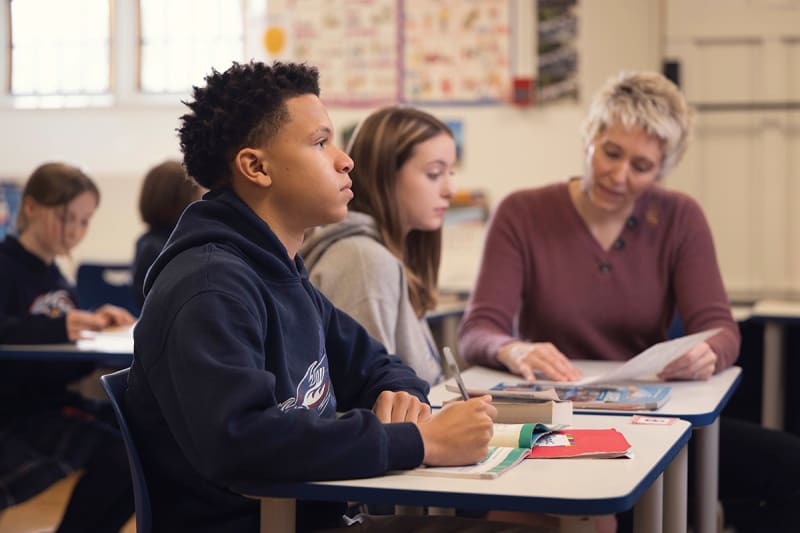
Armbrae’s motto, “Be Kind, Work Hard,” is at the heart of everything the school does. No matter the grade at which a student begins, this guiding principle is woven into their learning and daily activities.
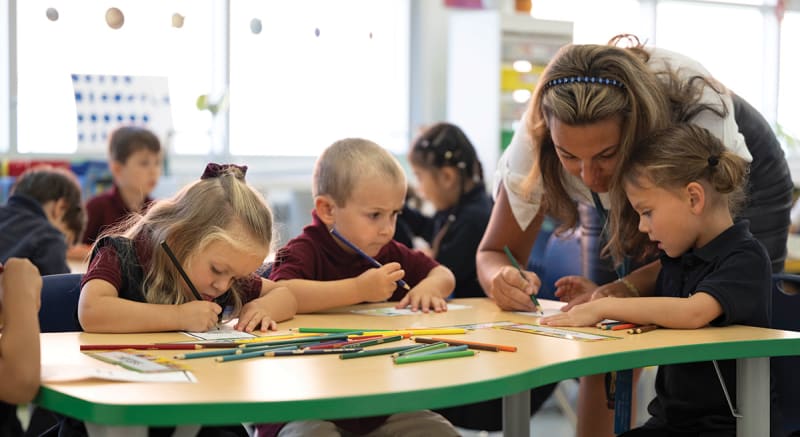
At the Pre-Primary and PreSchool level (Foundation Years), school is play-based, allowing students to learn through activities like Jolly Phonics, math connections in science and art, and outdoor play.
When we visited Armbrae, we were shown the Pre-Primary and PreSchool schedule. At the time, it was Asian Heritage Month, so many activities were specifically tied to that theme. On the day in question, specific activities included a ‘hello song’ in different languages, which was part of the morning Meeting and Discussion, an Asian heritage lesson for social studies and culture during the Afternoon Learning Circle, and exploring and understanding the Notan, which is a concept of light and dark.
These students also often visit the Primary class, which helps them feel more connected to the other levels, unlike other preschools, which tend to be separate from elementary level schools.
“Preschool is unique in that they’re included and integrated into the school,” says Cornick. “They’re always getting the exposure, the curriculum and the classroom… so when they do come to Primary, it’s just a smooth transition.”
In the Lower School, students start following the Nova Scotia curriculum, with 50-minute periods like math, science and language arts, as well as specialist classes like music, art, and library.
The Middle and Upper Schools continue without the specialist split, with each level designed to prepare students for their next steps, whether that’s the next grade or post-secondary studies.
The Upper School starts with Grade 9, and these students follow a structure that’s a bit different from their other Upper School counterparts. The year is, however, designed to prepare students for their last three years. Grade 9 students take eight courses: Citizenship, English Language Arts, French, Leadership, Math, Physical and Health Education, Science and an elective of either Visual Arts or Drama. The visual arts and drama courses are at the Grade 10 level, but are taken in Grade 9.
Once a student reaches Grade 10, classes are more geared toward meeting requirements for their diploma. Key Nova Scotia graduation requirements include: three language arts credits at each level; a fine arts credit; three math credits at each level; two science credits; one other math, science or technology credit; one physical education course; one global studies course; and a Canadian content course. There are also numerous electives.
Additionally, Armbrae has Armbrae-only requirements for graduation. These include completing a Leadership course in Grade 9; Career Education courses in Grades 10, 11 and 12; maintaining a required course load over the duration of their upper-level years; fulfilling all of their CAS requirements (creativity, action-oriented pursuits, and service to others) each year; and following the school’s Honour Code.
Advanced Placement (AP)
In addition to these standards, Armbrae offers students a chance to challenge themselves with Advanced Placement (AP) courses. AP courses prepare students for the academic rigour of university by developing essential skills like time management and critical thinking. AP courses are equivalent to first-year university courses, and students can earn university credits in high school by successfully completing AP courses. These benefits are particularly appealing to students aiming to enter more competitive post-secondary programs. If a student is a high-level athlete, they may want to take AP courses to earn university credits ahead of time. With AP credits in hand, a varsity athlete can take fewer courses at the university level to make sure they can meet both their academic and athletic commitments.
“I think it is part of building resilience,” says Maki. Using the world history course as an example, Maki says Armbrae offers both an AP and an Academic version. “Students who want that enriched experience can take the AP version of the course, while students who just want to take the standard level class to fulfill graduate requirements can do that too,” he says.
Additional Learning Opportunities
Outside the classroom. Armbrae students can hone their academic skills beyond the traditional classroom setting. On any given day, students can be away at camp, on a field trip or heading to the beach on the Northwest Arm. Each experience is designed to expand their understanding of a certain science, history, or arts topic, but also to intentionally reinforce “future-ready skills” like adaptability, communication, collaboration, and problem-solving.
Armbrae Everywhere (AE). Armbrae Everywhere is a series of made-in-Armbrae online courses designed to allow students to take bespoke courses that address their interests, but may not be offered in person. Built on the Brightspace™ LMS (learning management system) platform, AE courses also allow students to move through the curriculum at their own pace. Students can work on their AE courses in any setting they prefer. However, during the school year, students are actually scheduled into a classroom for their AE classes. In addition, an Armbrae teacher is assigned to each course so that students have someone to coach them through the course and someone they can discuss their progress with.
Summer Academy. Armbrae’s Summer Academy is fully online and offers students an opportunity to improve their grades or take courses they couldn’t fit into their schedule during the regular school year. These students also take AE courses built on the Brightspace platform, allowing them to travel, spend time with family, or have a summer job— all while earning a high school credit.
Armbrae is known for its strong mathematics program, and math courses are particularly popular at Summer Academy. This is because the standards for being eligible for certain math courses are quite high. “Taking a Summer Academy course is a great option for a student who doesn’t make the cutoff for our advanced math pathway,” says Ally Read. “Or, if they are a student who may be transferring in from a school that doesn’t have a rigorous math program, they have an opportunity to bridge the gap with a Summer Academy course.” While it has the Armbrae name, Summer Academy is offered to both non-Armbrae and Armbrae students.
The Library. While it’s not part of an academic program, per se, the library is becoming more integrated into students’ lives and their studies at Armbrae. At the helm of the library is English teacher and author Ryan Shaw, who teaches classes to students in PreSchool through Grade 6 and works on skills such as research with older students. Shaw has reached out to community organizations like the Writers Federation of Nova Scotia to bring writers into the school and has started reading competitions for the Middle and Upper Schools.
“It’s about getting good books into kids’ hands at all times. There’s a strong reading culture here, so I’m just trying to stoke that fire here at the library,” says Shaw.
Technology
Armbrae Everywhere and Summer Academy illustrate Armbrae’s commitment to ensuring education is accessible. The industry-leading Brightspace platform is an easy-to-use interface for both teachers and students. Teachers can leverage its powerful features to create and deliver first-class content, and its mobile accessibility promotes student learning anytime and anywhere.
“We wanted to learn to use a tool that was transferable to university, so the kids would be accustomed to this learning management tool,” says Director of Annual Giving and Special Events, Suzanne Morrison.
Since Brightspace is already integrated into everyday learning, Armbrae is using it to enhance its course offerings with Armbrae Everywhere. Select courses can be added to the Brightspace platform and can be done entirely online.
“It’s the asynchronous model, where the work is all online, and then they work through it, and then they have a teacher giving them feedback,” says Read.
Armbrae has a 1:1 computing policy, allowing students to access laptops and tablets for class and note-taking purposes. Students from Primary to Grade 4 have access to school-owned iPads and Chromebooks, while students in Grades 5 and above are required to bring their own devices.
Finally, Armbrae is proud to partner with Yondr to create a smart device-free learning environment. By policy, smart devices are not permitted in Foundation Years or Lower School. In Middle and Upper School, students are given a personal Yondr pouch to hold their devices—smartphones, Air Pods, smartwatches, etc.—throughout the academic day. Students lock their devices in the pouch during morning homeroom and can keep the pouch with them, though they won’t be able to access their devices. Pouches are unlocked at the end of the day in homeroom or at designated unlocking stations.
Career and university guidance
Leading students into life after Armbrae is Michael Maki, Director of Career and University Guidance. He works closely with each student, taking a one-on-one approach to ensure they are well prepared for their next step—an advantage of being part of a small school.
“There’s so much support,” says a Grade 12 student. “He’s been introducing us to books with questions, and he’s been kind of going through it all with us, like our packing lists and what we need to take and even the little things that don’t come across, like roommates and some of the changes you’ll have to make. He’s so available; he’ll stay after school for you. I can’t thank him enough for everything.”
Maki, who joined the school in 2023, wants to make sure that Armbrae’s students see how much potential they have. In 2025, students were accepted to post-secondary institutions in nine different countries, including Canada, Ireland, Italy, and Germany. It’s showing students that their university choices aren’t limited by where they grew up or what school they graduated from. Their plans post-Armbrae can be whatever they want them to be.
Armbrae takes students on university trips, both in Halifax and to other provinces. In addition, Armbrae hosts a number of career and university fairs on campus. The career fairs and job shadow opportunities give students access to professionals from a wide range of occupations in order to see what might be of interest to them. The university fairs allow students to speak to representatives from the best universities in Canada and around the globe—without leaving campus. “I meet the students where they’re at,” says Maki. “The hashtag that I always use with the students is my job is to help you with (hashtag) life after Armbrae. I don’t say college. I don’t say university. As an independent school, the primary goal is to be a university prep school; that is the primary output, but that does not mean if a student doesn’t have that as an ambition, that I’m no less able to assist or promote or provide them opportunities.”
For the job shadowing initiative, students have to do a lot of the work themselves, such as finding their own placement, doing a formal interview, writing a reflection and taking pictures to show what they did throughout the day. This is a crucial part of their Career Education class, and they are “held accountable for that time,” says Maki.
He also says that providing students with chances to see how a job is done, or what actually happens in a professional’s day, is important as well. This is why he encourages them to do a job shadow, as expectations don’t always reflect reality.
“It’s about breaking down those misconceptions or stereotypes, and giving the students real-life, practical experience to be able to explore. There is no better way to discover if you like water than by putting both feet in. You’re only going to know if you get your feet wet,” says Maki.
Co-curriculars
Arts and athletics
Armbrae is dedicated to giving students access to programs in athletics, the arts, and beyond. Sports include basketball, field hockey, flag football, volleyball, track and field, and rowing. Recently, their 2024/2025 boys’ senior basketball team was “Triple Crown winners”—CAIS National Champions, City Regional Champions and Provincial Champions. Expanding competition beyond Halifax is important to the school.
“We always want to challenge our students and help them strive for excellence in both academics and sports,” says Athletic Director and Social Studies Teacher Ben Ur. “This is a really wonderful way of doing that and exposing them to different parts of the country (provincial/national tournaments) as well, and especially for the older kids, having university coaches see them.”
When we spoke to Ur during his interview in the spring of 2025, he already had five trips planned for teams for the upcoming year.
There are three levels of sports that students can take part in at Armbrae: Junior age competitive teams for Grades 6-9 (U13, U14, U16); Senior competitive teams for Grades 9-12 (U16, Tier 2, Varsity); and Club teams. Club teams include, but aren’t limited to: Junior Futsal Soccer Club, Junior Ultimate Frisbee Club, Junior Tennis Club, Rowing Club (Grades 8-12), Senior Curling Club and Pickleball Club. Club programs don’t feature competitive play outside of the school.
The Creativity, Action, Service (CAS) Programme
Along with athletic clubs and sports opportunities, a core part of the Armbrae co-curricular programming is the CAS Programme, short for Creativity, Action, Service. This school-wide initiative gives students a chance to try out different activities from six categories: academic, arts and society, athletics, leadership, recreational and service. Depending on their grade level, students need to complete a certain number of these by the end of the year, and there are clear guidelines for tracking student involvement.
“Sometimes you don’t have the motivation to go out and pursue a bunch of different things, and so actually having that system in place gets people doing more things,” says a Grade 11 student. “Honestly, I never thought I’d try debate. I was a little scared of what it entailed because I am a very opinionated person. I was kind of scared that I would get too emotionally invested in it, but it was offered through the CAS Programme and was something that a lot of people were doing and seemed to be engaged with. So I gave it a try and fell in love.”
These activities are divided by their time commitment, with the smaller ones (Mini Activities) mostly being in-school and covering a period of eight weeks. Major Activities and Minor Activities can require a greater time commitment. These activities can include Band, Chemistry Club, Debate Club, Board Game Club, First Aid, Peer Tutors, Chess Club, Yearbook, and Run Club.
Community
The overarching goal of the co-curricular program is to get students thinking beyond themselves and how they might fit into the wider world.
“In the Middle School, for example, our objectives are twofold: we want them to learn how they learn, and we want them to try all kinds of different things. When they get to the Upper School, they have skills, experience and ideas about what to begin specializing in. At that point, we hope they’re engaging in activities and experiences beyond Armbrae, so they can start to understand how the world works,” says Sajatovich.
“It’s really important for strengthening our community,” Sajatovich continues. “We’ve really tried to expand the program, and we’re still working on it. But one small example that comes to mind is our morning crew. The morning crew consists of two students who help during drop-off every morning. We have young Grade 6 students, and we’re asking them to approach each car to assist the younger students in exiting, so the parents don’t have to get out. We’re hoping the students will build relationships with these younger students and their parents. Another example is our Book Buddies program, where Upper School students read with younger students as Book Buddies in an after-school program. So, the Upper School students are getting to establish relationships with the Lower School students and vice versa. It’s a powerful dynamic that exists within our community.”
The spirit of collaboration and teamwork was something we saw in action during our visit. The younger grades were practising for their spring play (both Upper and Lower School have seasonal plays). Nearby was a group of older students in discussion with staff and teachers. Students are also encouraged to be creative and start their own activities and clubs. “They’re so supportive, all of the staff and teachers,” one Grade 12 student told us. “If you bring up an idea and you’re passionate about it, I don’t think you’ll ever be told ‘no.’ They’ll work out the logistics with you, and they’ll make it happen.”
Finally, the Duke of Edinburgh’s Award (DofE) bridges both the co-curricular and academic program, offering students a unique chance to learn outside of the classroom through a variety of activities related to community service, skill development, physical recreation and the “adventurous journey.” At Armbrae, physical education students complete the program’s bronze award, while any Grade 10 to 12 student can participate at a different level (bronze, silver and gold) through their co-curricular activities.
Osprey Camps
Armbrae also offers numerous day camps, known as Osprey Camps, during break times throughout the year—PD days, December, March, and summer breaks. The camps, which do cost a fee, are separated into three categories: Little Ospreys (Grades PreSchool to Primary), Junior Ospreys (Grades 1 to 3), and Osprey Discovery Camps (Grades 4 to 6).
“Enrollment in camps is intentionally kept small to ensure we’re able to provide a customized experience for the campers,” says Matthews-Duffett. “The camp culture is similar to our school culture. Keeping things small and emphasizing that personalized/community feeling.” The camp themes vary, but have included topics and days centred around LEGO, STEM, volcanoes, art, basketball, sportball, and dinosaurs. There are also times during the day when students can play freely outside and have quiet reading time.
Getting in
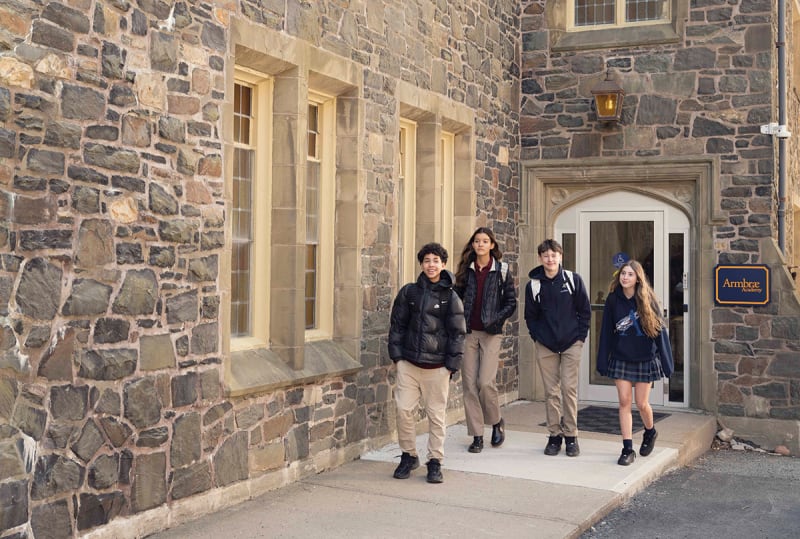
As with any private or independent school, Armbrae has an application process which starts with an online application. Along with general information, applications must include report cards, transcripts (high school), and a confidential teacher reference. Additionally, if a student is applying whose first language isn’t English, they must provide proof of English proficiency, both written and spoken. Students with learning differences must also provide documentation as part of the admission process.
Once all the paperwork is in, it’s time for the formal assessment. Depending on the grade level, the assessment varies: For Preschool, Pre-Primary, and Primary, it’s a readiness assessment, whereas for Grades 1 to 12, there is a formal interview and academic testing. Additionally, for those in Grades 10 to 12, there is guidance counselling.
Once the interview is complete, the Admissions Team will review the entire package and consider all factors when making their decision. Occasionally, offers can’t be made due to available spaces. In those instances, the candidate is placed on a waitlist.
While it’s not a requirement, interested students are encouraged to tour the school or consider participating in the Spend-a-Day program to determine if Armbrae is a good fit. “We were walking in, and it was pouring rain,” says one Armbrae parent about their tour day. “We had our little five-year-old trailing behind us, and we walked outside, and some guy in a pickup truck drove up, rolled down his window and said, ‘Are you considering Armbrae?’ and we said ‘yes,’ and he said ‘best decision ever’ and drove off. It was the best endorsement, the best drive-by endorsement.”
Affording Armbrae
As Clarke mentioned, Armbrae is working on diversifying its student population. Part of that mission is to make sure Armbrae is financially accessible to students who will benefit from the school experience. As such, Armbrae has a variety of payment plans in place. Qualifying families may also have access to tuition assistance, which is assessed by a third party, Apple Financial. Finally, there are limited scholarships and bursaries available, supported by Armbrae’s endowment fund.
Takeaways
Armbrae is a place where students are nurtured and challenged, given the opportunities and support they need to be successful. What sets Armbrae apart is more than the sum of its offerings. It’s more than a place to learn about history, experiment in science, tackle math problems or perfect the art of essay writing. It’s more than its language education, athletics opportunities, and co-curricular offerings. It feels like home. When you walk in the door, you’ll feel welcome and safe. This feeling of warmth is appreciated by its students, parents, caregivers and staff alike. It’s also something we immediately noticed on our visit.
“I think we take for granted, at times, how wonderful our teachers and our staff are,” says Ur. “It impacts the students and families, and it creates a sense of wanting to help each other. Whether it’s volunteering or showing school spirit. With athletic events, for example, I’ll have a group of students who help, and parents will be there to support them. It happens for other events, like our musicals, plays, and art exhibits. It just goes a long way in fostering this sense of belonging.”
Despite being founded almost 140 years ago, Armbrae Academy doesn’t feel old. Yes, it has maintained that sense of tradition, but it’s also modernized in many ways. It has changed and adapted as the world has changed, often proactively. This forward-looking approach is an important part of the Armbrae culture.
One parent says they appreciate the non-transactional culture of Armbrae, evident even during their tour of the school. “At Armbrae, the kids are going to be educated. That’s a given,” the parent explains. “What we like is that they are really good citizens, and if they achieve what Armbrae wants them to achieve, they will make an impact on the world. So when we were deciding where to send our child, it was a no-brainer”.
The same parent emphasized the importance of being involved.“I’m now on the board at Armbrae, and you can’t do that in the public school system,” says the parent. “The school is proactively trying to get parents involved in different ways, like the after-school programs, volunteering at events or on committees, and even presenting to certain classes. It’s about what skills you have and how you add value to the kids’ future. That’s very different.”
While Armbrae does have a sense of structure in its classes and co-curricular activities, it’s unique in that it allows its students to carve their own path, to flourish and have their own impact on the school and the wider world. This could happen by launching a new club, a lunch-time activity or something else entirely.
A powerful sense of “once an Armbrae student, always an Armbrae student” permeates the campuses, evidenced by the many parents and staff who are also alumni. This is more than a school; it is a community that remains integral to its students’ entire lives. As one Grade 11 student affirmed, whatever Armbrae is, it is something that is “uniquely Armbrae.” The School’s enduring mission, however, is clear: its motto, Be Kind, Work Hard, is the north star that underpins everything they do.