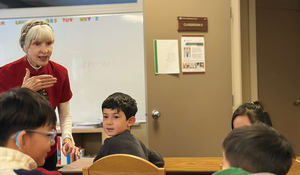
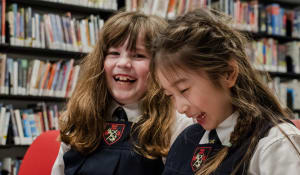
Students are more confident and teachers more relaxed, making for a less stressful environment.
How do small class sizes benefit younger learners?
Particularly for younger students, class sizes with fewer than 17 children can significantly enhance development, especially in foundational subjects like reading and mathematics. A lower student-to-teacher ratio also helps draw young children out of their shells, fostering self-confidence and social skills.
Is individualized attention only beneficial for younger students?
Most research studies focus on the early years, but individualized attention remains an advantage at every level. With fewer students per class, teachers can cater to different learning styles, provide more one-on-one time, and address questions and challenges more effectively.
Why doesn’t a one-size-fits-all approach work in larger classes?
No two children learn the same way. In larger classrooms, it becomes difficult to reach every student effectively. In contrast, smaller classes allow for more personalized teaching. Teachers get to know each child’s unique needs, learning preferences, and pace, enabling them to tailor lessons accordingly.
What kind of transformation can small classes inspire?
To see the power of small class sizes in action, consider Robert, a Grade 12 student at Tapply Binet College (TBC) in Ancaster, Ontario.
At his previous school, Robert struggled with ADD and disengaged from learning. He wasn’t enrolled in university-level courses, rarely attended class, and carried an average in the 60s. But once he transferred to TBC—where classes range from one to six students—everything changed.
With the help of small classes, he now earns grades in the 90s and is set to attend the psychology co-op program at Guelph University.
How do small classes support struggling students?
Teachers in small classrooms can identify learning challenges like ADD earlier and provide timely support. For Robert, the shift to a more intimate, attentive environment was pivotal. With stronger teacher-student relationships and regular feedback, he gained confidence and discovered his academic potential.
What is the classroom environment like in small schools?
Smaller classes foster a welcoming atmosphere. Students build stronger friendships and feel part of a close-knit community. Teachers, too, are more at ease, contributing to a low-stress, collaborative learning space where students feel supported and empowered.
As Robert puts it, "It’s weird, every day I want to go to school. At Tapply, I think, ‘I can do this, I am able, I have the potential to succeed.’"