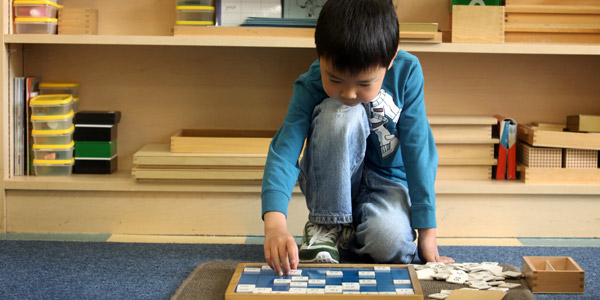
Neuroeducation will play a key role in the future of education, with curricula based not just on teaching subjects but on preparing brains for learning. YVONNE BERG/OUR KIDS MEDIA
Neuroscience is coming to the classroom. Or more accurately, our understanding of how a brain develops will change the way we teach, parent, and help our kids to grow and develop. In education, this can be seen in preschools (such as Montessori, Waldorf, and Reggio Emilia), gifted programs, special needs schools, and language immersion programs.
Over the last decade, our ability to study how the brain works has dramatically improved. Now, the research done by neuroscientists is coming out of the lab and into the classroom.
Here are five ways that education will be changed because of what we've learned about a child's brain:
1. We'll Start to Hear a Lot About "Neuroeducation"
In the future, we'll hear a lot about neuroeducation, and we can expect to see curricula based not just on teaching subjects, but on preparing brains for learning. If you think of the brain as a tree with branches, neuroeducation is the process of adding more branches. If the brain has more branches, a child can learn faster, remember more, and have an improved IQ. Neuroscience has shown us that it's possible to change the "wiring" of the brain (or to add more branches). This "rewiring" is based on something called neuroplasticity and we'll hear a lot more about it in the years ahead.
2. Changing the Way Kids Study
Our understanding of the brain is leading to remarkable insights into how memories are formed and how we access those memories. These insights are leading to new approaches to helping kids to study and learn. We'll expect to see new insights into helping your kids with their study plans. For example, it turns out that repetition is important but that the brain responds to a "spacing effect." The spacing effect is the finding that when you space learning episodes farther apart in time, you'll remember more information later on than if you mass the learning into one study episode, according to Nicholas Cepeda, associate professor of psychology at York University. Understanding how the brain is "wired" and how memories work will give us new hints on how to help our kids study and remember.
3. Music, Language, and the Mind
One of the most pronounced findings of neuroscience is the impact of learning music on cognitive function. The idea became popular when it was called the "Mozart Effect"—but it turns out that listening to music isn't enough. Neuroscience has shown that learning to play an instrument or learning about notes, rhythm, and song can have a dramatic impact on how the brain develops. But the breakthrough is in understanding why this happens: that the brain can create new connections through things like music, and the impact of those connections is increased IQ, memory, and attention. So expect to hear a lot of support for music programs in schools over the coming years!
4. The Bilingual Advantage
Similar to music, learning a second language has a direct impact on how the brain develops and grows. And the impact can be unexpected: a child who has learned English and French will perform better than a child who grew up learning English only—in English!
5. The Parenting Advantage
What a child does in school goes hand-in-hand with what happens in the home. The advantages on the brain of a great school program, for example, are only fully realized when parents play a role in their child's development. Some of the findings of neuroscience are common sense. Diet and exercise help the brain, for example. But some of them are less obvious: how you reward and encourage a child only works to improve the brain if it's done a specific way, for example.