
The truth about private schools: regulation and credit mills
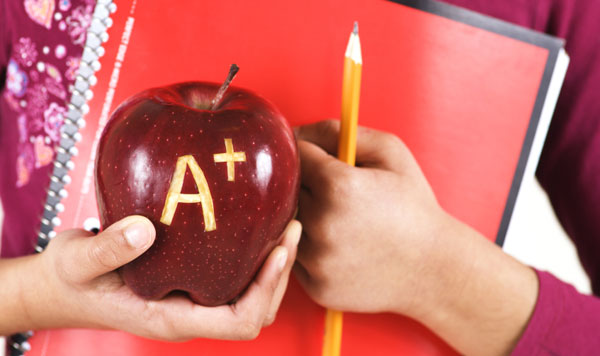
The deadline looms. The marks are not impressive. The pressure mounts. What do you do?

The deadline looms. The marks are not impressive. The pressure mounts. What do you do?
For students under intense pressure to qualify for university, “credit mills” — rogue private schools that allegedly inflate grades and award high school credits for a fee — have become a concerning phenomenon in Ontario, according to a joint Toronto Star / Ryerson investigative series. Critics argue these operations unfairly shift university spots and scholarships away from deserving students.
“There are kids who would be failing but are instead getting 80s in these schools,” says George Benedek, recently retired principal of Stephen Leacock Collegiate Institute in Toronto. “They get scholarships based on inflated documents, then flunk out because they weren’t ready. It undermines the integrity of education.”
Provincial inspection reports obtained by the Star revealed troubling practices: grades raised at parents’ requests, credits awarded despite minimal attendance, removal of difficult exam questions, courses taken without prerequisites, limited supervision, and unmonitored internet use during exams.
Operators defended the practices, attributing higher outcomes to smaller class sizes and personalized attention.
Educators and industry voices call for stronger oversight of the private school sector in Ontario. Meanwhile, families must do their homework when evaluating prospective schools.
The Toronto School Administrators Association has raised these concerns with provincial officials, but according to the Star, little substantive action has been taken. Since 2009, the ministry has received 30 complaints of inflated grades—information obtained via access-to-information requests.
With support from education experts and private school leaders, Our Kids Media presents the facts and offers guidance in navigating the private school landscape amid these concerns.
Ontario has over 358 private schools authorized to grant high school credits. The province assigns just 28 inspectors to visit those schools every two years. Since 2006, eight private high schools have had their licenses revoked—but some have reopened under new names. In one case, a former operator now runs an adult career college.
George Briggs, former executive director of the Conference of Independent Schools (CIS), criticizes lax regulation: “Anyone can start a school with just a Notice of Intention submitted to the Ministry,” he says. “Parents should favour schools that belong to credible associations.”
The Ministry does not inspect private elementary schools or private secondary schools that do not issue credits toward the Ontario Secondary School Diploma (OSSD). Only private schools offering OSSD credits are subject to inspection—and even then, only their standard of instruction is reviewed. Check a school's status via the ministry
Across Canada, many independent schools operate outside direct government curriculum mandates—unless they receive public funding. Still, many private schools choose to meet or exceed provincial standards, says Michael Zwaagstra, co‑author of What’s Wrong with Our Schools and How We Can Fix Them.
“Students at private schools often perform well on standardized measures,” Zwaagstra notes. Schools included in public rankings frequently score highly on Fraser Institute report cards. See our Fraser Institute coverage
Many reputable schools maintain internal accountability measures. But parents should verify whether schools belong to recognized associations like the Ontario Federation of Independent Schools (OFIS), CAIS, or the CIS, which impose standards on governance and operations.
Independent schools that issue OSSD credits—including all OFIS member schools—are subject to ministry inspections. As OFIS Executive Director Barbara Bierman puts it, “They are more regulated than their public counterparts, which often receive no external inspection.” All schools must stay responsive to tuition‑paying families who can “vote with their feet” if quality falters.
Because education is provincially regulated, accountability varies across Canada. In British Columbia, private schools meeting certain criteria receive government oversight and regular inspections. Peter Froese, executive director of the Federation of Independent School Associations, emphasizes controls in governance, policy, and student welfare.
Inspection reports show that some operators use outdated curriculum, lack proper assessment strategies, and teach without clear lesson plans. In Ontario, private school teachers are not required to be certified by the Ontario College of Teachers (OCT). Teachers certified under OCT are listed at www.oct.ca. In contrast, private schools under governmental funding often must hire certified teachers, notes Zwaagstra. Private school teachers often receive training comparable to public school standards.
Qualifications vary widely: in some systems, teacher certification is optional unless mandated by the school’s association. Among OFIS schools, 97% of teachers are OCT‑registered or hold equivalent credentials, says Briggs.
Credit mills typically offer minimal instruction, lax oversight, and inflated grading in exchange for payment to quickly boost transcripts. Families should not conflate these with serious private schools offering strong academics from early years. Many parents choose private education for reasons beyond grade boosting—such as culture, values, and specialized programming.
The Fraser Institute reports that Ontario parents cite dissatisfaction with public schools (94%), teacher commitment (91%), academic quality (80%), and campus safety (84%) as top reasons for choosing private schools. Though the survey focuses on Ontario, similar motives exist across Canada.
“Parents today are savvy,” says CAIS Executive Director Anne‑Marie Kee. “They want schools that support student growth, not inflated marks. Authentic learning matters more than quick fixes.” The study also notes that many private school enrollees emphasize motivations like religious values, small class sizes, individualized teaching, and accountability.
The Ontario Ministry of Education offers a consumer tips guide. Parents should ask whether a school:


What does “individualized education” actually look like?
Building a strategic academic pathway from the early years

At Hudson College, learning to write is a developmental journey that shapes how students think, communicate, understand, and interact with the world around them.

A program designed for young boys

How Mindful Career helps students build a roadmap for the future
Small class sizes, inquiry-driven learning, and a focus on well-being have created an environment that nurtures confident and curious learners
Online private high schools
Online secondary schools and classes (June 10, 2026)
Online private elementary schools
Elementary school courses and grade schools online (June 10, 2026)
Aurora Montessori schools
Find Montessori schools in Aurora listed below. (May 1, 2026)
Montessori schools in Burlington-Hamilton
Find the top Montessori schools in Burlington-Hamilton (May 1, 2026)
Designing education around the student
What does “individualized education” actually look like? (April 28, 2026)


|

|

|

|

|

|

|

|
 |
 |
 |
 |
 |
By logging in or creating an account, you agree to Our Kids' Terms and Conditions. Information presented on this page may be paid advertising provided by the advertisers [schools/camps/programs] and is not warranted or guaranteed by OurKids.net or its associated websites. By using this website, creating or logging into an Our Kids account, you agree to Our Kids' Terms and Conditions. Please also see our Privacy Policy. Our Kids ™ © 2023 All rights reserved.