Walden International School THE OUR KIDS REVIEW
The 50-page review of Walden International School, published as a book (in print and online), is part of our series of in-depth accounts of Canada's leading private schools. Insights were garnered by OUR KIDS editor visiting the school and interviewing students, parents, faculty and administrators.
Introduction
The phrase above the front entrance of Walden International School, “Making Good People,” is the clearest shorthand for the school’s educational philosophy, and it appears repeatedly in the way teachers, administrators, students, and parents describe the school. The phrase is tied to specific routines, such as morning meetings and self-regulation charts, as well as educational values, such as inquiry-based learning, cultivating student voice, self-awareness, responsibility, and respect.
Walden’s identity is shaped by the International Baccalaureate (IB) framework, which the school connects closely to its educational philosophy. “Everything in our programming is centred around making good people,” says Daphne Perugini, Head of School. “What makes that easier is the Learner Profile Attributes, which are part of the IB Programme.” The language of inquiry, agency, reflection, and the learner profile appears in practices ranging from young students naming their feelings to older students debating current events.
In the Senior Kindergarten room, students use photographs of themselves to identify learner-profile attributes and to place themselves on a self-regulation chart. “The goal is to help children arrive in the zone defined by calmness, focus, and being ready to learn,” says Denise McIntosh, Senior Kindergarten teacher. These classroom practices are part of the overarching effort of connecting emotional self-awareness and academic growth.
That connection is the key to understanding the school. Walden International School is a coeducational day school in Oakville, serving students from Junior Kindergarten through Grade 8 and currently enrolling about 250 students. The Walden name dates to 2016, when the first school was established in Brampton; the Perugini family purchased the site in 2018 and established the Oakville campus.
The school teaches the Ontario curriculum through a progressive IB framework, but its distinctiveness lies in the way the parts of its approach reinforce one another. Inquiry is meant to build independence; independence is accompanied by reflection; and reflection is connected to how a student treats other people. Academics, relationships, wellness, arts, athletics, service, and outdoor education are presented as different settings in which a child learns to participate responsibly.
The grey-and-blue interior is orderly. Classrooms carry the personal stamp of their teachers, but the more consequential feature is relational scale. Teachers describe classes small enough to notice a quiet child, to recognize a change in a student’s morning greeting, and to make time before school for a student who needs help.
The significance of the phrase painted above the entrance becomes clear in how deliberately the school works to make it real. A Grade 1 teacher might ask whether a particular word is kind; another teacher might discuss his dyslexia and invite students to catch his spelling errors; a physical education teacher might attend a music performance; and a class might turn questions about building structures into an investigation of materials, design, history, and human needs. These moments matter precisely because real education is not a seamless process. Some of its most valuable experiences begin with a pause to notice a word, name a difficulty, show up for someone else, or follow a question further than expected. Walden’s values become credible in the attention it brings to those moments and the way it turns them into practice.
The result is a particular kind of elementary and middle-years education. Walden is academically purposeful, but it does not equate rigour with early specialization, constant testing, or a teacher controlling every route to an answer. It asks students to become articulate about what they are learning, why it matters, how they know, and what they might do with that knowledge. The model will appeal most to families who see education as preparation for agency and community life, and who are comfortable with classrooms that may look active, conversational, and open-ended while remaining structured around clear goals.
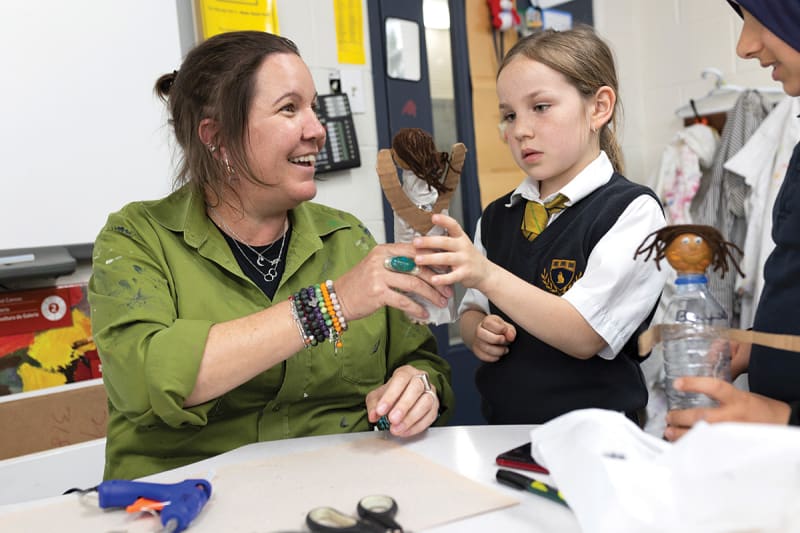
Key words for Walden International School: Inquiry. Character. Belonging.
Background
Perugini describes Walden as having begun “as a solution to a problem.” Its origin was dissatisfaction with school models that felt overly traditional and, in her view, too willing to separate academic success from the formation of the person doing the succeeding. A former student’s frustration helped crystallize the idea while Perugini was a vice-principal in public education. The school that emerged was intended to preserve childhood, invite student participation, and challenge some of the hierarchical assumptions associated with both conventional schooling and private education.
The site was home to another school before Walden opened. Some staff members worked at the predecessor school and remained through the transition. McIntosh, who has taught on the campus for 19 years, describes adopting the IB framework as a meaningful change in her own teaching. She learned to step back from the centre of the lesson, make more room for student questions, and ask even Senior Kindergarten children to offer opinions and make connections. Karen Langill, the office manager who also works in admissions, offers another perspective on the transition. From the outset, this continuity gave Walden established relationships and experienced teachers alongside a more explicit commitment to inquiry, student-centred learning, balance, and character.
Annelieke Hogenbirk, a Grade 1 homeroom teacher, credits an early IB coordinator with helping establish the program at Walden. Today, Primary Years Programme coordinator Kristin Fowlin works with teachers from JK to Grade 5 to map the Ontario curriculum through the IB framework. For prospective families, the distinction is important. Provincial learning expectations remain in place, while the IB framework shapes how subjects are connected, how inquiry is organized, and how students demonstrate their understanding. “We ask a lot of questions,” Hogenbirk says. “We let kids figure out a lot of stuff on their own. We have units of inquiry that are guided by lines of inquiry.”
As its name suggests, the school has a broad international orientation. Its global outlook is expressed mainly through habits of mind and subject matter: considering multiple perspectives, discussing current events, studying international sustainability goals, and connecting local action to wider issues. Students might research habitat loss, debate a public question, negotiate historical perspectives in a Seven Years’ War simulation, or write about a Canadian event from the viewpoint of people whose actions they initially find difficult to understand. “The IB Programme helps create students who are independent thinkers, who are critical thinkers,” Perugini says, “who are able to look at either a local or an international global problem and think of different ways to explore solutions.”
The IB framework also supplies Walden with a shared vocabulary. The learner profile attributes - including being caring, principled, open-minded, reflective, and communicative - recur across grades and subjects. Fowlin says the aim is to develop students who can work with others, including people whose ideas or styles they might not naturally choose. Teachers refer to these attributes in classroom praise, discussions, assemblies, self-assessment, and conflict repair. The vocabulary is stable; what it looks like changes as children mature.
That continuity helps give the school coherence across a JK-to-Grade-8 span. Younger students begin by naming feelings, recognizing kindness, and asking questions. Older students take on research, leadership, public presentation, service, and more complex discussion. The movement is developmental rather than abrupt. Christopher, a Grade 8 student, explains that the PYP Exhibition gives younger students a first significant step before the later Community Project: “That helps us build confidence.” The school’s background, then, is not only its founding story. It is the continuing effort to turn a dissatisfaction with old models into a sequence of experiences that increases a student’s responsibility year by year.
Culture and values
Head of School Daphne Perugini places character development at the centre of Walden’s vision, arguing that academic achievement gains meaning through the person a student becomes. “Being academically successful is important,” Perugini says, “but the absence of being a good person, really, makes all the other things unimportant.”
Character education is part of all grade levels. In the early years, teachers use language around kindness, honesty, emotional awareness, and repair. Senior Kindergarten students learn to recognize emotional states through Zones of Regulation and daily greetings, which allow the teacher to quickly notice when something is off.
Walden’s IB learner profile provides much of the vocabulary for this work. “Children start using the language themselves,” says McIntosh. “They notice when a classmate returns a lost paper or shows care toward another student.” In that sense, the learner profile functions like a shared moral and intellectual language, rather than simply a poster on the wall.
The distinction matters because “Making Good People” could otherwise remain an agreeable but untestable slogan. At Walden, teachers repeatedly translate it into questions and behaviours. Hogenbirk begins the day with a community meeting and sometimes poses a social scenario: what would a student do if someone had not told the truth? She returns to the school’s phrase when a real situation occurs. “Is that what you’re doing right now? Is that making you a better you? Are your words kind? Are they hurting somebody’s feelings?” The aim is less to attach a label to a child than to help the child evaluate an action.
Perugini describes reflection in similarly practical terms: “For every action there’s a reflection so that you can make a better choice next time.” That language makes room for standards and consequences without treating a mistake as the final word on a student’s character. Heidi Corley, a Grade 4 teacher, asks, “How do we fix it?” after something has gone wrong. The question assumes both accountability and the possibility of repair.
Respect is Corley’s central classroom word. “We respect each other, we respect the other classes, we respect the world around us, and we care for them,” she says. Students often express the same idea in their own words, such as “Everyone is a friend; people do not use mean words.” The simplicity of these words should not be confused with shallowness. In the younger grades, moral understanding grows through repetition, example, and a vocabulary children can actually use. In older grades, the same habits are tested through disagreement, collaborative work, leadership, and encounters with complex public issues.
Some of the strongest evidence is deliberately ordinary. Langill talks about reminding students to say please and thank you and to hold a door for the person behind them. She also recalls a child who found $20 outside and brought it to the office, worried that the person who lost it might need it. Monthly learner-profile attributes and student recognition provide public reinforcement, but teachers also praise conduct in the moment: returning a paper, helping a peer, offering a principled answer, or communicating knowledge clearly.
The school’s relational culture includes adult vulnerability. Rory McCorquodale, a Grade 5 teacher, tells students that he has dyslexia, will sometimes spell a word incorrectly, and may need their help correcting it. That admission shifts the meaning of error. It shows that expertise is compatible with imperfection and that asking for help is not a loss of authority. It also creates a concrete opportunity for students to respond with tact rather than ridicule. McCorquodale calls honesty and compassion among the most important things he can model.
The arts offer a parallel lesson. Teela Comeau, the performing arts and music teacher, tells students at the outset that music, dance, and acting require vulnerability. Students arrive with different levels of experience, and the class is not to judge where someone begins. Once that expectation is established, Comeau says, students respond by helping one another with a chord shape or a hand position “without being judgmental.” The moral lesson is embedded in the work: a student must risk being seen, and classmates must learn how to support that risk.
Student voice is another cultural commitment, though Walden does not define voice as getting one’s way. “They have an equal voice, or they play an equal role in their education,” Perugini says. “Equal” here describes human worth and participation, not an absence of adult responsibility. Students are expected to listen, explain, reflect, and accept consequences. Perugini emphasizes that “communication is not just about talking, it’s about listening.” The school’s stated preference for face-to-face conversation means that conflicts are approached as relational problems, not merely rule violations.
Students see that agency in concrete terms. Pavika, a Grade 6 student, says Walden teaches students that “you can make a difference even with a small voice,” recalling an activity in which a group organized a beach cleanup. Christopher started a debate club because students can propose their own clubs. Kylo, a Grade 7 student, describes how a newcomer who joined the school play late was not dismissed for missing the initial casting. Students recognized her prior arts experience and found her a meaningful role in lighting. In that instance, inclusion meant finding a real contribution rather than offering only reassurance.
Cross-grade structures reinforce the same culture. The house system brings JK through Grade 8 students together. Langill describes younger children who begin the year nervous about meeting older students and later run into the gym eager to join their house teams. The buddy system pairs Senior Kindergarten students with Grade 8s for a year-long relationship, giving older students a visible role as models and younger students a personal connection beyond their class.
The school’s language is aspirational, and prospective families should still ask how consistently it is experienced across classrooms and peer groups. A close community can be warm, but closeness also makes participation and communication unusually important. Walden’s approach asks adults and children to name problems, listen to one another, and repair relationships. Families attracted only to the slogan may miss the work it implies. Families who value a school that treats character as daily practice rather than a separate course are more likely to recognize what Walden is trying to build.
School leadership
Perugini’s leadership is closely identified with Walden’s founding premise. She presents leadership as a capacity that students and teachers should gradually develop through participation, responsibility, and calculated risk. “In order to make a difference in this world, you can’t really just be a follower,” she says. “At some point you have to take a risk and be a leader and forge the way.”
That stance is reflected in a comparatively horizontal organizational culture. “We don’t look at our relationships in a hierarchical kind of design,” Perugini says. Teachers told us they are trusted to bring their knowledge and personality to the classroom. Hogenbirk says the absence of constant checking has made her a more confident teacher.
Walden educators teach the value of autonomy partly by modelling it. Their authenticity helps students become more comfortable with their own identities, while their professional judgment demonstrates how freedom operates within shared standards. This makes hiring and professional culture especially important: autonomy works only when teachers share the school’s expectations, embody them in their practice, and work collaboratively.
Fowlin’s coordinating role is therefore significant. She supports teachers in mapping the Ontario curriculum through the PYP, aligning units, and responding when student data or classroom experience suggests a need. She notes that the school strengthened foundational literacy and mathematics programming after identifying those needs. The school’s willingness to adjust its approach helps ensure that open-ended inquiry does not come at the expense of fundamental skills.
Collaboration is both an instructional practice and a leadership expectation. “Teachers really need to work together,” Fowlin says, “which is important to show the students that we don’t make you work together and then not do it ourselves. We also do the same thing.” Grade-level teachers and specialists plan how French, art, design, physical education, music, and other areas can contribute to a common unit. Staff members also show up for one another’s events. That visible support tells students that the adults’ interest in them extends beyond a subject assignment.
Perugini’s clearest description of student participation is worth stating in full: “We try to instill in the kids the idea that they have a role to play in their education and that they have a voice. We believe every person in this building brings something to the table. That includes the students, which is why we value and encourage their voices. Through that, they also develop ownership of their learning.”
Leadership at Walden is also evident in the school’s approach to fit. Perugini emphasizes that serving families in her role as an educator means prioritizing their success over enrolling every applicant. When another school would better meet a child’s needs, the admissions team will help the family identify one. That commitment carries particular weight because enrolment is also an operational necessity. It also gives families a useful standard for assessing the admissions experience. Does the school learn enough about the child to make a candid judgment? Does it explain both what Walden offers and what it expects of students and families?
The leadership model will suit educators and families who value trust, open dialogue, and shared responsibility for what happens at the school. Those looking for a more formal culture, a sharply top-down structure, or a uniform style across classrooms may feel less at home at Walden. Walden’s culture is grounded in its purpose and educational philosophy rather than in uniformity or rigid structure.
Perugini also places childhood itself within the leader’s duty of care. “It’s a very short time, and children are only children for like this very small window,” she says. Walden’s program does not interpret that protection as avoiding difficulty. Perugini wants students to succeed, but she also wants them to encounter manageable failure, ask what went wrong, and learn from it without shame. The balance is important: a humane school is not necessarily an undemanding one. Leadership sets the conditions in which high expectations, calculated risk, and emotional safety can coexist. Families should look for that combination in practice - whether students are genuinely stretched, whether errors lead to useful feedback, and whether challenge remains proportionate to age.
Learning environment
People frequently describe Walden as a close community. Corley tells her class early in the year that they are all her children for the year: “I will be your mama bear for the year,” she tells them. “I will be here. If you get hurt, I will protect you.” Part of supportive relationships, Corley explains, is recognizing when a mistake is made and asking, “How do we fix it?”
Students, too, describe the school in terms of belonging. Amelia, a Grade 7 student who joined Walden recently, says teachers and classmates helped her feel less anxious and more included in a new environment. She points to teacher availability before school, from 8:10 to 8:55 am, as a valuable form of support. Valencia, a Grade 8 student who has attended Walden for eight years, describes the school as a place of strong relationships and personal growth. She adds that the Approaches to Learning framework has helped her manage academics alongside competitive hockey and ARCT piano.
The school appears particularly attentive to students who may not have felt fully at ease elsewhere. “A kid can really be free to be who they are here,” says Hogenbirk. New students visit for two days so both the family and school can assess fit. The emphasis on fit is also reflected in Perugini’s comments about admissions. She frames the school’s work as mission-driven rather than revenue-driven, saying she will help families find another school if Walden is not right for the child.
The transdisciplinary approach, integral to Walden’s educational philosophy, is also apparent in the teachers. All the teachers we spoke with contribute beyond their classroom teaching through musical theatre, athletics, chess club, ecology and recycling work, outdoor education, parent events, and student performances. For example, a physical education teacher attends music performances, while an arts teacher would support tournaments. Students notice when adults show up outside their assigned domains, which signals that the teacher’s interest in them extends beyond a single subject.
This cross-departmental culture aligns with the IB approach. Physical education connects to classroom units, as when Grade 2 students studying simple machines explore their own arms as levers while throwing a ball. Performing arts connect music, history, perspective-taking, composition, and advocacy.
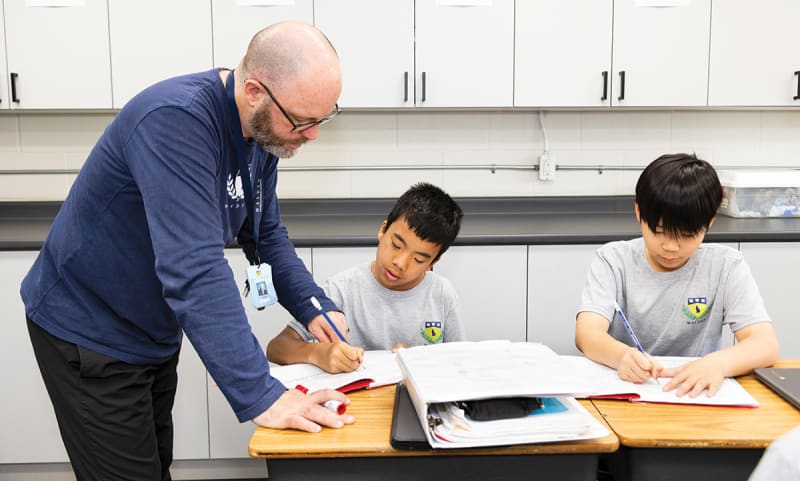
Walden’s relational approach to education is the reason why teachers know their students well. Corley emphasizes how the optimal class sizes help teachers notice each student, including quieter children who might otherwise fade into the activity of the room. Hogenbirk likewise describes being able to tell a student, truthfully, “I’ll be there in a moment,” because she can return to the request promptly. Personalization begins with teacher availability and becomes more tangible when teachers adjust a task’s form, pace, grouping, or point of entry.
Fowlin describes Walden’s classrooms as busy and interactive rather than hushed or teacher-dominated. Students move, change groupings, work alone, work together, and learn through discussion. For some families, this energy will read as engagement; others should observe whether the level and style of activity suit their child’s concentration and sensory needs. Inquiry-based teaching still requires purposeful routines, particularly for students who find open-ended work difficult. Teachers describe guidance through lines of inquiry, staged projects, exemplars, check-ins, and direct instruction, even as students make meaningful choices.
The balance between independence and support is visible in student testimonies. “The teachers have a good balance of making sure that we’re independent while also making sure that we’re demonstrating and trying to do our best on all pieces of work that we do,” says Kylo. Pavika puts the difference more concretely: teachers do not simply assign work and leave success to chance; they help students through the steps. Christopher says teachers provide an approach but also encourage students “to explore our boundaries,” so that learning becomes a way to understand both the topic and oneself.
Belonging is structured rather than assumed. Morning meetings give every student a place in the group. Teachers may ask every child to read a sentence, gently stretching individual comfort zones and reinforcing that inclusion also means participation. Hogenbirk explains to students that patience is necessary because every person finds something difficult. In physical education, Chris McLean uses varied games to help each child discover an activity they enjoy. “Every kid has one game that they will enjoy,” he says. Effort is the primary expectation: “You can do it. You just don’t know you can do it yet.”
The emotional tone is warm but not permissive. Corley’s “mama bear” promise involves protection and consequences. Actions are followed by reflection. Students are heard, but they are also expected to listen. Teachers aim to know children closely enough to distinguish a need for reassurance from a need for greater challenge. This relational model depends heavily on the quality and consistency of individual teachers. Our conversations reveal a staff culture in which teaching is treated as a vocation and in which educators invest substantial time beyond formal classes.
Teachers also gave us a clear picture of why the environment can feel personal without becoming casual. McLean describes hallway greetings, fist bumps, and conversations about a weekend as part of a culture built through repetition. He attends music events because students notice when a teacher enters a part of their life outside the teacher’s assigned subject. Comeau returns the support at tournaments. Hogenbirk similarly says she can do her best work in a school that trusts her professional judgment. McCorquodale says teaching can be lonely, but at Walden “you are always being heard and always being respected.” These are adult perspectives and therefore not neutral evidence, yet their consistency helps explain the cross-classroom investment students report.
We heard the student side of these experiences in several conversations, including one with Valencia, who describes Walden as “much more than just a school.” She connects its supportive relationships with the way teachers push her toward her academic potential. She also explains how the IB Learner Profile and Approaches to Learning have carried into several areas of her life: managing a demanding personal schedule, navigating the social dynamics of a longstanding friend group, and taking responsibility for stage management. The learning environment, in other words, is intended to become portable. Its success is measured partly by whether students can organize, communicate, and act responsibly without a teacher directing each move.
Academics
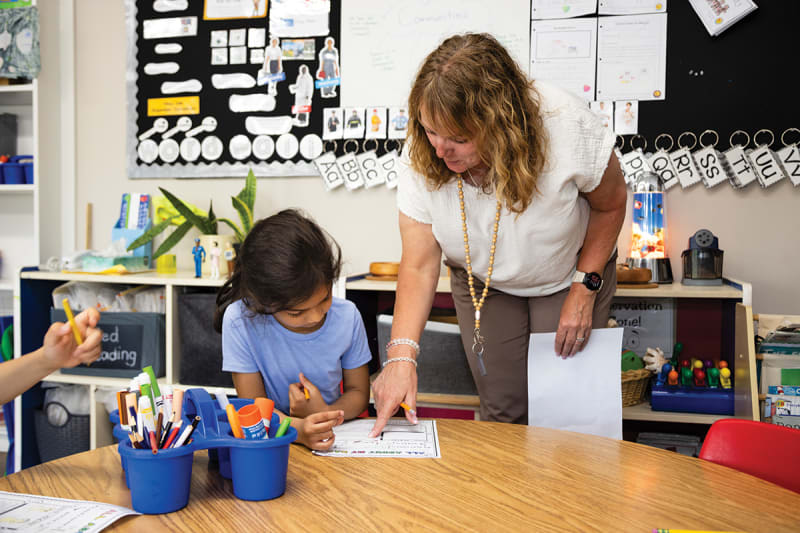
Walden’s academic program is built around the Ontario curriculum taught through the IB framework. In the Primary Years Programme (PYP), the emphasis is on transdisciplinary, inquiry-based learning, rather than treating subjects in isolation. For example, a unit on structures can bring together science, social studies, design, history, and communication. Students learn about bridges and buildings, but beyond that, they learn to ask where materials come from, how a structure is made, and how designs address human needs. In this way, knowledge is tied to real-world contexts and activities.
Grade 3 teacher, Jenefer Monica, describes the program as “transdisciplinary learning,” “inquiry-based,” and “student-centred and not teacher-focused.” Students take an active part in shaping the direction of their learning. They ask questions at the beginning of a unit, pursue individual lines of interest, choose formats for demonstrating their understanding, and take responsibility for completing work they have helped design.
Monica recalls that two students who had studied structures months earlier returned from family trips with photographs of the Golden Gate Bridge and London Bridge, independently applying what they had learned beyond the classroom. Similarly, Grade 5 teacher Rory McCorquodale describes a financial-literacy discussion that developed into a debate about whether taxes are beneficial. The goal, in short, is not simply to cover content but to practise thinking with it.
Foundational skills remain part of Walden’s flexible approach, and the school has adjusted its programming when it has identified a need to strengthen literacy or mathematics. Teachers support that work by noticing when a student needs a different pace, format, extension, or way into the material. Hogenbirk describes having time to respond quickly and personally, while Corley adds that quieter students are less likely to be missed because teachers know what is happening with each child.
Classroom examples show how the program feels in practice. A unit begins with questions: What are you wondering? What would you like to know? In Grade 1, a study of materials led students to ask how objects are made and where substances come from. Specialists then add disciplinary depth. French students might learn family vocabulary and create a family book while art students make portraits. During an energy unit, design students built wind turbines. The integration is not meant to blur disciplines until they become indistinguishable; it is meant to let students use several disciplines to examine a shared problem.
The best inquiry is open enough to invite surprise but structured enough to result in substantial learning. Monica describes students researching and designing things she did not anticipate because the curriculum allowed individual paths to develop. Student choice includes selecting a topic, framing a question, or choosing a product, but it remains tied to the goal of the unit. Fowlin gives examples of a brochure, pamphlet, podcast, or song lyric, all acceptable only if the student demonstrates the intended understanding.
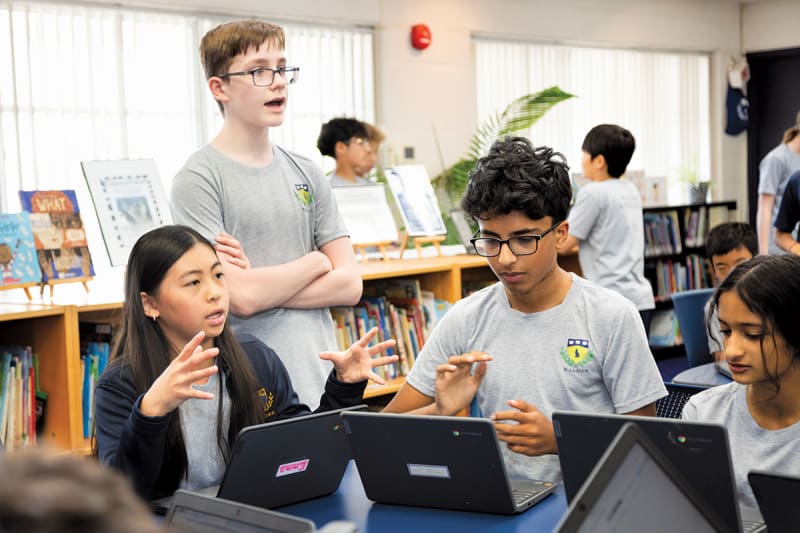
Choice of format is especially relevant for students who are reluctant to write or who can reveal more understanding through another medium. A child studying the water cycle might begin with a poster, drawing, video, or digital flipbook while continuing to develop writing and other foundational skills. Digital literacy also begins early. Hogenbirk says Grade 1 students learn about online safety, protecting personal information, and why they should not believe everything they encounter online. Teachers also want students to distinguish fact from fiction and understand why sources matter. Chromebooks, Google Docs, videos, and music software support research, drafting, and presentation, but students are expected to develop the knowledge needed to use those tools critically. In music, for example, they learn rhythm, notation, and structure so they can explain why something sounds wrong rather than relying on software to identify the problem.
The same principle applies to assessment. Walden’s teachers use different means for students to show what they know, but they also push students to examine the quality of their reasoning. Kylo, a Grade 7 student, contrasts an approach that asks students simply to produce the correct answer with the more exploratory questions he encounters at Walden: “I stated the answer, but did I explain why that answer is the case? How hard did I go with my work? Did I exceed the expectations?” This is a demanding form of self-assessment. It asks the student not only to be correct but to consider evidence, depth, and effort.
Pavika similarly describes math classes that begin with an engaging activity rather than moving straight into a lecture. The teacher would present an image, graph, or set of symbols to prompt students to infer what their next unit may involve. In Walden’s IB social studies course, Individuals and Societies, students respond to current events by moving to different areas of the room to indicate agreement or disagreement, then explaining their reasoning. Historical learning can involve negotiation among groups representing British settlers, the French army, or other participants in the Seven Years’ War. In each case, content provides the necessary substance; activity gives students a reason to retrieve, interpret, and communicate it.
The approach extends to global and civic questions. The PYP Exhibition asks students to investigate issues connected to international sustainability goals and to consider action. During our school visit, presentations addressed food insecurity, marine pollution, poverty, wildlife, food waste, and habitat loss. Students created display boards with evidence and proposed solutions; one used recycled material to make a sculpture about sustainability. Kylo chose birds and bird habitat loss. Pavika’s group organized a beach cleanup. These projects follow a common pattern at Walden, moving from inquiry to research, then to presentation and, when appropriate, action.
Open discussion is central. Amelia, a Grade 7 student, describes a Four Corners activity in which students debate perspectives on current events. McCorquodale allowed a financial-literacy lesson on budgeting to develop into a discussion about whether taxes are beneficial, withholding his own view so students could examine the issue. Perugini says the school does not avoid sensitive topics, though it addresses them in age-appropriate ways. Walden presents this openness as part of its commitment to open-mindedness. Prospective families should ask how teachers select and frame sensitive topics, since students may encounter views they do not share and will be expected to respond with reasons and respect.
Teachers consistently emphasized academic differentiation in our conversations. Corley describes pre-assessment, flexible grouping, scaffolding, and extension. In a rocks and minerals unit, for example, a pet-rock story drew reluctant writers into character development. The engaging premise did not reduce the literacy goal; it made the goal more reachable. McCorquodale uses student passions and peer explanation, recognizing that a classmate may sometimes find the connection that an adult cannot. In physical education, written assessments allow a student who is less proficient at performing a sport to demonstrate conceptual understanding.
Early literacy and numeracy remain visible within the progressive framework. McIntosh holds high expectations in Senior Kindergarten: many children enter still learning letter names and sounds and leave reading and writing. What moves her is seeing students’ thoughts appear on paper for the first time. She also uses the language of “blooming,” drawn from Leo the Late Bloomer, to help children understand different developmental timelines. One child may be doing double-digit addition while another consolidates teen numbers. Differences are acknowledged rather than hidden, and growth is made a shared expectation rather than a competition.
The Middle Years experience described by students builds on those foundations through research, communication, organization, reflection, and self-management. Valencia credits the Approaches to Learning framework with helping her balance schoolwork, competitive hockey, and advanced piano studies. Kylo says he did little research before arriving at Walden but now loves it and recognizes how much stronger the skill has become. Christopher observes that hands-on work and real-world examples make it clearer why learning matters beyond school.
Walden’s academic model is therefore neither wholly child-led nor conventionally teacher-led. Teachers establish curricular goals, teach foundations, design provocations, guide research, monitor progress, and intervene when needed. Students ask questions, make choices, collaborate, reflect, and take increasing responsibility for finishing work. The model’s success depends on both sides. Without strong teaching, inquiry can become superficial; without genuine student ownership, it can become a decorative label over ordinary assignments. Walden appears alert to that tension and willing to adjust when foundations need strengthening.
Prospective families should learn about how the framework is adapted for a particular learner. Students who enjoy discussion, projects, and visible relevance may find the environment motivating. Those who need explicit sequencing may also benefit, but families should examine how consistently scaffolding is provided in the relevant grade and subject. Sample work, reporting practices, and concrete examples of direct instruction, inquiry, practice, and assessment will give a clearer picture than the IB label alone. Walden’s academic promise is that common goals can be reached through responsive teaching and meaningful routes into the work.
Co-curriculars
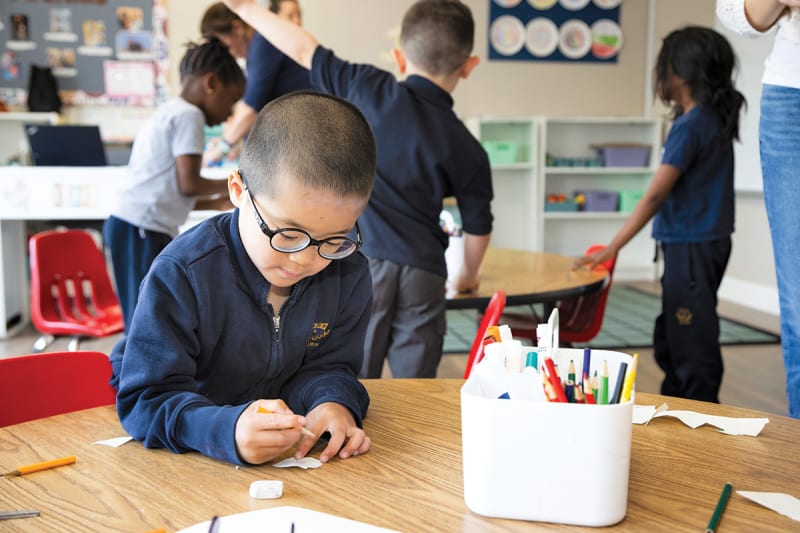
Walden’s co-curricular life extends the classroom’s emphasis on participation, inquiry, and collaboration. Arts, athletics, clubs, service, and outdoor education give students additional settings in which to take risks, discover strengths, and depend on one another. The strongest examples connect activities with wider learning. The musical builds interdependence, athletics reward effort, outdoor education tests resilience, and student-led clubs and service turn initiative into responsibility.
The arts illustrate that overlap particularly well. Songwriting begins in Grade 1 with short pieces modelled on nursery rhymes, sometimes advocating for the environment. Older students consider structure, historical context, and perspective. Comeau describes examining songs about the 1932 Hunger March in Edmonton and asking students to write not only from the marchers’ natural point of sympathy, but also from the perspective of police and Mounties who were frightened and following orders. Artistic expression becomes a disciplined exercise in historical imagination.
Theatre creates interdependence. Christopher compares the school play to a puzzle in which the absence of one person leaves the picture incomplete. Valencia is the stage manager, a behind-the-scenes responsibility that has required organization, teamwork, and communication. Comeau also describes setting a high bar for musical theatre and seeing students meet expectations more advanced than they may realize. The production reveals the breadth of adult participation, including classroom teachers, arts staff, families, costumers, choreographers, directors, and students who contribute according to their abilities. Its educational value lies in both the demands of the performance and the experience of depending on one another.
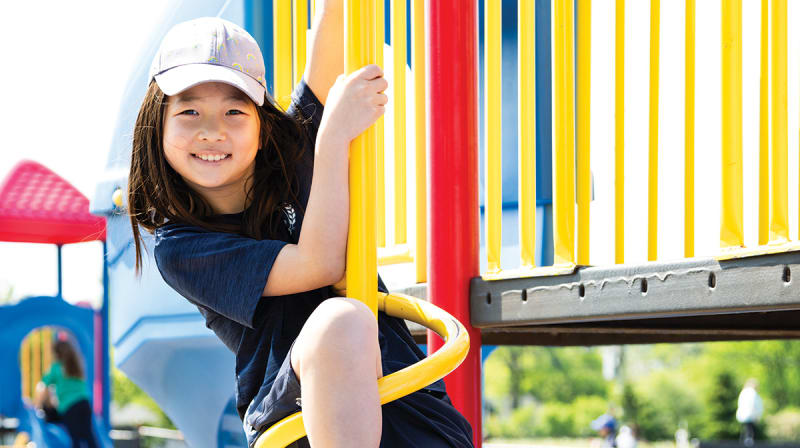
Athletics are similarly framed around exposure, participation, and well-being. McLean wants younger students to encounter many forms of movement before deciding they are “just” a soccer or basketball player. He also describes physical education as a safe place for students to move, release energy, and enjoy themselves after time spent sitting in classrooms. Gymnastics, badminton, dance, intramurals, team sports, and games create multiple entry points. Amelia participated in volleyball, ultimate frisbee, badminton, and track and field after joining Walden. Current parent, Tim Main, likewise says his children tried teams they would not normally have considered.
The competitive dimension is present - teams play, students speak of varsity activity and school spirit, and Hogenbirk proudly recalls coaching a championship softball team - but it is not the only measure of success. McLean tells students that effort matters more than natural ability. The approach may be especially reassuring for a child who wants to participate without being defined by performance, while still leaving room for committed athletes to practise, compete, and contribute.
Outdoor education offers a different form of challenge. McCorquodale describes teaching students to build fires, work together, identify strengths, and persevere in difficult weather. He is explicit about alternative competence: the child who struggles with essays may become the person who can build a fire and help the group. At the time of our interviews, expansion and a possible Algonquin canoeing and portaging experience were still being planned, so families should confirm current grades, destinations, duration, and participation expectations. The program’s purpose is to teach resilience through consequential, shared tasks.
Student initiative extends into clubs and service. At the time of our interviews, some school-run clubs rotated in six-week blocks, while students could also propose and lead activities during recess. Monica gives examples including coding, reading, and yoga, with student volunteers organizing groups of roughly 10 to 15 children. Christopher started a debate club and found that hosting required risk, organization, and social confidence. Hogenbirk’s EcoSchool group empties recycling bins, teaches other classes what belongs in them, and helped expand collection beyond paper to plastics, cans, and cardboard. Weekly service learning in the older grades asks a class to choose and carry out a project, such as a food drive or school-based contribution. Agency here includes both initiating something and maintaining it for other people.
The breadth is meaningful, but Walden is still a relatively small JK-to-Grade-8 school. The co-curricular menu may vary with staff expertise, student interest, season, and enrolment. Families seeking a highly specialized athletic pipeline, conservatory-scale arts facilities, or a very large club catalogue should ask specific questions. Walden’s strength is more intimate: students can try unfamiliar roles, start something, be noticed, and encounter the same values in the gym, rehearsal room, campsite, club, and classroom.
Student support
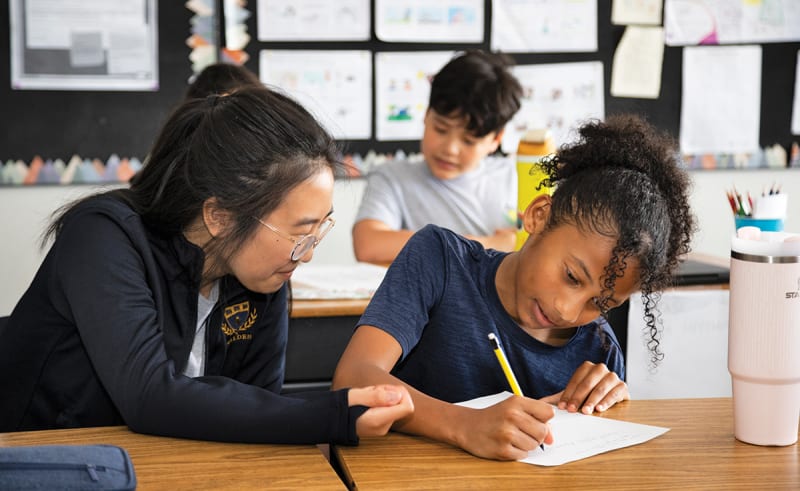
Walden’s support model begins with knowing the student. Smaller classes make it easier to notice hesitation, changed behaviour, a missing concept, or a quiet child who might be overlooked. Teacher availability before school gives older students a predictable time to ask questions. Amelia found the 8:10-to-8:55 period especially valuable in science, where she could clarify challenging material and prepare more confidently for assignments and future study.
In the early years, support begins before a formal lesson. McIntosh’s students choose a greeting when they arrive: perhaps a high five, a hug, or another option. Because she learns each child’s pattern, a different choice can put a student “on my radar” within 30 seconds. The purpose is not to make a diagnosis from a greeting. It is to create a routine that gives children control over how they are received and gives the teacher a first piece of relational information.
Zones of Regulation provide another accessible tool. Students who do not yet have the language to describe an emotional state can move a photograph to a colour zone. Green represents being calm, alert, and ready to learn; other zones help a child communicate that something is different. “If we can’t get into that green zone, then the learning is not going to happen,” McIntosh says. She views social-emotional learning as lifelong and explicit: children need language and strategies, not a vague instruction to calm down.
Wellness is treated as a daily or weekly practice rather than a crisis response. Teachers mention mindfulness, movement, breath work, soft entry, music, reading, writing, puzzles, nature walks, and Wellness Wednesdays. The school’s idea of balance does not mean reducing expectations. McIntosh pairs regulation with a confident belief in what six-year-olds can do. Valencia pairs self-management with a demanding schedule outside school. The aim is to help students become capable of recognizing what they need and returning to purposeful work.
Academic support is responsive rather than confined to remediation. Differentiated formats allow a student to reveal understanding that a single test might miss. Flexible groups and peer teaching create new routes into difficult material. Teachers can extend learning for a child ready to go further while scaffolding a child who needs smaller steps. The “blooming” metaphor makes different timelines discussable without pretending that differences do not exist.
In our conversations, teachers described a classroom culture in which learning differences are acknowledged with openness and respect. McCorquodale’s openness about dyslexia models self-advocacy and mutual help. He looks for student passions that can become sources of competence and connection. Walden is best suited to students whose learning needs can be met through responsive classroom teaching, differentiated instruction, and close teacher relationships within an inquiry-based program. Families seeking intensive remediation, therapy, or dedicated special-education services should ask directly about staffing, documentation, accommodations, and the boundaries of what the school can provide.
Transitions are supported through relationship and observation. Amelia’s experience suggests that teachers and peers can help a newcomer feel included quickly; the two-day visit lets the student experience the school before a decision is finalized. Cross-grade houses and buddy relationships broaden the circle of familiar people. These structures can be especially valuable in a small community, where a child’s sense of belonging depends not only on one homeroom but on being known across the school.
The most persuasive feature of Walden’s support is its integration with ordinary school life. Support takes different forms, whether through a greeting, a morning meeting, a teacher’s availability, a choice of assessment format, or peer mentorship. Walden’s approach reduces the tendency to separate “supported students” from their peers, making help feel accessible and normal for everyone. At the same time, integrated support must still be specific enough to meet real needs. Prospective families should bring concrete examples of how their child learns and ask the school to explain, with equal concreteness, how teachers would respond.
Parent community
Walden regards families as active participants in the community rather than an audience. Langill says the school has a close relationship with parents, and the musical, coffee houses, high teas, performances, tournaments, service activities, and parent events create visible points of connection. Corley says teachers, students, families, and administrators work as a team with the child at the centre. Communication is reported to be especially close in the primary years.
Tim Main, a current parent, connects the school’s academic and relational qualities: “What we appreciate about Walden is the close-knit feeling of family and community in the school, the values that the teachers and administrators embody, and the very high calibre of education. They have set high standards for the students to follow. We feel confident about the academic foundation they’ve built for students for their secondary and post-secondary levels.”
Main also describes a child settling successfully after moving from public to private school, crediting the support provided in the first months. His account is useful not as proof that every transition will be uncomplicated, but as an example of what the school’s close communication can accomplish when a student enters a new academic and social culture. Parents considering the same move should ask how teachers identify early gaps, communicate progress, and help a student interpret unfamiliar expectations.
Other parents emphasize consistency over time. “The level of consistency and continuity at Walden has been impressive,” say Rahim and Farrah. “Each year has been as good as or better than the last. This has raised our expectations not only of Walden but of ourselves. The school recognizes and nurtures the children’s potential and skills. They challenge both students and parents to strive for high standards.”
The reference to parents being challenged is significant. A close-knit school can ask more of families: responsiveness, attendance, trust, candid conversation, and practical help. Community productions and events benefit from parent contributions to costumes, supplies, set work, and encouragement at home. The relationship is rewarding, especially for parents who want to know teachers and take part in school life, though involvement can vary depending on their availability.
Getting in
Walden’s admissions process is framed as a mutual assessment. Prospective students visit for two days so the child can experience the program and the school can observe the fit. Hogenbirk explains the purpose plainly: the school wants to know whether the student is a good fit for Walden, whether the student likes the school, and whether the program is right for them. This is more informative than an admissions conversation conducted only between adults.
In our conversations, Walden’s leadership emphasized that it looks for families who understand its overall educational philosophy, rather than focusing only on individual program features or its IB designation. Perugini advises parents to research carefully, ask honest questions, and consider alignment with family values. “Your child is really your biggest investment and your most treasured investment in your life,” she says. Her statement that she will direct a family elsewhere when Walden is not the right match should encourage candid discussion about needs, expectations, and constraints.
A likely fit is a student who benefits from being known, responds to discussion and hands-on inquiry, and can grow into meaningful choice. The school may also appeal to children who have felt anonymous, overly constrained, or unsure where their strengths belong. Curiosity, willingness to participate, respect for different viewpoints, and increasing responsibility are central expectations. A child does not need to arrive already confident or self-directed; much of the program is designed to develop those qualities. The more important question is whether the child can engage with the relational and reflective work through which Walden develops them.
Families should ask detailed questions about current class composition, foundational skill instruction, homework, assessment and reporting, support for learning differences, co-curricular schedules, technology, transition after Grade 8, and any program that is still expanding. They should also visit with attention to ordinary interactions: how students speak to one another, how a teacher responds to uncertainty, how much structure accompanies choice, and whether their child feels both comfortable and productively challenged.
Takeaway
Walden offers an inquiry-based, student-centred education, enabling students to develop and pursue their interests and demonstrate their understanding in varied ways. Smaller classes, strong pedagogical relationships, arts, athletics, and outdoor education all support the development of skills, confidence, resilience, and a sense of responsibility. The school’s “Making Good People” approach is integrated with the IB Learner Profile and informs daily practices, emotional self-awareness, and social-emotional development.
These observations describe the school accurately, but Walden’s uniqueness becomes most legible in the moments where its strengths converge. A child identifies a feeling so that learning can begin. A reluctant writer invents a pet-rock character. A student uses research to advocate for bird habitats, joins a beach cleanup, or argues about taxes. A musician helps another student find a chord without judgment. A camper who struggles with essays becomes competent and useful by a fire. The philosophy is strongest when it is expressed in action.
The school’s advantages are also its demands. Access to teachers strengthens support, but it also makes communication central. Inquiry creates relevance and ownership, but it requires capable scaffolding and a student’s willingness to participate. A close parent community can be supportive, but it may expect visible engagement. Walden places its emphasis on people and program rather than on an expansive campus or highly specialized infrastructure.
Walden is likely to fit families who want the elementary and middle years to remain broad and connected through a transdisciplinary mindset. They will value academic foundations but will not see test performance as the only meaningful outcome. They will be comfortable with a teacher asking a child to explain, reflect, collaborate, revise, and sometimes fail productively. They will understand that student voice is paired with responsibility and that belonging involves making room for other people’s voices as well.
The student accounts are persuasive because they describe growth rather than perfection. Amelia’s first year was marked by reduced anxiety, teacher access, new activities, and a sense of inclusion. Valencia, after eight years, connects Walden to the habits that let her balance academics, hockey, piano, leadership, and friendship. Kylo speaks of becoming a researcher. Christopher describes learning to organize a club and depend on a cast. Pavika offers perhaps the simplest summary: “We’re like a community growing up together.”
That growth is not only preparation for the next school, though the academic and self-management foundations are intended to support secondary and later study. Perugini’s wager is that achievement gains meaning when a student can use knowledge responsibly. The IB framework gives Walden a method for pursuing that idea; smaller classes and a committed faculty give it a relational setting; co-curricular and community life give students places to practise it.
Pavika describes leaving school with what she calls a “Walden-y feeling”: “I know what I did. I’m prepared. I’ve got this. I accomplished something.” The phrase is informal, but it captures the intended outcome better than a grand claim would. Walden wants students to finish each day—and eventually Grade 8—able to name what they have learned, recognize how they have grown, and understand that their choices affect a community. For families who share that view of education, the words above the entrance serve as a standard against which the school’s daily life can be judged.