Linbrook School KEY INSIGHTS
Each school is different. Linbrook School's Feature Review excerpts disclose its unique character. Based on discussions with the school's alumni, parents, students, and administrators, they reveal the school’s distinctive culture, community, and identity.
What we know
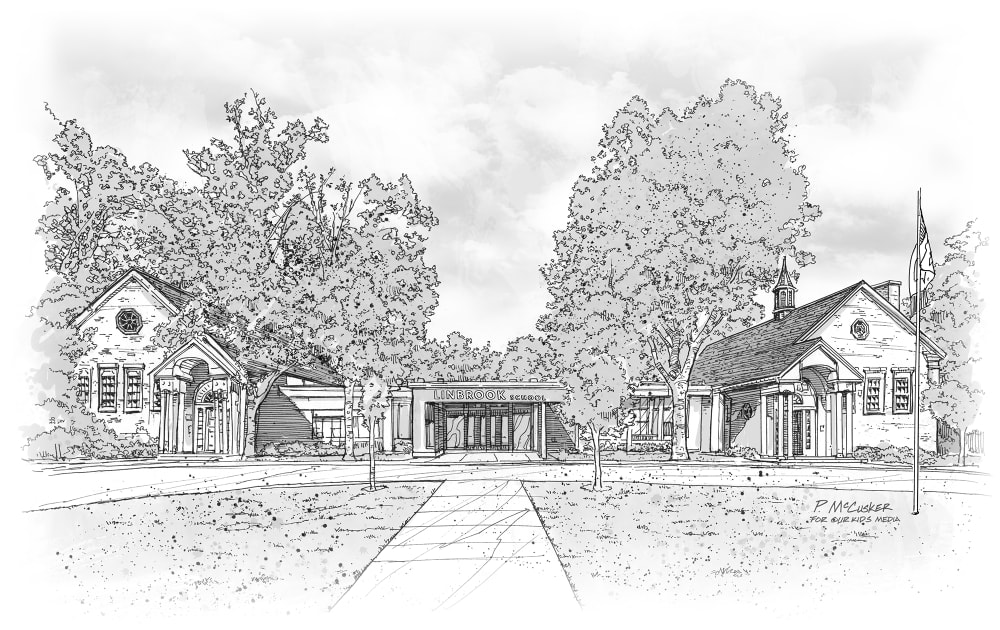
- Linbrook’s structure is rooted in research on how boys learn academically, socially, and emotionally.
- With enrolment capped at 180 students, staff know every boy, tailor their support, and deliver co-curricular depth, including competitive athletics, a robust arts program, and musical productions that rival those of larger schools.
- The school’s safe environment helps boys express themselves, build confidence, and develop a lasting sense of brotherhood.
Handpicked excerpts
“The seed for Linbrook was planted when I was deep in education leadership, running another program and watching my daughter thrive at St. Mildred’s across the street,” says Founder and Head of School Amber Way. “Many of the families I knew had boys, and they wanted me to look into options for their sons. I quickly realized there was no equivalent to St. Mildred’s for boys in Oakville, yet there was certainly a demand for it. In 2009, I had a son, and the research became personal.”
Though the first Linbrook families were brought into an office in downtown Oakville and asked to believe in something they couldn’t yet see, the vision for the school caught on quickly. Opening in the fall of 2014, while construction was still ongoing, the school welcomed 65 students in its first year. Twelve years later, Linbrook is thriving and has been running at capacity for nearly a decade.
Small by design and capped at 180 students, Linbrook creates a safe, nurturing space for boys to explore, learn, and grow. Linbrook’s philosophy grew out of the simple, but well-researched premise that boys learn differently and most schools have not been designed to support their needs. The physical environment and daily schedule are deliberately set up to support boys. “They need to move. It gives them energy and helps them learn,” says Way. Three daily recesses, five gym periods a week, flexible seating and desks designed for movement are just some of the things that differentiate Linbrook.
THE STUDENT EXPERIENCE
Students walk in the front doors at Linbrook, and they’re greeted by name. That may seem like a small thing, but it definitely makes a difference. “We never miss anyone because we know all of the boys personally,” says Julie Churchill, Vice-Principal. “We know what they need to be successful, how we can support them, and how we can ensure we’re providing them with a well-rounded experience.” When new students join the school, which can happen at any grade, they’re considered based on their academic profile as well as their social-emotional skills and how they will fit into the existing cohort. The goal is to ensure all students are successful and happy throughout their time at Linbrook.
Some Linbrook students have IEPs and are provided with extra support in subjects like reading and math, while others are given access to enrichment opportunities. “Our son was diagnosed with a learning disability in Grade 2, and from there the support team at Linbrook really took over,” says parent Kristen Kiernander. “He used to be really down on himself because he struggled to read, but now he carries his diagnosis without shame and has been able to catch up in reading thanks to the support provided. He hasn’t missed a beat grade-wise, and it’s no longer really a thing; he just works with it.”
Mason is a Grade 4 student who participates in a small Friday math enrichment group. “There are 10 of us in Grades 3 and 4, and we get to try advanced math challenges, do math competitions, and make our own questions. I love it because even if math isn’t that challenging in class, you’re always being pushed a little further through enrichment.”
“When you come to Linbrook, you’re not just sending your child to school, you’re joining a community of like-minded parents who have chosen this education for their sons,” says Ashley McNabb, the mom of a JK student. “My daughter is in Grade 2 at St. Mildred’s, so I was eager to get my son into Linbrook. I wanted an all-boys school for him because, to be honest, most traditional kindergarten classrooms are designed for how girls learn. They are expected to sit quietly in a circle and rarely have enough movement built into the day. While that would have been fine for our daughter, my son is an active 5-year-old, and I wanted to send him somewhere where the way he is isn’t a problem to be managed. It’s something to be embraced.”
For principal Mike Packowski, who worked with Way to build Linbrook from the ground up, the idea of leading an all-boys school was appealing. “I remember thinking how much I would have loved a school like this growing up,” he says. “This is an environment I would have thrived in.” The school’s goal, Packowski explains, is to get boys to genuinely love coming to school. “No matter the subject, they’re engaged, they’re excited, they’re learning in a way that actually suits how they’re wired.”
CHARACTER EDUCATION
Character education begins in JK and is woven throughout the curriculum all the way to Grade 8. The program begins with Grade 2 homeroom teacher Barbie Vasilakos McRae. “We plan our teacher assignments based on strengths, and one of those strengths belongs to Barbie, whose mindfulness program is where character education begins for all of our younger students,” says Churchill. Seven years ago, Vasilakos McRae approached the Head of School with an idea to bring mindfulness to Linbrook students. “Amber was immediately on board, and I started teaching informally at first,” she says. “In the spring of 2019, we brought in a wellness director to help us develop a written curriculum, which teachers are now able to implement.”
In JK, it begins simply. The use of puppets that embody different emotions and values (think: Tidy Turkey and Buzzy the Bee) help students learn age-appropriate ways to express their feelings. “We start with things like ‘What are you feeling? What does that look like, sound like, feel like?’,” explains Vasilakos McRae. “The goal is to remind boys all the way through their time at Linbrook that academics aren’t everything. We’re here to grow into good humans, and that means developing kindness, courage, and emotional awareness from the start.”
By Grade 4, mindfulness and emotional intelligence are the norm. “Boys who are in Grade 5 have had this type of learning since Kindergarten, and you can really see it,” Vasilakos McRae says. “They have the vocabulary, the self-awareness, and the ability to say, ‘I’m grateful for this’ or ‘I felt this way’ without it feeling forced.”
BOYS’ EDUCATION
A question that Churchill gets quite often is, ‘Why all boys?’ And it’s one she’s happy to discuss. “When you look at how boys learn, not just how they get by but how they truly thrive and build confidence, well, you want an elementary experience that’s designed to support those things,” she says. That doesn’t mean leaning into stereotypes. In fact, Linbrook prides itself on doing the opposite. Boys are free to express themselves without the weight of gender expectations. “When students asked to start a bracelet club, the answer was absolutely. The choir, drama program, and art classes are genuinely beloved and all led by male teachers. It broadens their perspective of what’s possible, what they can do,” she says. “We want them to be exactly who they are.”
What Linbrook offers, beyond academics, is something harder to quantify. “They really do form a special bond, a brotherhood, that extends far beyond the end of Grade 8,” says Way. “We have alumni who have all gone on to different high schools and then find themselves reconnecting in university and becoming roommates. Many come back to the school, visit with their former teachers, and volunteer at our events.”
ART INTEGRATION
Academically, the program is rigorous, but what sets Linbrook apart is how seriously it takes the arts alongside athletics. In speaking with students, it’s noticeable how often art, drama, and music come up among their favourite subjects.
“In Grades 5 through 8 is where it all comes together,” says teacher Martin Wigle, speaking of the school’s robust music education program. Students cycle through units on every instrument, developing real working knowledge of each, before making an informed choice at the end of Grade 5 about which instrument they’ll commit to. “We want them to buy into something they’re genuinely interested in, because that choice leads to more practice and more love of music,” he says. “The instruments are also chosen with longevity in mind: guitar, bass, piano, and drums are instruments boys tend to carry with them for life. These are lifelong instruments.”
Sitting with a group of Grade 4 to 6 students, we got talking about the school’s musical production of Willy Wonka that was staged earlier that spring. The boys eagerly share memories from the production, which saw Linbrook students playing all the roles—including Veruca Salt, Violet Beauregarde, the grandmothers, and every character in between. “They stole the show,” says AJ Fisico, the school’s creative lead for events and productions. “In a co-ed production, girls typically play the boy roles when needed, and that goes largely unnoticed, but watching a room full of boys fully commit to any role, regardless of gender, says something powerful about the environment Linbrook has built. I see it constantly here,” he continues. “The traditional pressure falls away, and the boys genuinely believe in their abilities to sing and dance, and they are celebrated for it.”
THE MIDDLE SCHOOL YEARS
Relationships are a priority at Linbrook. “It all starts with connection,” says Grade 8 teacher Lindsay Mundy. “If you want to have a successful program with middle school-aged boys, you have to connect with them first, you have to build a relationship. At their age, they can often feel like adults aren’t on their side, and if they don’t buy into your class, you’ve lost them.” For Mundy, that often means getting down to their level, getting to know them, and talking with them in a way that feels like a partnership rather than top-down instruction. “Connection and enjoyment on one side and clear boundaries and structure on the other. It’s a delicate balance. My most successful technique, by far, is ensuring they know that I’m on their team and that I’m there for them.”
In the Grade 8 language classroom specifically, balance plays out in how each period is planned. An 80-minute double block isn’t a time to ask boys to sit and tackle one long task from start to finish, Mundy explains. “You have to read the room, understand how much they can handle.” A typical period will open with a mini-lesson, move into stations or group practice, then shift to independent work, with a longer assignment like an essay chunked into manageable pieces. “I circulate, give them space and independence, but they know I’m there if they have a question. Next year, no one will be holding their hand, and so we practice that gradual release of responsibility here, together.”