

The 2026 OUR KIDS Private School Expo is coming to cities near you. Get your family pass

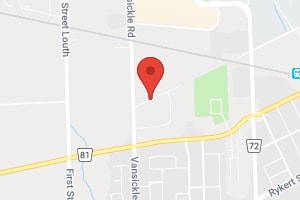
The regions Ridley College offers busing from are:
Additional notes: Busing is included in tuition, with service running in the morning and again in the afternoon from Monday to Friday during the school year. At the end of the school day, the departure time will align with release times for all students; however, it's important to note that depending on your child’s co-curricular schedule, they may need to stay on campus later in the evening and be picked up by a parent or guardian. Learn more about our busing programme: ridleycollege.com/bustransportation


The 50-page review of Ridley College is part of our series of in-depth accounts of Canada's leading private schools. It provides a unique and objective perspective on the school's academics, programs, culture, and community.
Read our in-depth review"Ridley College is an independent boarding and day school for students in JK through Grade 12. As leaders in positive education and wellbeing education, we teach students a foundation of skills and habits they need for learning and success now and long after graduation. Our learner-centred and inquiry-based learning approaches are enhanced by the International Baccalaureate (IB) philosophy, a comprehensive and rigorous programme that challenges and sets students apart, empowering them to excel and grow."
Ridley is a leader in positive education and applies the science of positive psychology and positive education to the student experience. Every Ridleian belongs to one of our ten Houses or four House Teams, and is supported by our unrivalled circle of care and engaged with vibrant, challenging, modern programmes to nurture and mentor them throughout their educational experience. We house the largest boarding programme in Ontario and the third largest in Canada.
To provide a well-rounded and supportive educational experience, Ridley College has made intentional tradeoffs that ask more of both students and families. Upper School students are required to participate in sports and co-curricular activities throughout the year, in addition to managing an academic schedule and attending Saturday programming focused on life skills and service learning.
Families benefit from a strong circle of care around each student, with multiple adults contributing to their growth and wellbeing. This network ensures comprehensive support, and advisors serve as a central point of contact to guide families navigate the many resources available. With so much happening across campus and many staff members involved in each student’s journey, families receive frequent updates to stay informed and engaged.
Ridley College has undergone several key transformations that have shaped its current identity. In 1973, the School became co-educational, allowing female students to enrol and marking a significant cultural shift. In the 2000s, we expanded our offering to include junior kindergarten through Grade 12 and began incorporating day students into boarding Houses to help foster a more inclusive environment.
In 2022, The Campaign for Ridley raised more than $50 million, the largest fundraising campaign in the school’s history, leading to major renovations of the Iggulden Building and athletic facilities. We have also introduced magnet programmes focused on high-performance sports such as basketball, hockey, rowing and figure skating. More recently, Ridley has prioritized student wellbeing, with all staff and faculty completing the Positive Education Certificate and the school becoming a Visible Wellbeing institution.
A student who thrives at Ridley is curious, engaged and eager to be part of a vibrant community. They’re not just focussed soley on academics — they’re looking for opportunities to grow, challenge themselves and get involved beyond the classroom. Whether it’s athletics, clubs, leadership or service, they want to participate and make the most of their experience. They’re open-minded and inclusive, excited to learn alongside peers from diverse backgrounds, including international students. We’re looking for students who are independent, motivated and ready to embrace everything our community has to offer.
Ridley students lead intentionally busy and balanced lives. They are encouraged to develop as well-rounded individuals through academics, athletics, clubs and community engagement. If a student prefers not to participate in a variety of activities or has significant outside commitments that limit their involvement, they may find our environment less suited to their interests. Our community thrives on active participation and balance, so families should be prepared for a dynamic and immersive experience.
Families choose Ridley College because they are seeking a school that prepares their children both academically and emotionally for university and life beyond. They often speak to the warmth of our community, the positivity that defines our culture and the individualized care each student receives. Ridley offers strong academics alongside a wide range of activities that help students discover and pursue their passions. Families also value our commitment to belonging, our celebration of cultural diversity and global perspectives, and our proud Canadian heritage. Many say Ridley feels like home. They appreciate the breadth of opportunities available to students — whether in academics, athletics, co-curriculars, clubs or leadership.
Ridley College is widely recognized for its strong focus on postsecondary preparation, with a reputation for equipping students with the skills and knowledge needed to succeed beyond graduation. We are also known for fostering high levels of student engagement and encouraging volunteerism within the local community. Our commitment to rigorous academics further reinforces Ridley's image as a leading institution dedicated to excellence in education.
The Ridley community is often called the Ridley family. All Ridleians belong to a broader community of peers, faculty, parents and alumni. As a boarding school, our lifeblood is community connection and relationship building across age groups, generations and identity groups, creating a strong feeling of belonging that defines and sustains us. Students make lifelong connections with peers from around the globe, maintaining friendships across time zones, forever shaped by the Ridley experience. Most students don’t realize all of this until they’ve graduated.
Families may be surprised by the depth of Ridley College’s commitment to service and wellbeing. Service is more than a value — it’s a lived experience that helps students build empathy, compassion and a sense of purpose. Through weekly service opportunities, support for local House charities and optional global service trips, students learn that giving to others is a key part of a flourishing life. Equally important is our emphasis on positive education and student wellbeing. We believe that students need to feel good to do good, and that academic success is closely tied to mental and physical health. By teaching habits and skills that support wellbeing, we help students build a strong foundation for lifelong success.
In 2024, Ridley College proudly opened the doors to the revitalized Iggulden Building, a vibrant hub for the arts that includes purpose-built spaces for creative arts, music, drama, film and visual arts, as well as a modern library designed to inspire learning and collaboration. The Evans Athletic Centre also saw significant upgrades, with the addition of a new fitness centre, squash courts, a rowing room, updated changerooms and a dedicated athletic therapy space to support student wellness and performance. Each year, Ridley enhances the student experience through its annual Ridleian Fund. Recent improvements include new classroom spaces to accommodate a growing student population, upgraded outdoor areas for learning and play, improved campus pathways and the integration of new technology to support innovative teaching and learning.
In 2025/26, we are engaged in a collaborative planning process to develop a new strategic plan that will guide Ridley into the future. Our goal is to chart a course that continues to inspire flourishing lives to transform our globe, ensuring Ridley’s legacy of excellence and service endures for generations to come.
Hear directly from Ridley College community as they share insights.


|

|

|

|

|

|

|

|
 |
 |
 |
 |
 |
By logging in or creating an account, you agree to Our Kids' Terms and Conditions. Some information presented on this page may be paid advertising provided by the advertisers and is not warranted or guaranteed by OurKids.net or its associated websites. By using this website, creating or logging into an Our Kids account, you agree to Our Kids' Terms and Conditions. Please also see our Privacy Policy. OUR KIDS ™ © 2026 All rights reserved.