The Rosedale Day School KEY INSIGHTS
Each school is different. The Rosedale Day School's Feature Review excerpts disclose its unique character. Based on discussions with the school's alumni, parents, students, and administrators, they reveal the school’s distinctive culture, community, and identity.
What we know
- Rosedale Day School (RDS) combines academic rigour, individualized support, co-curricular breadth, and student well-being, rather than focusing on a single specialty.
- The school’s downtown location means the city functions as an extension of the classroom, with access to museums, libraries, theatres, athletic facilities, and other resources.
- Small class sizes enable strong teacher-student relationships, high student involvement, and accessible learning support.
Handpicked excerpts
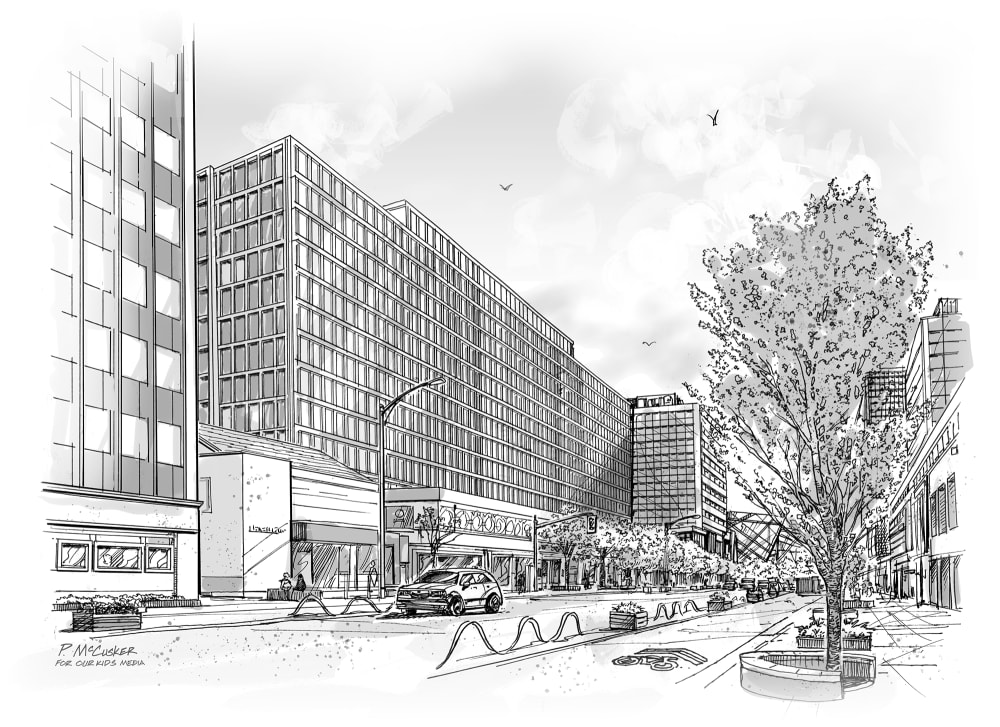
The Rosedale Day School (RDS) is a caring community that offers personalized education in the heart of downtown Toronto. It’s a hidden gem only in the sense that many city dwellers walk by its exterior without knowing there’s an educational institution inside the retail and office building on Bloor Street. For those in the know, which is a growing number given RDS’s excellent reputation, it’s a place where students from Junior Kindergarten to Grade 8 can learn in a close-knit, academically rigorous yet supportive environment that’s enriched by all the city has to offer.
Since its founding three decades ago, RDS has created an educational experience that places equal emphasis on real-world learning, co-curricular development, and well-being. “Other schools might be known for their one ‘thing,’ but we strive for balance,” says Head of School John Reid. “We’re a small school that delivers a big-school experience where everyone benefits from robust co-curricular offerings, music, art, French, athletics, and outdoor education programs.”
BASICS
RDS is a coed, Canadian Accredited Independent School (CAIS) for students from Junior Kindergarten to Grade 8 located on Bloor Street near Bay, smack dab in the centre of Yorkville. The school occupies much of the third and fourth floors of the Colonnade, which was one of Toronto’s first mixed-use buildings when it was built in the 1960s.
Playing badminton at the Royal Canadian Yacht Club, tracking dinosaurs at the Royal Ontario Museum, taking gymnastics at U of T, or learning about wind instruments at the Toronto Symphony Orchestra—this could all happen in a week at RDS.
“The field trips that other schools might do once a year, we’re doing every week here,” says Reid. “We call it our downtown advantage.”
According to Deputy Head of School Constance McGuire, teachers use the city as an extension of the classroom. “Toronto is our second teacher,” she says, noting that families often choose RDS partly because it provides this urban enrichment.
BACKGROUND
RDS launched in 1995 with four staff members and just over 20 students from Junior Kindergarten to Grade 2. Founder Sherry Stewart worked in several Toronto-area schools before realizing her dream of starting a new school. Her belief that “every child is unique” has remained the RDS motto and guiding vision. Current faculty who knew her say she was a passionate educator who wanted her school to be a place where all teachers and students knew each other and everyone was kind and thoughtful.
Stewart’s convictions about individualized education and the importance of relationships have endured over the decades, says Middle School Coordinator Julie Buwalda, who began teaching at RDS 25 years ago. “She understood that everyone learns differently and that teachers must adapt their teaching to meet students where they are. Sherry knew that school wasn’t easy for everyone, but believed it could still be a wonderful place for children to be.”
ACADEMICS
RDS’s academic programs deliver a learning experience that’s individualized, rooted in the real world, and constructed to foster skills that will be essential in the future.
“We’re always asking ourselves the same questions,” says Reid. “How does the student in front of me learn best? How can we expose students to meaningful experiences inside and outside the classroom? And what do we need to teach our students today so they’ll be successful 5, 10, and 20 years from now?”
Starting right from Kindergarten, there are consistencies across the whole school’s academic approach. First and foremost, the curriculum is student-paced and tailored to individual strengths. Inquiry- and project-based learning start from day one, for example, as do cross-curricular activities. Then there’s the partnership with Future Design School (FDS), which unites the curriculum around the importance of cultivating evergreen, real-world skills.
These evidence-based, progressive philosophies do not, however, displace the fundamentals that are essential to any elementary school. “Literacy and numeracy are big focuses for us,” says McGuire. “We’ve developed academic programs to ensure that students are at or above grade level in these crucial skills.”
In recent years, RDS has implemented daily structured literacy lessons, utilizing The Really Great Reading program. “It’s a structured, systematic, multi-sensory way of teaching students, whatever level they may be at,” says Junior School Coordinator Laura Trought. “There’s a lot of solid research evidence behind it, and our teachers have found it to be extremely effective.”
In practice, this means finding ways to integrate the key FDS skills—so-called “soft skills” such as critical thinking, creativity, collaboration, design thinking, and entrepreneurship—into the curriculum.
THE PEDAGOGICAL APPROACH
There’s a solid body of research that shows children must feel mutual trust and respect with their teachers to succeed academically. “Relational learning,” a method where teachers are constantly building this rapport with students, is the bedrock at RDS.
“The best thing about this school is that the teachers get to know not just their own students, but most of the students in their division,” says Trought. “We truly care about our students, and we work hard to bring out their unique voices, increase their confidence, and create strong bonds.” A parent of two children who have attended RDS since kindergarten echoed many parents we met in saying, “The teachers really do know the kids as individuals.”
ACADEMIC SUPPORT
High challenge with high support is the ideal at progressive schools today, and RDS’s significant investments in achieving this balance have paid off. As one longtime RDS parent says, “It’s supportive, but I know my children are getting a rigorous education.”
For a small K-8 school, it’s quite exceptional to have two full-time learning strategists, both with special education certification. “At a lot of schools, academic support is a bit of an afterthought,” says Middle School Learning Strategist and Academic Support Coordinator Claire Smith, who has a Master of Education in Developmental Psychology and Education. “Here, nothing is ad hoc. It’s a central priority. Our work is ingrained in every part of RDS programming. The whole academic schedule is built around student needs, whether it’s for extra support or enrichment.”
WELLNESS
At small, close-knit schools, the attention paid to students’ holistic well-being often happens organically. This is true at RDS, yet there’s also an intentionality about caring for the whole student.
“The research is very clear: students must feel safe and well to learn,” says Reid. “We don’t leave that to chance.”
“If there’s a teachable moment anywhere, anytime that relates to these issues, we’re going to take advantage of it,” says Trought. “This isn’t a once-per-week thing that we talk about and then move on from. We’re a very nurturing community and believe that if kids aren’t feeling well emotionally because of something that happened at home or at recess, there’s no way that they’re going to be ready to learn.”
One RDS teacher says, “This is a place where students can be themselves and be celebrated for who they are. We do a great job of really seeing and knowing our students and their families, giving them the right support at the right time, and making sure they feel like they’re part of our community.”
EXTRACURRICULARS
Involvement is one of RDS’s four core values, and you can see this in practice in the hour or so after the school day officially ends. The school is full of activity as clubs convene and athletic teams set out for practices or games.
“For many students, the co-curriculars are what make them excited about coming here,” says Reid. “School is definitely about learning and academics, but it’s also about trying new things, finding out what you’re good at, and discovering your passions.”
As with everything at RDS, balance defines co-curricular programming. They make sure there is a diverse array of clubs. While the specific clubs evolve from year to year, the aim is to give students many ways to get involved, explore their interests, and contribute to school life beyond the classroom.
ARTS EDUCATION
The annual RDS Art Show, usually held at the Royal Canadian Yacht Club, brings out family and friends to celebrate students’ artwork, while the Winter and Spring Concerts highlight students’ musical talent. But the most anticipated and discussed arts event, based on our interaction with RDS community members, is undeniably the annual musical theatre production.
ATHLETICS
The imperative to make every child feel a sense of belonging at RDS extends to its athletics program. It’s all about building students’ confidence, giving them the feeling of being part of a team, and allowing them to take chances.
STUDENT BODY, LEADERSHIP, AND DIVERSITY
Community is everything at RDS. It’s the word we heard most across all of the interviews, but it’s much more than just talk. There’s an authentic feeling here of mutual care.
The modest enrolment and single class per grade play a big role in the sense of community. “We’re such a tight and trusted community,” says one Grade 6 student. Another in Grade 7 says she has five classmates that she’s known since JK. Several students said they’re grateful for the cross-grade and school-wide activities where they mix with kids outside their class.
GETTING IN
There is no ideal candidate, in alignment with the “every child is unique” school motto. “We’re looking for students with good character who embody our core values,” says Reid. “For example, involvement is key here, so children who are open to trying new things are a good fit.”
One Grade 7 student summed up the RDS culture like this: “Our school is small, and I like it that way. No one feels like a stranger.”