The Sterling Hall School KEY INSIGHTS
Each school is different. The Sterling Hall School's Feature Review excerpts disclose its unique character. Based on discussions with the school's alumni, parents, students, and administrators, they reveal the school’s distinctive culture, community, and identity.
What we know
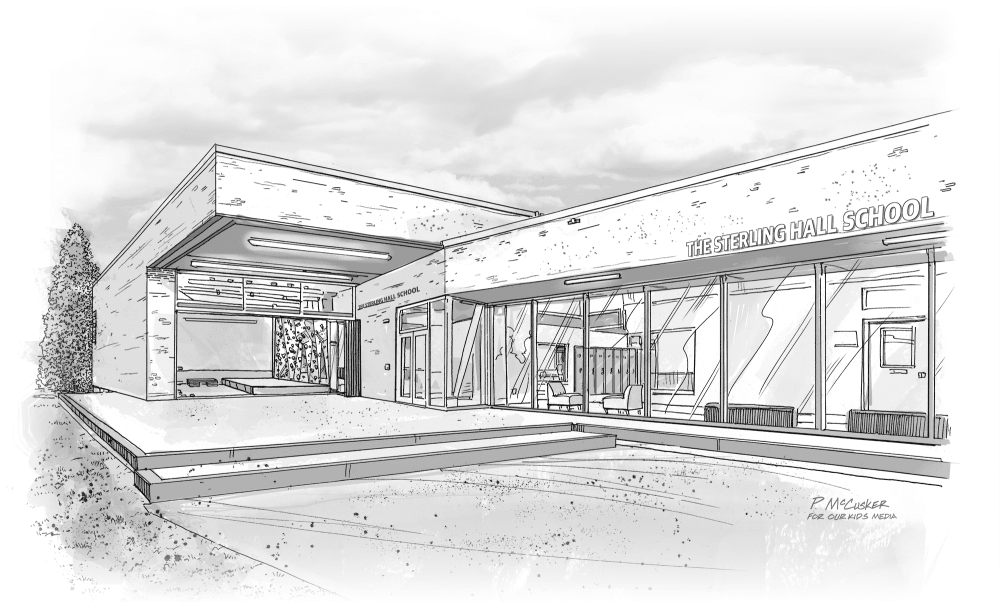
- A purpose-built boys’ school focused on the early and middle years, JK to Grade 8, Sterling Hall’s physical spaces, curriculum, and teaching approach are designed specifically around how boys learn and grow.
- Holistic development, experiential learning, character education, wellbeing, leadership, athletics, the arts, and over 50 co-curricular clubs are integrated into daily life.
- The strong community is reflected in active parent involvement, volunteerism, and a welcoming school culture. More than 70% of parents volunteer, and families are regularly present on campus, including at Friday assemblies.
Handpicked excerpts
The Sterling Hall School (SHS) is Toronto’s only non-denominational, independent, all-boys elementary school. Tucked into a residential pocket across from Yorkdale Mall in Toronto’s Yorkdale–Glen Park neighbourhood, the school is home to 320 boys from JK through Grade 8. Offering a tailored elementary and middle years program, SHS is deliberately designed to meet the academic and social-emotional needs of boys. Though relatively small, the school has an impressive offering of intramurals, teams, clubs, and co-curricular activities that all SHS boys have access to.
SHS combines strong academics with a focus on character, leadership, and wellbeing, maintaining a close-knit community where each student is known and supported. With its thoughtfully designed classrooms, specialist-taught subjects, and emphasis on movement, collaboration, and experiential learning, Sterling Hall provides a dynamic environment that prepares boys for success in high school and beyond, equipped with the confidence, curiosity, and skills they need to thrive. SHS knows that boys learn differently, and they use research on boys’ learning to guide teaching methods and curriculum.
As a destination school Sterling Hall draws families from across the city. Families are drawn to the school’s singular focus on boys’ education during the elementary and middle school years. While many do consider Toronto’s larger all-boys schools, and boys often move on to those institutions after Grade 8, parents repeatedly praise Sterling Hall’s small, close-knit community and its deliberate focus on the foundational JK–8 years, which are among its defining strengths.
Sterling Hall’s Graduate Placement Program supports Grade 8 boys and their families as they prepare for the transition to secondary school. The process is thoughtful, extensive, and customized, offering relevant information and strategic advocacy through each stage of the high school application process.
“We were looking for small class sizes and a school where my son wouldn’t feel overwhelmed. He was just five at the time, and when we toured the school, I loved how interactive it was,” says mom of three Sterling Hall boys, Sarah Willinsky. “The boys don’t stay in the same classroom all day; they move around a lot, even in Kindergarten. But the biggest factor for me was the focus on character strengths and social-emotional learning. It really aligned with my values.”
CHARACTER EDUCATION
Using the VIA (Values in Action) Character Strengths program, students learn from a very young age how to identify character traits, consider when they use them in daily life, and which other traits they’d like to work on. “This is a strengths-based program that looks at 24 different character traits that are broken down into categories,” explains Kate Taylor, Vice Principal. “Every student has the potential to embody and demonstrate these strengths, and as they get older, they come to understand what their own signature strengths are and which traits they want to practice more.”
Students begin setting small goals as early as JK, and every report card includes a self-reflection piece conducted by the boys in partnership with their teachers. Character is mapped through the curriculum at every level and also shows up in athletics and co-curricular activities. Character-building opportunities are endless and include leadership and service-learning initiatives, reading buddies, and experiential learning trips.
“In the primary years, character education is story-based and all of us, from teachers to students, have a shared language around these traits,” says long-time Sterling Hall teacher Aleeza Janmohamed. “Teachers talk about character traits regularly and pair each trait with a story that boys can understand and remember.” This approach is supported through Sterling Stars, a program that makes character education visible and concrete for younger students. In her SK class, students collect character stickers on their pencil boxes. “At 10 stickers, they receive a certificate and at 15, the Principal comes into the class during community time and presents the boys with a silver star pin they will wear on their blazer.”
“In JK through Grade 2, external motivation plays a role, but by the time boys reach Grade 3 and beyond, the goal shifts toward intrinsic motivation. The stars fall away, because the expectation is that character work has already been embedded,” says Principal Rick Parsons. “By then it’s part of who they are.”
BOYS' EDUCATION
Founded in 1987 by Darlene Ferris, an elementary school teacher with a vision for creating a boys’ school—when there was none—that would focus on the whole child and provide a safe space for boys to learn and thrive, the school continues to adhere to its founding values.
“We begin with the understanding that boys don’t learn in a vacuum,” says Parsons, who joined the school 14 years ago. “Learning is always social, always part of a larger human context. Boys grow through trial and error, by failing and trying again, by navigating friendship conflicts, and by building, sustaining, and repairing relationships.” For Parsons, this “messy” process of human development is not a distraction from learning but the very heart of it. It teaches boys how to work in groups, collaborate, and develop the skills research consistently links to long-term happiness and wellbeing.
“Academics are one important thread in a much bigger fabric,” he says. “The goal is to help boys become resilient, compassionate humans who can overcome challenges, learn from setbacks, and handle social and emotional missteps in healthy, constructive ways.” Parsons frames this approach as “relational learning.” Teachers must first build genuine relationships with boys, meeting them where they are and recognizing that each boy is at a different stage and dealing with different things. The focus is always on the whole child, not just on marks or content coverage.
As you walk through the school, it is clear that everything—from the colourful schedules and flexible furniture to the well-lit classrooms, the well‑appointed fitness room, and the ample outdoor spaces—is intentionally designed to support an active, visual, and boy-centred approach to learning.
Boys needing movement in order to be successful is a recurring theme at Sterling Hall. After sitting attentively through the Friday Assembly, the students are soon outdoors, running around and burning off steam. With two recesses, regular outdoor education (in the Learning Garden, Mud Kitchen, and acres of outdoor space and tree-dotted areas), and daily PE (in the gym, fitness centre, and sport court), the school day is thoughtfully structured to ensure student success. “The movement is what enables them to focus in class,” says Director of Enrolment Management, Susie Heinrich. “The boys know, ‘I’m going to be still now because I’m going to get to move around later.’ The intentional schedule itself helps them self-regulate.”
At dismissal, staff and teacher stand at the door, greeting boys and parents, encouraging handshakes, eye contact, and the kind of genuine, gentle manners that support boys’ success in the wider world—without the performative or hyper-masculine tone some families notice elsewhere.
THE STUDENT EXPERIENCE
The overall student experience focuses on SHS’s three values: Learning, Character, and Community. “A student should be willing to embrace all of these if they’re going to be successful at the school,” explains Heinrich. “That being said, we don’t have an ‘ideal’ Sterling Hall boy. As Rick often explains, we are growing a garden of wildflowers, and we want each boy to be the very best version of himself.”
As Kate Taylor explains, the school is working to dismantle narrow ideas of masculinity by emphasizing that boys can be nurturing and caring, and by supporting activities such as the arts and music, athletics, and clubs like knitting and baking, alongside other more traditional activities. “What’s most important to us is that the boys feel safe to be themselves and not constrained by stereotypical masculine norms,” she says.
Each morning from 8:30 to 9:00, every class from JK through Grade 8 gathers for a community circle, where boys engage in social-emotional learning, leadership, and health and safety curriculum. “These circles are essential because while we know the boys will readily talk about bravery, they need dedicated, consistent time and space to open up about moments when they don’t feel brave, when they don’t fit in, and how they can handle those feelings,” says Susie Heinrich. “When this space is given regularly, boys share, empathy builds, and the group becomes genuinely grounded and connected.”
ATHLETICS, ARTS, AND CO-CURRICULARS
Sterling Hall offers a rich athletic program across Grades 3–8, including soccer, volleyball, basketball, hockey, swimming, cross country, softball, tennis, and track and field, plus intramural options for every boy. Grade 2 students get a head start through skill-building clinics run by experienced coaches. Beyond athletics, there are approximately 50 clubs running at any given time, spanning a wide range of interests and rotating each term based on faculty expertise and what boys want to explore.
“Our co-curriculars are a cornerstone of life at Sterling Hall, and all our teachers contribute by running at least one club or activity per term. We have a JK teacher who loves coaching the older boys in athletics, and others who run study halls or develop clubs based on their passions,” says James Burns, Director of Student Life. All boys have the opportunity to play sports and join a team. Students are actively encouraged to try something new, and alumni speak very highly of the impact this has had on their growth.