
The 2026 OUR KIDS Private School Expo is coming to cities near you. Get your family pass



Ashbury College THE OUR KIDS REVIEW
Verified Review
OUR KIDS verifies every review by confirming the reviewer’s identity and their firsthand experience with the school. Learn more
The 50-page review of Ashbury College, published as a book (in print and online), is part of our series of in-depth accounts of Canada's leading private schools. Insights were garnered by OUR KIDS editor visiting the school and interviewing students, parents, faculty and administrators.
OUR KIDS editor speaks about Ashbury College
Introduction
Ashbury College is a leading Canadian independent coeducational school located in Ottawa, recognized for preparing students for success in post-secondary education. Ashbury serves both day and boarding students from Grades 3 to 12, with a strong representation of international students from over 55 countries.
The school was founded in 1891 by George Penrose Woollcombe, an Anglican clergyman and educator who envisioned a school that would combine academic excellence with character formation. Originally an all-boys school in downtown Ottawa, Ashbury relocated to its current Rockcliffe Park campus in 1910 and became coed in the late 20th century.
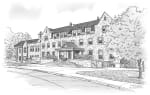
Nestled in Ottawa’s historic Rockcliffe Park, Ashbury College is surrounded by towering trees and lush greenery. This prestigious residential neighbourhood is known for its elegant homes and distinguished residents, including diplomats and political leaders, offering a serene and inspiring setting for learning.
Ashbury’s 13-acre campus blends tradition and innovation, with heritage architecture standing alongside state-of-the-art learning spaces. The school’s signature red-brick buildings contrast beautifully with the surrounding greenery, creating a campus that is both inspiring and picturesque.
We arrived at reception on Thursday morning and were greeted by a few members of staff. Our visit coincided with Ashbury’s Professional Development (PD) week, and we had the opportunity to meet faculty and experience a campus tour led by Nicole Hynes, Director of Admissions, who has worked at Ashbury for nearly ten years.
Walking through Ashbury’s halls, one quickly senses the school’s deep-rooted history. Framed photographs trace its evolution over 134 years, while archival displays showcase vintage uniforms and milestone moments, including the introduction of co-education in 1982.
Yet Ashbury is far from frozen in time. A walk through campus reveals a dynamic balance between tradition and progress, where historic spaces like the chapel and hallways coexist with cutting-edge classrooms and co-curricular hubs. Innovation is woven into the fabric of school life, shaping both academic and extracurricular experiences.
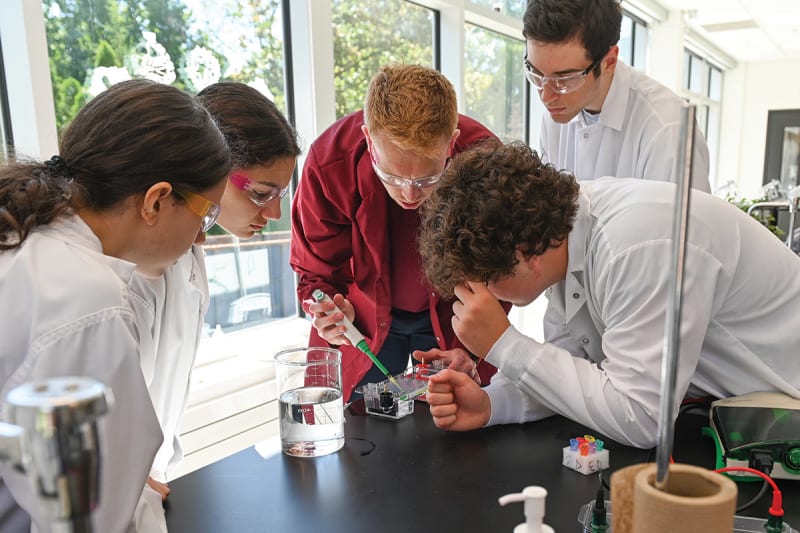
One of the features that will certainly stand out during a campus visit is the Centre for Science and Innovation. It’s a $10 million wing that reflects Ashbury’s strong emphasis on science education. Home to modern physics, chemistry and biology labs, this recently developed space fosters hands-on learning, research, and creativity. Brightly lit halls showcase periodic tables, student-led research, and science-inspired art, creating an atmosphere that celebrates inquiry and imagination. It’s a place where students don’t just study science, they live it.
“We have invested in outstanding arts facilities and built a center for science and innovation,” says Head of School Norman Southward. “We ensure we’re offering a balanced program supported by the IB curriculum. We want our students to be future-ready, able to adapt to changing job markets, and to rely on the skill of adaptability as the surest foundation for success.”
Ashbury College showcases student accomplishments at various places throughout the campus, including the Student Art Gallery and display cases of the multitude of trophies and awards for athletic and co-curricular activities.
Ashbury’s indoor learning spaces are diverse and dynamic. Students benefit from multiple gymnasia, a state-of-the-art fitness centre, a professional-grade theatre, and recently renovated visual arts and music studios. The library and learning commons serve as a central hub for collaboration, research, and quiet study. Ashbury’s spacious dining hall is a vibrant extension of student life, serving as more than just a place to eat. Surrounded by windows overlooking the sports fields and featuring a grand piano for student use, the space invites both day and boarding students to connect as a community while sharing meals. Hynes says, “Our full school capacity is around 750 with grades 4 to 12. We are excited that for the 2026-2027 academic year, we will be expanding to include Grade 3 as well. We have about 550 students in the Senior School (Grades 9-12) and about 200 students in our Junior School program (Grades 3-8).”
Ashbury’s proximity to Canada’s political and diplomatic institutions has shaped its identity. This longstanding connection to Canada’s international community has helped cultivate a culture that is outward-looking and globally aware, with a student body that reflects a wide range of backgrounds and perspectives.
Within a 15-minute drive from Ashbury are historical Ottawa landmarks that students can easily access, including Parliament Hill, the National Gallery of Canada, the Canada Aviation and Space Museum, and the Canada Museum of History. There are parks, too, including nearby Gatineau Park. Ashbury’s proximity to these places gives space for learning resources and field trips. There is also easy access to a bus stop right outside the school, which gets students to downtown Ottawa in under half an hour.
Several staff members spoke with us about Ottawa being an ideal work location and a great place for anyone looking to raise a family. Access to resources, transit options, parks, and local culture are some of the city’s highlights. Ashbury’s convenient location, with its green surroundings and proximity to local ponds and parks, provides young students with a vibrant and nurturing environment. It’s a place where nature, culture, and community come together to enrich the learning experience.
“We’re an urban boarding school,” says Bruce Mutch, Executive Director of Enrollment and Advancement. “With most of the other urban boarding schools, it feels like you’re in the city, but when you come to our campus, it feels much more rural, with great amenities and access to important landmarks.”

School culture
The values of integrity, community engagement, and mutual respect are integrated into various aspects of school life, from classroom interactions to co-curricular activities. “Rooted in tradition, Ashbury embraces innovation,” says Hynes. “Our state-of-the-art living, learning, athletic facilities, global programs like Round Square, and commitment to stewardship prepare students to lead with integrity, curiosity, and compassion—locally and globally.”
Students are provided with well-rounded support from staff, teachers, and counsellors in academics, co-curricular activities, and sports. Since faculty at Ashbury participate in student co-curricular activities (like clubs and sports coaching), there is a deep sense of interconnectedness among the faculty and students. Many staff members at Ashbury also enroll their children at the school, with some having spouses who work alongside them, which has immersed their families in the Ashbury and Rockcliffe communities.
The school’s strategic pillars—thriving, connecting, and adapting—prioritize balance, wellness, and personal development. “The academic program remains central, but it is balanced with student wellness and well-being,” says Head of School Norman Southward. “Thriving means students meet their personal best while maintaining their well-being. Connecting means strong relationships within the boarding and day communities, the local community, and our international networks, including the Round Square network of 250 schools worldwide. Adapting means preparing students for the future, investing in sustainability, and ensuring the school evolves institutionally.”
We felt a sense of togetherness, particularly during lunchtime, which takes place in the spacious Maclaren Hall, filled with round tables, where students and staff can sit together. This tech-free zone is also used for assemblies for both Junior and Senior School.
Welcoming new students is vital to maintaining a strong sense of community at Ashbury. One of the school’s most cherished traditions is its start-of-year camp program, offered across all grade levels. Junior School students participate in day camps, while Senior School students attend overnight camps designed to foster friendships, ease transitions, and kick off the academic year with energy and enthusiasm. These experiences help students connect with peers and begin their Ashbury journey with confidence.
In addition to camps, there is a student ambassador program to facilitate the integration of new students. These upper-year students help new students around campus and answer their questions. Boarding buddies help new students settle into the boarding residences.
Ashbury’s school culture and community mindset have contributed to high staff retention and deep involvement of teachers and staff in student life. “We have these phenomenal staff who have taught here for multiple decades,” says Todd Lamont, Director of Student Life. “They are incredibly open-minded and open to change as students are becoming aware of different things.”
Hynes adds that a lot of Ashbury’s teachers also have international teaching experience. “That’s really important to us as a part of our hiring process. We talk about pluralism from an HR level, since it’s important as an international school community.” Diverse experiences from teachers and staff help them interact and connect with students better.
Ashbury’s Pluralism Project, launched in the summer of 2020, aims to make the school more inclusive for students and staff. Lamont explains, “Over the last 10-15 years, we’ve had internationalism as a strong pillar of our school. But that is slowly shifting to pluralism. Having students, alumni, and staff drive this has been important for the Pluralism Circle to work.” Through its pluralism pillars, Ashbury fosters diversity, condemns discrimination, and promotes mutual respect, which has contributed to a welcoming atmosphere for everyone on campus. Everyone belongs at Ashbury.
Another integral part of Ashbury’s school culture is prioritizing community service. While most schools in Ontario require 40 hours of community involvement to graduate with a Secondary School Diploma, Ashbury has a higher-than-average threshold of 60 hours. Ashbury offers numerous on-campus volunteering opportunities, including participation in events such as music concerts, the Ashbury Ball, book sales, and parent nights. Some students volunteer outside of school for clubs, camps, and local events. Ashbury also hosts annual days of community service in both the Junior and Senior Schools.
Students at Ashbury feel that cultural diversity and globalism are woven into every part of Ashbury, from boarding to classes and co-curriculars.
Finlay Spratt, Arts Prefect at Ashbury, says, “Because Ashbury is a boarding school, I’ve been able to meet people from all over the world. I’ve been able to connect with people from Northern Canada, the Yukon, and many parts of Asia. Meeting people from all over the world and seeing different cultures has been really eye-opening.”
Cat Gauthier, Ashbury’s 2025-26 Co-Captain, shared with us, “We have culture presentations at the end of the year, where students present about the country they’re from. Some bring food and talk about the country’s history and culture. We got to learn about Mexico, Colombia, Kenya, and Italy.”
There is also International Week, in which the student body is deeply involved. Here, students set up cultural booths and host a talent show to learn about their peers’ countries and cultures. Activities significant to countries are explored. “There was a booth that did henna,” Gauthier recalls. “There were food booths which a lot of boarders took part in. Last year, a group of students from Mexico made elote. Another student leader from Italy made tiramisu. It was an amazing experience.”
Academics
Ashbury College is a non-semestered school that offers the Ontario Secondary School Diploma (OSSD) and its own diploma. The academic environment balances rigour with responsiveness.
Receiving an OSSD requires completing 30 course credits, a minimum of 40 hours of community service, and the Ontario Secondary School Literacy Test (OSSLT). The Ashbury Diploma has academic and non-academic requirements beyond the OSSD. These include additional courses in Physical and Health Education and Global Perspectives, 60 hours of community service, and nine terms of co-curricular activities.
Similarly, Ashbury is an early adopter of innovation among private schools in Canada and was one of the first schools in the country to offer the IB diploma in 1976. The optional Bilingual certificate is granted to students who earn eight credits in French (four Extended or Immersion French, four additional courses taught in French). IB courses are offered at both the Standard (SL) and High Level (HL).
Student performance at Ashbury is evaluated based on factors like continuous assessment, class tests, and summative evaluations (including a summative project and/or a final exam). Ashbury offers extensive academic support systems, including tutoring, learning strategies workshops, and structured peer mentorship. The goal is to ensure that each student is both challenged and supported, regardless of their academic profile.
There is a strong emphasis on analytical thinking, effective communication, and ethical reasoning—skills that prepare students for long-term success in university and beyond. “Small class sizes and experienced teachers ensure every student is known, challenged, and supported,” says Mutch. “We foster academic excellence while encouraging students to grow personally, pursue passions, and strive for their best in a nurturing environment.”
We further discussed the academic focus at Ashbury with Dr. Libby Boulianne, Summer School Principal and Head of Senior School Science. “We’ve had a big science push due to a combination of factors,” says Dr. Boulianne. “With our science building, we have the space, flexibility, and equipment to empower our students who are passionate. In the past few years, we have had a big uptick in science, and I believe that as a school, we will reach an equilibrium.”
Ashbury’s science students can work at a university level in biology through the SMART (Science, Math, and Research for Transformation) Program, with the opportunity to travel and present their work at an annual university conference in the United States.
Ashbury also offers strong programs in streams of study such as business and arts, with mandatory arts and humanities courses integrated into the rigorous academics of Senior School students. Ashbury’s approach to co-curricular programming also contributes to this rigour. “In terms of balance between academics and co-curriculars,” says Dr. Boulianne. “All coaches, music directors, and club leaders send a consistent message that academics come first. Having said that, students also need to be able to manage their time. There’s been thought into co-curricular scheduling so students can dip their toes into different areas.”
Students have ample access to technology in their studies, with each one using an iPad during classes. Faculty try to strike a balance between such technology and face-to-face learning and connections during classes.
Some students, especially those who have switched to Ashbury from public schools or private schools where the academics were not quite as rigorous, might face a challenge in the beginning.
“I had to adjust to putting in a lot more effort than I’ve had to at my past schools,” says Gauthier. “But there’s a lot of support, and many amazing students and staff on board, which really helps the transition.” Spratt adds, “At the start, I struggled a little because academics were at a higher level. But during my two years at the Junior School, I progressively got better academically.”
Internships
Ashbury offers optional summer internships for upper-year students. The school successfully placed 54 students in internships or mentorship opportunities this summer, within various industries, including government, finance, and real estate. A vital touchpoint that helps students successfully land internships is Ashbury’s alumni network.
“We maintain our own alumni network called Ashbury Connect. We make it a point to host branch receptions around the world, with this year including locations like London, New York, and Montreal,” says Alumni Relations Officer Jake Harding, who helps organize these receptions. He also mentions Ashbury’s public alumni group on LinkedIn, which graduates of the school manage independently.
“While some internships are for younger students and recent college grads, most of them go to our Grade 11 and 12 students. Most of these opportunities come through our alumni executive,” says Harding. This executive is a small group of engaged alumni who reach out to promote Ashbury’s activities and help enroll students in internships.
Padme Raina, Director of Partnerships and Programs, who has been with Ashbury for 17 years, explains, “Ashbury College’s internship program has been running for almost 10 years, and it’s a very successful program that students often describe as the highlight of their academic career. It provides them with the opportunity to apply what they’ve learned in class to a real-world work situation.”
“We are fortunate to live and work in the community of Ottawa,” Raina continues. “Many businesses and government organizations are willing to spend time with students to teach them about their workplace and what a potential career looks like.” This program provides students with the opportunity to discover their true interests at a young age, which in turn shapes the academic path they choose. For many students, this is a life-changing experience.
Learning environment
Ashbury maintains a rigorous yet student-centred academic culture; the faculty is globally minded and experienced, and dedicated student success and wellness staff provide invaluable support to students throughout their educational journey. The approach is implemented from the Junior School level.
“We believe that the elementary years are foundational, not just academically, but in shaping character, curiosity, and a love of learning,” says Head of Junior School, Andrew Young. “Central to our program is our motto of Honesty, Courage, and Kindness and through these values, we build strong relationships, where each child is known and encouraged to be their best self. As part of Ashbury’s broader community, Junior School students benefit from exceptional facilities and specialized instruction.”
Ashbury College focuses on personalized attention to student needs. Small class sizes enable meaningful interaction between students and faculty, and teachers are encouraged to tailor instruction to diverse learning styles and cultural perspectives. With an average class size of 17 students, the school prioritizes smaller classroom sizes, boasting a student-to-faculty ratio of 8:1. In the Junior School, Grades 3-5 have one class per grade, Grade 6 has two classes, and Grades 7 and 8 have three classes each. Meanwhile, the Senior School sees more students, with about 100-150 students per grade.
Anjelien Slater, Director of Student Success and Wellness, who has worked at Ashbury for a decade, says, “Smaller class sizes let our students build relationships with the teachers and focus on their balance and personal growth. There can be challenges when there is a very small class number, especially in senior school, but what’s most important for both students and teachers is that they can get personalized attention. We make an effort to ensure that every student is known and feels safe in their experience here.”
Programming is designed to facilitate intellectual curiosity and cross-disciplinary thinking. The school consistently exceeds provincial and global benchmarks in university acceptance rates and academic achievement, with students gaining admission to top institutions in Canada and worldwide. Ashbury’s 100% university placement rate over the past 15 years is a source of pride for the school’s faculty and parents.
Boarding
The boarding houses on Ashbury College’s campus are divided into three houses: Mathews House (male) and Heather Gillian Residence (female), which house 50 students each, and Maple Residence, a smaller boutique residence that houses seven female students.
This year, Ashbury is hosting 106 boarders, who are enrolled between Grades 9 and 12, on its grounds. There are also 11 faculty staff who live in proximity to the boarding houses. Ashbury expects its biggest wave of students in the first year of Senior School, but boarding staff comment that students are settling into boarding even in Grades 10, 11, and 12.
Students are housed in either single rooms or double rooms with one other student, all of which have private washrooms and mini-fridges. The boarding houses host multiple common rooms for group activities, fully-equipped kitchens, laundry facilities, in-house fitness areas, and outdoor recreational space.
Andrea Kelly, Dean of Student Life and Director of Boarding, speaks about the support provided to boarding students at Ashbury. “They have evening prep supervised by their boarding staff, who are all qualified teachers, which gives them additional academic support.”
Staff organize a welcome weekend for boarding students, independent of the camp activities. This year, students had the opportunity to go on an Ottawa River Cruise. “It’s very intentional in those first few months; by having programming available, we try to strike a balance so they don’t start to feel isolated,” explains Kelly.
Boarding students also have the option to leave campus on long weekends to see family, or they can sign up for the Ashbury Long Weekend Program. In this program, they can attend a variety of weekend activities organized by the boarding staff. “Long weekend programs are developed by the heads and assistants of the boarding houses. We’ve taken them to places like Montreal and Chateau Montebello. This is a nice balance of downtime and fun programming,” says Kelly.
Student leadership is heavily embedded in the boarding experience at Ashbury College. Students can become leaders through the boarding council and provide support to new boarding students trying to find their place at Ashbury.
Munich Limapichat, a Boarding Captain and Grade 12 student, outlined his experience as both an international boarding student and student leader. When Limapichat arrived at Ashbury in Grade 10 as a boarding student, he had a difficult time settling in, especially when homesickness and isolation kicked in.
“Because I’m an international student, it was at first hard for me because of my language and the new environment.” With the support of his fellow students, staff, and boarding buddies, he eventually found himself at home. “It can be sometimes hard for new students to settle in, but it is now a part of my role to help them in the process.”
Limapichat has now gone on to be named “Rickoid of the Year” by his peers at the MIT Research & Science Institute. Ashbury is the only school in Canada from which a student is invited to participate in MIT’s summer research program.
Summer programs
Ashbury offers annual summer programs open to Ashbury students, students from outside Ashbury, and community members. The summer months are an ideal time for prospective families to visit the campus, meet the dedicated staff, and get a feel for Ashbury’s vibrant learning community in action.
The summer programs comprise three categories of offerings, including credit courses, academic prep workshops, and camps.
Dr. Boulianne, who serves as the Summer School Principal at Ashbury, says, “One of the things that I love about summer is we have a strong participation from our own community members. We have some people who are considering applying to Ashbury in the future, but we also have a large cohort that takes part in the summer, which is the only part of the school they participate in.”
Academic courses, such as geography and chemistry, help students earn credits towards their respective academic diplomas. This year, 12 academic courses ran for four weeks.
The academic workshops are one-week programs on subjects like Introduction to Canadian Law and Medicines for Teens. “We also have our academic prep workshops,” says Dr. Boulianne, “which help anyone going into Grade 9 feel more confident as they start the school year.”
The highlight of Ashbury’s summer program is the camps, which see participation from students between 6 and 18 years old. The camp program includes camps in robotics, arts, science, and sports. Ashbury also hosts a drama camp program with a showcase at the end. Boulianne explains, “We often get a lot of siblings of Ashbury students who attend these camps. It’s an incredibly different vibe than the school year because no matter what people are doing, they’re focused on it. There’s so much variety in activities, with involvement from different age groups.” The camps are led by experienced Ashbury teachers, with support from student Leaders in Training who help facilitate activities and foster connections.
Lamont, who also oversees the camps program, says, “The interconnectedness between Ashbury students and the community is amazing. I heard from many local families that summer camps helped integrate them into Ashbury as part of the Rockliffe community. We also have a very good summer food program, which receives high praise.”
Student success and wellness
Student well-being is integrated into all aspects of school life. The advisory structure, house system, and guidance support ensure that students are known individually and receive personal attention as they navigate academic and personal challenges.
The school takes a proactive approach to student wellness, offering counselling, peer support, and programming focused on mental health, stress management, and emotional resilience. These efforts create an environment where students can thrive academically and personally, without being overwhelmed by pressure.
One such effort is the Teacher Advisor Group (TAG) program. In this program, 8-10 Senior School students are assigned a teacher advisor, usually based on their grade and house system. This group stays together for all four years of Senior School. Advisors support and assist students and families during their time at Ashbury, and have positive conversations about their advisees’ social life, involvement, and decision-making.
“That’s the parents’ first point of contact, as well as the students’ first point of contact when they’re not sure who to talk to,” says Hynes.
Kelly says, “We have meetings where we review every student with the Junior School team and the Senior School team to do a good hand-off. We also look at incoming new students as much as we can through applications.”
The TAG program is an exercise in matching students with the right groups. When the Junior and Senior School teams collaborate to assign students to TAG units, they consider several key factors. Young mentions a few: “It’s about pairing the teacher and the students based on their strengths, interests, personalities, and challenges.”
Meanwhile, Junior School students participate in the Circle Program, a social and emotional learning initiative designed to foster a culture of respect and acceptance. Teachers lead their Form in discussions about weekly themes to generate the opportunity to learn and practice how to be good listeners.
With respect to student wellness more generally, Ashbury offers a wide range of supports and services, evident through its dedicated wing of wellness supports that students and staff can easily access.
Brad Moyle, Head of Senior School, says, “What I really like about Ashbury is that there are many ways for a student to be successful here in terms of the co-curricular program, student leadership, athletics, and arts. All of these things form part of the experience along with the academic experience, so when we talk about a student’s overall development, that’s what we’re talking about.”
A parent of a day student, Penny Yan, explains how her child has developed over their time at Ashbury, given access to the right wellness resources. “We’ve seen tremendous growth in our child’s confidence, independence, and critical thinking skills. They’ve become more engaged in their learning and have developed a genuine curiosity about the world.”
The support system at Ashbury is outstanding, she adds. “Teachers are approachable and invested in each student’s success. The advisory program, academic support services, and access to enrichment opportunities, like clubs, competitions, and leadership programs, have all played a vital role in nurturing my child’s interests and helping them thrive.”
Addressing student well-being and managing burnout, Yan says, “Whether it’s through wellness workshops, access to counsellors, or simply encouraging a healthy balance between academics and extracurriculars, Ashbury takes mental health seriously. My child has learned valuable strategies for managing stress and maintaining resilience.”
When Spratt, an incoming Grade 12 student, is asked about how he balances his student leader role and academics, he says, “Ashbury has a lot of mental health support. For example, I’ve done therapy dog sessions a couple of times. Taking a break from co-curricular activities to take more time for myself is what has helped me because after that week (when assignments are due), I have exams.”
Young says, “We do some check-in surveys where students have an opportunity to voice how they’re doing, and this can be done anonymously.” These wellness check-ins often spark meaningful conversations, allowing staff to stay attuned to students’ emotional well-being and overall mood.
Ashbury is also part of a seven-year study called the Ontario Health and Peer Relations Study in partnership with the University of Ottawa. This focuses on a student voice through surveys, examining a sense of belonging, mental health, safety, and kindness, which aligns with Ashbury’s pluralism project.
There are also Learning Strategists in the Junior School and the Senior School for academic help, and a wellness team in Ashbury’s Wellness Centre. The Wellness Centre is a secluded and relaxing space, complete with a nurse’s office, a counsellor space, and a relaxation space for when students (and teachers) need some quiet time to destress. Both the counsellor and nurse work closely with day and boarding students to ensure their emotional and physical well-being, say Slater and Hynes.
Another support resource is Ashbury’s Life Skills Coordinator, who promotes inclusion, respect, and pluralism to students through chapel services and community initiatives, helping them build life skills and awareness. “We work together as a team to promote personal well-being and personal growth,” Slater continues.
And when it comes time to forge students’ paths beyond Ashbury, the Guidance Counselling team is there to help. “They work with students in their academic programming and ensure that they have a positive journey from Grade 9 to 12, then continue supporting their university choice.” Spratt also mentions community time at Ashbury, which allocates a block every day for students to interact with speakers and advisors. Through these, he has been able to meet with speakers to learn more about career counselling, which is helping him as he heads into his final year of study.
For neurodivergent students at Ashbury College, there are accommodation plans available. These plans, used to understand a student’s profile, strengths, weaknesses, and areas for attention, help teachers get an understanding of additional aspects of support they may need. Slater adds, “Sometimes, students need support with executive functioning, organization, or time management. We want to be sure that the teachers understand the student profile, but beyond that, we work towards the student being able to understand their own learning profile so that they can also advocate for themselves as they grow.”
“We recognize there is neurodiversity,” says Slater, “and we want our students to feel as successful as they can in our academic program. We offer workshops for their learning skills, one-on-one support, and additional support through our staff.”
Co-curriculars
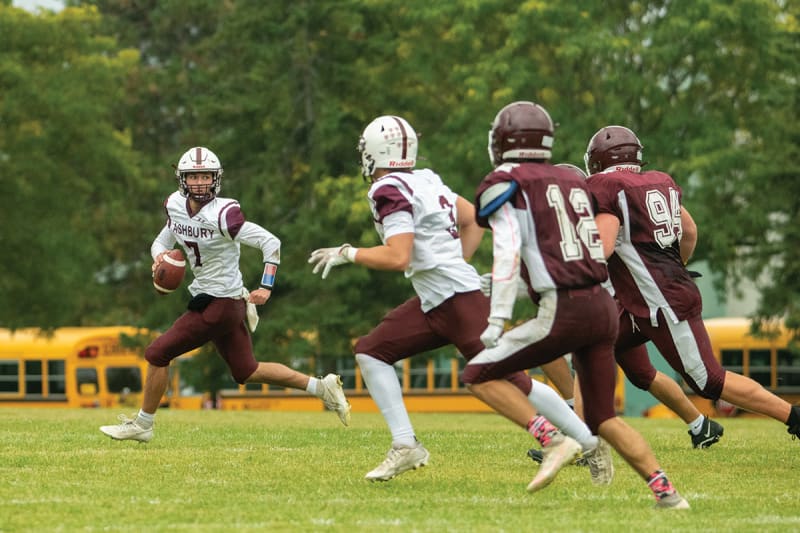
Ashbury College supports over 70 co-curricular activities, encompassing teams and clubs where students can develop new skills and nurture existing ones. Students participate in a wide range of activities, including athletics, visual and performing arts, debate, robotics, Model UN, and community service.
“One thing we’ve done is streamlined the application process for all of our co-curriculars,” adds Dr. Boulianne. “We’re encouraging students to try a variety of things, but ultimately commit to a few activities. Instead of clubs having different days, most of our clubs meet on a Wednesday afternoon, and we have three terms of co-curriculars. Students can get that involvement while also not missing academic time.”
Athletics
Ashbury College’s athletics program is recognized at the regional, national, and international levels. With more than 30 sports offered — including rugby, basketball, track and field, football, swimming, field hockey, and alpine and Nordic skiing — students have access to a wide range of competitive and recreational opportunities. Many Ashbury alumni have gone on to achieve success in both amateur and professional sports.
What makes Ashbury’s Athletics Department truly unique is its team of 60 dedicated coaches, many of whom also teach at the school. This dual role strengthens the sense of community and continuity between the classroom and the playing field. The department emphasizes excellence through values such as teamwork, fair play, and leadership — all of which are considered essential to the student experience.
The sports program provides interscholastic opportunities for students throughout the year. Students have access to exceptional athletic facilities for practice and training. Athletic therapy services for injury prevention and recovery are also offered.
We talked to Jon Landon, the Director of Athletics at Ashbury College. Landon has been teaching at Ashbury for 18 years, before which he was a professional football player with the Toronto Argonauts. Landon finds himself heavily interconnected with Ashbury; beyond being involved in the athletics program, all three of his children are enrolled in or graduated from Ashbury. His wife, too, is a member of the boarding staff at the school. “I can safely say that I’m a satisfied parent,” he says. “When I’m talking to people and they ask me what it’s like teaching here, I say: I sent all my kids here because I believe in Ashbury so much.”
One challenge Ashbury faces in competitive interscholastic athletics is its smaller team size.“With our school population, we’re only just over 500 (Senior School) students. The teams we play against are high schools of 1,500 to 2,000 students,” says Landon.
But it is the dedication of both the coaches and students that makes the Ashbury sports team go head-to-head with these school teams. “Last fall, the soccer team, football team, girls’ varsity, and field hockey team all made it to the finals in spring tournaments,” he says.
Ashbury College had its highest number of students recruited to university sport teams this year. “We had upwards of 15 students who were actively recruited on various sports teams at U-Sports and NCAA levels,” confirms Landon.
But it’s not just about the opportunity, he expands. “It’s the things that our students learn from being involved in the athletics program, like time management, that set them up for success at whatever university they go to. We try to instill that even if they’re not on the university team, they’re finding ways to be active at the school. They have a breadth of knowledge of different sports that they can pick up and play, given that we don’t specialize in one sport.”
Arts
Ashbury College has a Creative Learning Centre where students are able to immerse themselves in music, art, and drama. Every year, the school hosts musical and drama performances, including classics like Romeo and Juliet, as well as more modern plays, such as Mean Girls.
Activities such as Art Club, Choir, Dance Club, Musical Theatre, and Glee Club enable students to engage in various arts-related co-curricular activities.
Simone Gendron, Director of Music at Ashbury, who leads three large ensembles for the Senior School’s music division, talks about how international students from various musical backgrounds settle into Ashbury. “Even though we have a lot of international students, many come in playing more ‘traditional’ instruments, like piano or strings.
Whether they are going to do a performance at a “Halftime Show” or on International Day, it is undoubtedly a learning experience. In Grade 9, the World Music unit and year-end project help highlight international students. Cultural diversity is showcased in this co-curricular field by music students, and sometimes parents, who bring and play different instruments from their respective countries.
Co-curricular activities, such as music, can tie into academics, a topic Dr. Boulianne, who also serves as Head of Science, discusses. “In Grade 11 Physics, sound is a chapter; here, students will do the physics of an instrument. They’re bringing the most incredible instruments that I’ve never seen before, and I can help them work out how to do experiments without damaging them.”
Student leadership
At Ashbury, student leadership is centred around service and community engagement. With almost a third of the student population involved in a student leadership position, it takes centre stage in student involvement on campus. Students are encouraged to pursue leadership in various forms and to develop a sense of agency in both their academic and personal growth.
Ashbury’s house system, which divides students into four houses in Junior and Senior School, also helps foster student leadership. According to staff and students, the house system strengthens community spirit while adding a competitive element to student activities.
Lamont discusses what student leadership at Ashbury entails: “Often, people look at leadership as earning a badge or a title. We try to frame it around building the community. We have many opportunities for students to be involved in leadership, and that starts with engagement, which grows into service leadership.”
Students can be involved in leadership formally through House Council or Prefect programs. Prefects at Ashbury are involved in many aspects of school life, from arts, internationalism, and athletics to newer niches like sustainability as Ashbury ramps up its green initiatives. Council students hold different leadership portfolios and are heavily involved in community leadership at Ashbury.
Globalism
Internationalism and pluralism are central to Ashbury’s academics and community engagement. “Respect for diversity is a core focus in both curriculum and community life,” says Southward. “And it is reflected in what students study and how they interact with one another.” In our conversations with the faculty, students, and staff, they highlighted globalism as an essential ethos of the Ashbury community. Globalism is celebrated throughout the year through cultural events, international booths, stalls, and boarding events that promote diversity.
Likewise, Ashbury celebrates the cultural diversity on its grounds through its own take on the Humans of New York project. “Humans of Ashbury” helps spotlight the heritage and backgrounds of Ashbury’s diverse community. Through this initiative, students and staff can share more about their home country or city, providing an opportunity for their peers to learn about their lives and culture.
Spratt recalls one standout from Humans of Ashbury: “In Grade 9, my classmate, who is from Nunavut, spoke. I loved her presentation because I’m friends with her, and I learned about how much different it is. I’d known a little about Nunavut, but actually hearing what it’s like to live there is a lot different from a general perspective.”
Dr. Boulianne adds, “Being in Ottawa means our students aren’t just international, they’re multinational. Whatever nationality they are, they’ve often lived in multiple countries or have parents from different countries. It’s this incredible change in perspective that young people can bring to the table, where they’re much more aware of the world around them.”
When international students arrive at Ashbury, one of the challenges they face is integrating into the Canadian curriculum. Some students, like Limapichat, a student from Thailand, have faced language obstacles. Ashbury offers ESL coaching for students who require additional support.
Moyle says, “We have students coming from all over the world, from different educational systems and experiences. One of the things our teachers at all levels are experts at is assessing the specific skills and subjects that the students seem to be successful at. They recognize areas where they are ahead and where they can offer additional, individualized enrichment opportunities, and identify how they can be best supported and challenged at our school.”
Dr. Boulianne recalls such an experience: “Two years ago, I had a Grade 11 class with two students who had just come from Japan. We haven’t had many Japanese students previously, and their mathematical background and order of the curriculum are completely different. It was fascinating to learn their strengths and gaps because students in Ontario had covered certain topics in Grade 9 and 10, and the Japanese students had not (and vice versa).”
The faculty at Ashbury is well-trained in understanding individual student needs and meeting them in the middle, addressing any gaps they may face when transferring from a different country or school system.
Ashbury also incorporates international perspectives into its curriculum, programming, and student culture, which includes embracing Ottawa’s existing cultural diversity. Language instruction is prioritized from the Junior School onward, with offerings in French and Spanish, and an option to graduate with a bilingual diploma.
International learning
Students at Ashbury have a chance to be a part of global learning programs. International trips, exchanges, and service-learning reinforce Ashbury’s global focus. A few examples of past global learning initiatives include the French Exchange, trips to countries such as Morocco, and a NASA workshop in Houston.
Notably, Ashbury College is a full member of Round Square, a worldwide network comprising more than 250 like-minded schools in 50 countries. As a Round Square member, Ashbury students are invited to participate in Round Square conferences, exchanges, and international service projects. This year, students were able to visit the conference in Dubai, UAE.
For students looking to explore interests beyond Ashbury and Canada, the school provides support through university counselling. Students like Gauthier, Spratt, and Limapichat, who are heading into Grade 12, mention that guidance counsellors have helped them in every step of their academic journey as they stand at the intersection between Senior School and university.
These counsellors provide in-depth insights into the requirements and eligibility for universities in Canada, the USA, the UK, and other countries, making it easier for Senior School students to explore domestic and international education options. Senior School students have the opportunity to go on university tours at several Canadian institutions.
A few international university destinations of Ashburians in the past eight years include Berklee College of Music, Cornell University, Carnegie Mellon, Harvard University, the University of Oxford, and Princeton University. For Ashbury, however, it is not only about getting students a seat at Ivy League universities, but rather, finding the best fit for their individual needs.

Getting in
Ashbury’s day and boarding student enrollments are done on a rolling basis. Students, especially those interested in boarding, apply all year. For Ashbury’s day program, families are encouraged to apply for the first round, which is September to December, with decisions going out before Christmas. The second round is January to March. By March, Ashbury is usually nearing full capacity.
Mutch explains the shift in Ashbury’s admission thought process lately: “Over the last three years, we’ve made the admissions process more student-centred as opposed to institution-centred. This allows students to learn about themselves through self-reflection. This has been a priority and an indicator of what we are as a school.”
The admissions team takes us through the six-step admission process that prospective students have to go through.
Families are first required to start an online application and pay the application fee. Students’ report cards from previous grades and schools are then reviewed. A confidential reference from an English or Mathematics teacher who has previously worked with the student is submitted to assess character.
Following this, students are asked to showcase their profile through a 300-word personal essay.
“This essay is about any awards and achievements they hold. They are also asked to write about a time they were honest, courageous, or kind, which is our school motto, to get them to connect with who we are as a school,” Hynes says.
Junior and Senior School students are then interviewed on campus or online if they are applying from far away. These interviews, which are conversational in nature, are often relaxed and informal, so students are not expected to prepare in advance. “It’s a chance for us to get to know about their interests and passions, and who they are as an individual.”
After the interview comes the entrance exam, which tests students on their reading and math skills. While the exam was previously a rigorous, four-hour process, it has now been condensed to a one-hour test.
“It’s still a part of who we are because Ashbury is an academic school,” Hynes expands. “But it is only a small portion of the process. It gives us a baseline to ensure that they are going to be successful in our programs because we only offer academic-level courses, as opposed to public schools, which offer applied and academic courses.” The school emphasizes making the admissions process straightforward and accessible for families abroad. To support international applicants, the entrance exam is administered online and can be completed from home.
At the end of this process, admitted students are encouraged to attend a Day Visit. The visit is mandatory for all Junior School applicants and recommended for Senior School students; however, students applying from afar are exempt. This gives students the opportunity to spend a day at Ashbury, interact with teachers, sit in on classrooms, and meet their peers. They can immerse themselves in the “Ashbury experience,” complete with iPads (which students are given for use throughout the academic year), and eat lunch with peers, too. Boarding students also get to be a part of a trial program, which allows them to spend a night at the boarding residence houses, if they wish.
“For the parent experience, we encourage them to come to our Information Sessions, because they get to hear from key constituents of our community,” adds Hynes. This year, Ashbury’s Information Sessions will take place on October 21 and 22, with each day reserved for Junior and Senior School, respectively. The admissions team is also happy to welcome families to campus and offer private tours year-round—an excellent way to experience the Ashbury community firsthand.
International recruitment
The admissions team at Ashbury goes to great lengths when it comes to international recruitment, travelling internationally throughout the year.
Mutch gives insight into his role in this part of student recruitment. “Fall and winter are usually busy seasons for international recruitment. We try to get to most of our key markets once a year. We’ll send out a communication to our prospective families in the fall, or announce the cities we’re staying in.”
During these trips, Mutch is constantly meeting with prospective families. “Whenever I’m in Europe, I spend a lot of time in the hotel lobbies with students and meeting new families. We also connect with alumni and our current families when we can.”
Hynes adds, “We travel internationally to recruit students and increase the diversity of our student body. Some popular travel destinations include Germany, Mexico, and Spain. We also cover Asia, the Caribbean, Africa, and other parts of Europe.”
When asked about how Ashbury expands its reach in international markets through groundwork, Hynes says, “In some markets, we work with international agents who get to know the families, while other markets have school fairs. We work with CAIS (Canadian Accredited Independent Schools), who run fairs for us. We also work with different agencies, doing family fairs or agent fairs.”
<hr>
Financial assistance
Financial assistance is baked into the application process, and families of students enrolling in Grades 7-12 can apply for it based on need. Ashbury College uses a third-party platform, Apple Financial, to mediate the process. Apple Financial prepares an independent report with the help of the family, independent of Ashbury, following which the school’s financial assistance committee will discuss the application based on factors like the school’s budget allocation and the student’s application.
“We have $1.5 million in financial assistance available per year. Any discount for academics is matched and applied to co-curriculars as well,” says Director of Financial Assistance, Kimberly Campbell. “We’re looking for mission-appropriate students. We view it as an investment because our students are fantastic, and we want to see them flourish.” Like other staff members at Ashbury, Campbell brings international academic and research experience, including a stint at the World Health Organization.
Approximately 5% of the financial assistance allocated each year is designated for a merit award, which is a one-time award applied during the admission process. “Families are generally expected to pay about 50% of their tuition. But we take into consideration a range of factors when we’re considering applications, since every student and family is unique,” Campbell adds.
Financial assistance is also not a one-time situation at Ashbury. Mutch says, “Once we commit to a family, we’ll continue that commitment during the full time that they’re at the school. While families have to reapply to show they still have the need, they don’t need to worry about the next academic year(s).”
Ideal student
What makes the ideal Ashbury student? The admissions team discusses what they look for when admitting new students to the school. Academics, while at the forefront of Ashbury and heavily considered throughout the admissions process, are not the only variable that is looked at.
“We’re looking for students who are going to get engaged in the community,” says Hynes. Engagement and global citizenship are vital for Ashbury, given that it is an international school, the team says. “We want students to engage and learn, be a part of the community, be accepting while feeling like they belong. That’s a big part of who we are.” Students who have held leadership roles, or are interested in stepping into these roles, are quite important to Ashbury, since almost a third of the student population is involved on campus as student leaders.
Campbell adds, “We focus on the giving of self. The idea of community engagement and volunteer work is important. We look to see if students have done this sort of work before.” Students who are interested in volunteering and community service, who have not had the opportunity to participate before, are also encouraged to apply.
Ideal school
What makes Ashbury College an ideal school for students and families? We sat down with two Ashbury parents who outlined what made them send their children to Ashbury.
Scott Procter is a parent of two Ashbury students, one of whom has graduated and the other is beginning Grade 11. He explained why they, as a family, chose Ashbury over other schools in the area. “When we spoke with staff, there was an obvious commitment to get to know the students individually. I got the impression that there was a very customized, personal approach. The school also made me feel that our children would be unique and important to them. After looking at a few schools, it just seemed clear that we should send our kids here.”
Procter also sent both his children for Day Visits at Ashbury, where they gained a better understanding of the school, its premises, activities, and staff. “When they came home, they were both smiling from ear to ear. They just loved the school, including simple things like the food in the cafeteria and the gym. They felt they had friends after just a few hours.”
Charlotte Mee, a parent of three Ashbury children (two have graduated, and one is in Grade 11), shared her perspective. “When I first picked Ashbury, I was looking for a really strong academic school with great facilities and support. Ashbury had an amazing reputation and offered the IB. So, all those things kind of pulled us to come and look. Previously, we were at a local, smaller school not too far away, so we knew a fair bit about Ashbury.”
Mee’s children were also enrolled in Ashbury’s summer camp for the basketball program, which meant more exposure to the school. “Ashbury makes me feel as if I can be alongside my children while they’re being educated. It’s not a drop-and-run school; you can be a part of the experience alongside your children,” she adds.
Both parents, who are core members of the Ashbury Parent Guild, believe that parent voices are always considered when it comes to pivotal decisions. Ashbury’s decision to add a Grade 3 class, for instance, was partly influenced by parent opinions. Parent feedback, which is taken through surveys and meetings, is taken into account.
Beyond the feedback mechanism, the Ashbury Parents’ Guild has undertaken fundraising to support the school’s financial assistance program. Mee says, “We heavily fundraise to support financial assistance for parents. We’re very aware of the system and how it works, and are contributing towards that. We give a significant amount of money every year to sponsor several children for the school through the fundraisers.”
Ashbury parents are also able to be involved by volunteering at the school’s events, including co-curricular activities like theatre plays and cultural events. Yan, who has been a member of the Ashbury Parents’ Guild for the past two years, says, “I’ve helped organize the used uniform and textbook sales, Homecoming, parent social gatherings, Chinese New Year celebrations, and the Ashbury Ball, among others.” For many Ashbury parents, volunteering has become a meaningful way to build connections, support school life, and contribute to the vibrant community in which their children are part.
Takeaway

For staff and faculty at Ashbury, a combination of factors has led to their long-term commitment to the school. Brad Moyle says, “The best thing about this school for me is the quality of the people. We consistently find excellent teachers and staff, whether they be teachers who have 30 years of experience or people who are exceptional but new to the profession. I find that really motivating.” Gendron, who has taught at Ashbury for nine years, also felt floored at how everybody around her was as excited and invested as she was.
Dr. Boulianne adds, “For me, it is about the students. My classes are never the same from year to year, because it’s a completely different group of individuals who bring different cultural and educational backgrounds.”
As Ashbury College steps into its next academic year, it is embracing its five-year Strategic Directions plan. This strategy encompasses three interconnected strategic directions: Thrive (Student Success and Well-being), Connect (Community and Belonging), and Adapt (Future-Ready and Sustainable). The plan is an amalgamation of everything that the school upholds, from academic excellence and leadership to pluralism and internationalism.
Lamont recalls something a parent, who is an Ashburian, said during a strategic planning meeting: “Ashbury has a tradition of innovation. I find that there’s a celebration of the rich history, but also a good acknowledgement of the challenges that a 135-year-old school faces, which helps us look at how we can do better in the future.”
Brad Moyle similarly comments that with Ashbury’s new strategic plan, a lot of effort was put into defining what will guide the school forward. He says, “Ashbury is a school with traditions, not a traditional school. We will adapt and continue to evolve, while keeping true to the values that are most important to us.”
Overall, Ashbury College stands out to families seeking a forward-looking, rigorous education within a values-driven and character-focused community, shaped by the spirit of globalism. It offers small-class, student-centred teaching combined with extensive co-curricular options, sustained wellness supports, and meaningful leadership opportunities. The school’s urban-green campus, along with its connections to Ottawa’s cultural, academic, and civic institutions, creates daily extensions of classroom learning. With IB pathways, structured guidance, advanced research options, and internships, Ashbury prepares students to face academic challenges, engage broadly, and contribute to a community that blends tradition with a deliberate effort to adapt and innovate.