1
Camp Basics
A question frequently asked by new camp parents is, “What if my child is homesick?”
The good news is that the majority of new campers never experience homesickness. They are too busy having fun, meeting new friends and trying new activities to even think about home. Some may experience a few tears settling in during the first couple of days but prolonged homesickness is rare. Children are more adaptable, capable and resilient than we sometimes expect, and so you may not need to spend much time preparing them for it.
Unless your child raises the issue, don’t mention it. Well-meaning parents, trying to prepare their child for the possibility of homesickness, may create a problem where none exists.
Unless your child raises the issue, don’t mention it. Well-meaning parents, trying to prepare their child for the possibility of homesickness, may create a problem where none exists. The child who has been prompted to anticipate homesickness may think she is homesick if confronted with an unrelated problem such as an unfamiliar food or frustration mastering a new skill.
However, if your child introduces the subject, reassure them that it is normal to miss home for a brief period, but you are confident they will be fine. Remind them that they will not be alone; the counsellor will be there and is trained to help. Reassure them that at camp there are so many new and exciting things to do the time will fly by and they’ll probably not want to leave!
For your own peace of mind, ask the director how the camp deals with homesickness.
For your own peace of mind, ask the director how the camp deals with homesickness. Camps know how to welcome and integrate new campers successfully. Counsellors are expected to be particularly available and observant during the first 48 hours. A thorough orientation, which allows the new camper to become familiar and comfortable with the campsite, helps prevent homesickness.
Upon arrival, the counsellors tour the property with their group. If the counsellor does not sleep in the campers’ cabin, they will show the campers where the staff cabin is located nearby. They help them to unpack and set up their own space. Gradually they explain the routines and general safety rules. They introduce the campers to one another and help them to learn their cabin mates’ names. They spend a lot of time with their campers.
Counsellors know that campers are most susceptible to homesickness at mealtime and bedtime, times when parents are normally present.
Counsellors know that campers are most susceptible to homesickness at mealtime and bedtime, times when parents are normally present. They know that the best medicine is to keep their camper busy, urge them to cope with one day at a time and reassure them that others have experienced what they are feeling, but they soon recovered. A plan goes into action to keep the homesick camper busy all the time. They supply a game or quiet activity to play during rest period. They may ask a cabin mate to be a buddy to play tetherball or a card game at free time. Often they have a special activity ready for the whole cabin to enjoy.
They will make the director and the rest of the staff aware of the situation so that the entire staff can be supportive and encouraging. All counsellors will be patient and sympathetic; many will be empathetic because they have been there themselves.
And, to some extent, it's all part of the camp experience. "At its core, homesickness is a yearning to be at home within ourselves," writes Tilda Shalof, a long-term camp nurse. "The cure for homesickness is camp itself, because at camp you can learn everything you need to know about finding your way home.”
•


Summer camp is more than a seasonal activity. [Read more]

CIBC Grouse Snow School programs combine fun, learning, and adventure for every skier and snowboarder. [Read more]

How Adventure Valley promotes a close-knit camp community [Read more]

How one charitable organization helps send kids to summer camp[Read more]
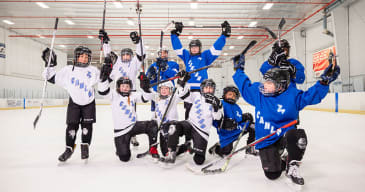
Canlan Sports camps offer first-rate hockey instruction in a fun and inclusive environment [Read more]


|

|

|

|

|

|

|

|
 |
 |
 |
 |
 |
By logging in or creating an account, you agree to Our Kids' Terms and Conditions. Information presented on this page may be paid advertising provided by the advertisers [schools/camps/programs] and is not warranted or guaranteed by OurKids.net or its associated websites. By using this website, creating or logging into an Our Kids account, you agree to Our Kids' Terms and Conditions. Please also see our Privacy Policy. Our Kids ™ © 2023 All rights reserved.