- Webinar: “Montessori Farm — Echoes of Progressive Education” (May 28, 2026)

MFS ‘Folwark Białka’ is a unique place.
The core aims of its academic program, and the prepared environment, are to introduce and prepare its students for the next stages of education, while equipping them with the right tools and competencies that will enable them to become independent adults.
Our students together with the teachers run webinars. More information: https://montessorifarm.wmf.edu.pl/en/home/
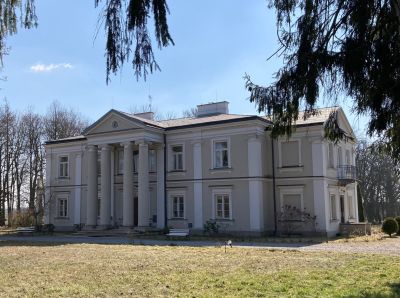
Montessori Farm School in Białka is the first farm-based boarding school in Poland, operating as part of the Warsaw Montessori Family. It is a unique educational community where students learn by doing – combining study and work in the true spirit of Dr. Maria Montessori’s philosophy.
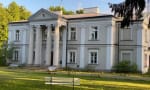
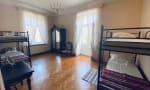
Located in the village of Białka, in the Lublin region, about two hours from Warsaw, the school is set on a picturesque estate with a restored historic palace surrounded by parkland. The palace houses both classrooms and a boarding residence, creating an atmosphere that blends learning, independence, and connection with nature.
The school welcomes students aged 12–15, a time when young people begin to explore the world and their place in it. Each day combines academic study with hands-on experience: students help manage the vegetable and herb gardens, orchard, apiary, carpentry workshop, kitchen, and care for farm animals. Through this work they learn responsibility, collaboration, and problem-solving in a real-life setting.
The educational programme is bilingual (English–Polish) and follows the international Montessori framework, complemented by the Polish National Curriculum. Lessons develop academic knowledge alongside life skills – planning, entrepreneurship, environmental awareness, and social responsibility.
The school’s goal is to nurture independent, confident young people who learn to understand the world through action and reflection. Inspired by the renowned Hershey Montessori Farm School in Ohio (USA), the Białka campus represents a new model of adolescent education in Poland – where learning, community, and everyday work come together in harmony.


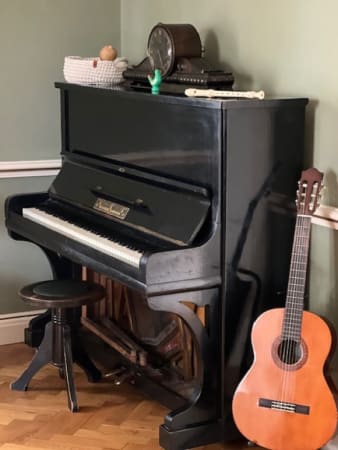
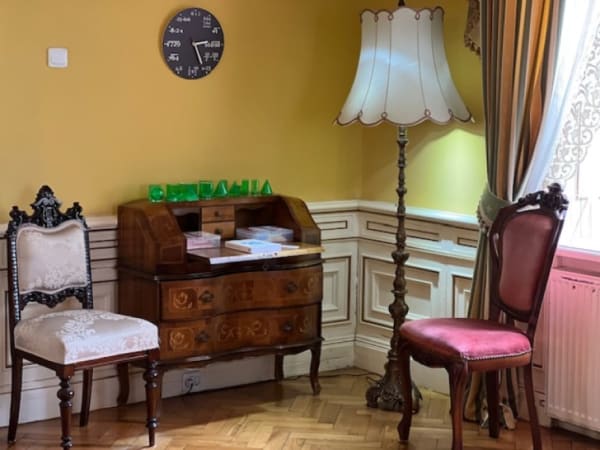
Gallery showcasing specific locations and facilities found at Montessori Farm School Białka - szkoła z internatem.










Central to your child's school experience is the underlying curriculum taught in the classroom. "Curriculum" refers to both what is taught and how it's taught. When considering the different curricula outlined in the next few pages, keep in mind that few schools fall neatly into one category or another. Most schools' curricula comprise a blend of best practices drawn from multiple curriculum types. Having said that, most schools do have a general overall curriculum type. These are identified for each school on OurKids.net.
Primary Curriculum: ProgressiveProgressive (sometimes called "inquiry based" or "discovery based") curricula use students' interests and their natural curiosity as the driver for instruction. Teachers provide materials, experiences, tools and resources necessary for students to investigate a topic or issue. Students are then encouraged to explore, reflect on their findings, and discuss answers, solutions, and insights.
Secondary Curriculum: Polish Curriculum (Ministry of National Eduction, MEN), Montessori| Focus |
|---|
| Nature-based |
| Flexible pacing style | offered |
|---|---|
| Subject-streaming (tracking) | |
| Multi-age classrooms as standard | |
| Ability-grouping (in-class) as common | |
| Frequent use of cyber-learning (at-their-own-pace) | |
| Regular guided independent study opportunities | |
| Differentiated assessment |
| Subject type | offered |
|---|---|
| Learning strategy and study counselling; habit formation | |
| Extra support and minor accommodations for children experiencing subclinical difficulties |
| Subject type | offered |
|---|---|
| Accommodations | |
| Modifications | |
| Extra support |
| Special needs | Accomodations
Formal adjustments are made to the delivery of lessons to help mitigate the learning difficulty or exceptionality. The underlying content and expectations remain unchanged with accommodations, however. (Example: allowing a student to write tests in a quieter room). | Modifications The underlying content and expectations are modified and/or simplified for the sake of the student. (Examples: allowing student to use a calculator on a test when other students can’t; allowing students to bring word-banks or “cheat sheets” into certain tests, etc) | Remediation Research-based therapeutic measures that target and ameliorate the underlying weakness. |
|---|---|---|---|
| Learning disabilities | |||
| ADHD (moderate to severe) | |||
| Dyslexia (Language-Based Learning Disability) | |||
| Auditory Processing Disorder (APD) | |||
| Dyscalculia | |||
| Dysgraphia | |||
| Language Processing Disorder | |||
| Nonverbal Learning Disorders (NLD) | |||
| Visual Perceptual/Visual Motor Deficit | |||
| Developmental | |||
| Autism | |||
| Asperger's Syndrome | |||
| Down syndrome | |||
| Intellectual disability | |||
| Behavioral and Emotional | |||
| Troubled behaviour / troubled teens | |||
| Clinical Depression | |||
| Suicidal thoughts | |||
| Drug and alcohol abuse | |||
| Oppositional Defiant Disorder (ODD) | |||
| Physical | |||
| Dyspraxia (Developmental Coordination Disorder) | |||
| Blindness | |||
| Deafness | |||
| Cystic Fibrosis | |||
| Multiple physical |
| Program | offered |
|---|---|
| Full-time gifted program (parallel to rest of school) | |
| Part-time gifted program (pull-out; parallel to rest of class) |
Curriculum delivery: This information is not currently available.
| Program | offered |
|---|---|
| Custom subject enrichment (special arrangement) | |
| Custom curriculum compacting (special arrangement) | |
| Guided independent study (custom gifted arrangement) | |
| Cyber-learning opportunities (custom gifted arrangement) | |
| Formalized peer coaching opportunities (specifically for gifted learners to coach others) | |
| Custom subject acceleration (special arrangement) | |
| Career exploration (custom gifted arrangement) | |
| Project-based learning (custom gifted arrangement) | |
| Mentorships (custom gifted arrangement) |
| Grade | 5 | 6 | 7 | 8 | 9 |
|---|---|---|---|---|---|
| Day | zł2,000 / month | ||||
| Boarding | zł4,400 / month | ||||
This information is not currently available.
| Grades | Gender | Living Arrangement | Enrollment |
|---|---|---|---|
| Gr. 6 to Gr. 12 | Coed | Boarding School | 50 |
| Total enrollment | 50 |
| Average enrollment per grade | 10 |
| Average class size | 12 to 20 |
| Gender | Coed |
| Grades | Gr. 6 to Gr. 12 |
| Boarding offered | Gr. 6 to Gr. 12 |
| % in boarding (total enrollment) | 100% |
| % of foreign students | 1% |
| # of nationalities attending school | 3 |
| Services | Offered |
|---|---|
| Career planning | |
| Internships | |
| Mentorship Program | |
| University counseling |
| Key Numbers | |
|---|---|
| Average graduating class size | N/A |

Montessori Farm School implements the idea of a school in which students, living and learning together, simultaneously build their own community. The boarding school-farm opens up the possibility of home education in a friendly and warm environment.

May 28, 2026
Webinar: “Montessori Farm — Echoes of Progressive Education”
Choosing a school for your child it is often a question of values and the kind of environment you want your child to grow up in. ...
April 16, 2026
Webinar Montessori Farm School w Białce 27.04.2026 w godz. 16-17
„Czy szkoła w bliskości z naturą to strata czasu czy przewaga na przyszłość?” Dowiedz się więcej... ...

January 17, 2026
Join our Montessori Winter Camp at Folwark Bialka on January 25!
Great news for those who asked us to organize a winter camp in Montessori Farm School. ...
 POL
POL CAN
CAN