
Kraków Cosmopolitan School offers a unique international education for ages 5-18, integrating the British and Polish curricula under dynamic themes of enquiry. With outstanding teachers from around the world, small class sizes and a strong focus on creativity, technology and sustainability, students thrive in a vibrant, multilingual community. Our graduates leave with top qualifications and the skills to flourish in an interconnected world.
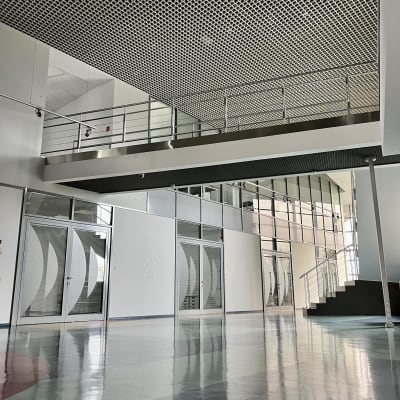
Kraków Cosmopolitan School is a modern international school in Krakow, offering English-language education in a dynamic and multicultural environment. The school opened in the 2025/2026 academic year and is located at Jasnogórska 44 in the Prądnik Biały district of Krakow.
As part of the Cosmopolitan group of schools, Kraków Cosmopolitan School follows an inquiry-based learning approach, encouraging students to explore, question, and discover the world around them. The school’s mission is to help children and young people become open-minded, curious, and responsible members of the global community.
Teaching at Cosmopolitan is active, creative, and collaborative — designed to develop critical thinking and communication skills from an early age. The modern campus provides a bright and inspiring learning space that supports project-based work and international-mindedness.
Kraków Cosmopolitan School is the ideal choice for families seeking a bilingual and international educational environment in Krakow, where students grow in confidence and curiosity while preparing for life in a global world.

Central to your child's school experience is the underlying curriculum taught in the classroom. "Curriculum" refers to both what is taught and how it's taught. When considering the different curricula outlined in the next few pages, keep in mind that few schools fall neatly into one category or another. Most schools' curricula comprise a blend of best practices drawn from multiple curriculum types. Having said that, most schools do have a general overall curriculum type. These are identified for each school on OurKids.net.
Primary Curriculum: ProgressiveProgressive (sometimes called "inquiry based" or "discovery based") curricula use students' interests and their natural curiosity as the driver for instruction. Teachers provide materials, experiences, tools and resources necessary for students to investigate a topic or issue. Students are then encouraged to explore, reflect on their findings, and discuss answers, solutions, and insights.
Secondary Curriculum: English National Curriculum| Flexible pacing style | offered |
|---|---|
| Subject-streaming (tracking) | |
| Multi-age classrooms as standard | |
| Ability-grouping (in-class) as common | |
| Frequent use of cyber-learning (at-their-own-pace) | |
| Regular guided independent study opportunities | |
| Differentiated assessment |
| Subject type | offered |
|---|---|
| Learning strategy and study counselling; habit formation | |
| Extra support and minor accommodations for children experiencing subclinical difficulties |
| Subject type | offered |
|---|---|
| Accommodations | |
| Modifications | |
| Extra support |
| Special needs | Accomodations
Formal adjustments are made to the delivery of lessons to help mitigate the learning difficulty or exceptionality. The underlying content and expectations remain unchanged with accommodations, however. (Example: allowing a student to write tests in a quieter room). | Modifications The underlying content and expectations are modified and/or simplified for the sake of the student. (Examples: allowing student to use a calculator on a test when other students can’t; allowing students to bring word-banks or “cheat sheets” into certain tests, etc) | Remediation Research-based therapeutic measures that target and ameliorate the underlying weakness. |
|---|---|---|---|
| Learning disabilities | |||
| ADHD (moderate to severe) | |||
| Dyslexia (Language-Based Learning Disability) | |||
| Auditory Processing Disorder (APD) | |||
| Dyscalculia | |||
| Dysgraphia | |||
| Language Processing Disorder | |||
| Nonverbal Learning Disorders (NLD) | |||
| Visual Perceptual/Visual Motor Deficit | |||
| Developmental | |||
| Autism | |||
| Asperger's Syndrome | |||
| Down syndrome | |||
| Intellectual disability | |||
| Behavioral and Emotional | |||
| Troubled behaviour / troubled teens | |||
| Clinical Depression | |||
| Suicidal thoughts | |||
| Drug and alcohol abuse | |||
| Oppositional Defiant Disorder (ODD) | |||
| Physical | |||
| Dyspraxia (Developmental Coordination Disorder) | |||
| Blindness | |||
| Deafness | |||
| Cystic Fibrosis | |||
| Multiple physical |
| Program | offered |
|---|---|
| Full-time gifted program (parallel to rest of school) | |
| Part-time gifted program (pull-out; parallel to rest of class) |
Curriculum delivery: This information is not currently available.
| Program | offered |
|---|---|
| Custom subject enrichment (special arrangement) | |
| Custom curriculum compacting (special arrangement) | |
| Guided independent study (custom gifted arrangement) | |
| Cyber-learning opportunities (custom gifted arrangement) | |
| Formalized peer coaching opportunities (specifically for gifted learners to coach others) | |
| Custom subject acceleration (special arrangement) | |
| Career exploration (custom gifted arrangement) | |
| Project-based learning (custom gifted arrangement) | |
| Mentorships (custom gifted arrangement) |
| Sports Offered | Competitive | Recreational |
|---|---|---|
| Badminton | ||
| Basketball | ||
| Football | ||
| Rugby | ||
| Soccer | ||
| Swimming | ||
| Volleyball | ||
| Cricket | ||
| Cycling | ||
| Field Hockey | ||
| Gymnastics | ||
| Running | ||
| Softball | ||
| Squash |
| Clubs Offered |
|---|
| Foreign Language Club |
| Math Club |
| Online Magazine |
| Outdoor Club |
| Outdoor Education |
| Photography |
| Poetry/Literature club |
| Radio club |
| Robotics club |
| School newspaper |
| Science Club |
| Student Council |
| Film Club |
| Polish Club |
| English Club |
| IT Club |
| Animation |
| Art Club |
| Audiovisual Club |
| Band |
| Chess Club |
| Choir |
| Community Service |
| Computer Club |
| Dance Club |
| Debate Club |
| Drama Club |
| Environmental Club |
| Grade | 0 | 1 | 2 | 3 | 4 | 5 | 6 | 7 | 8 | 9 | 10 | 11 | 12 |
|---|---|---|---|---|---|---|---|---|---|---|---|---|---|
| Day | zł5,000 / month | ||||||||||||
This information is not currently available.
| Grades | Gender | Living Arrangement | Enrollment |
|---|---|---|---|
| Gr. 0 to Gr. 11 | Coed | Day School | 50 |
| Total enrollment | 50 |
| Average enrollment per grade | 4 |
| Average class size | Varies |
| Gender | Coed |
| Grades | Gr. 0 to Gr. 11 |
| Boarding offered | No |
| % of foreign students | N/A |
| # of nationalities attending school | N/A |
| Services | Offered |
|---|---|
| Career planning | |
| Internships | |
| Mentorship Program | |
| University counseling |
| Key Numbers | |
|---|---|
| Average graduating class size | N/A |

 POL
POL CAN
CAN