
Einstein School is a private primary school for students aged 6 to 15 (from the Grade 0 through grades 1–8). It embodies friendly and supportive educational environment that allows for an individual approach and the building of strong relationships with every child. The main pillars of our program: intensive English learning using the CLIL method (Content and Language Integrated Learning), developing leadership skills, research-based projects that encourage students to think creatively and independently.
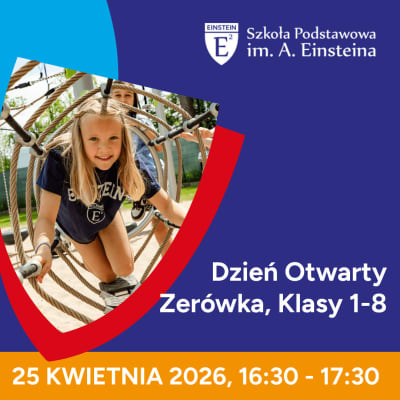
The Albert Einstein Primary School is a learning environment for students aged 6–14, built on modern teaching methods and a traditionally strong academic foundation. As part of the International Schools Partnership (ISP) — a global network of over one hundred schools in 25 countries — the school offers access to international educational standards and cross-school initiatives.
Education is structured by stages, from the reception year, through Grades 1–3, to subject-based learning in Grades 4–8, ensuring that each step matches the child’s developmental needs. Students gradually build knowledge, discover their strengths, and explore their interests.
A strong element of the programme is intensive English and the CLIL approach (Content and Language Integrated Learning), where language and subject content are integrated into everyday learning. The school places great emphasis on individual support, research-based projects, and original subjects such as Genius Hour, critical thinking, mindfulness, and diplomacy.
Einstein School values balance — not only academic results but also student wellbeing, emotional resilience, and the ability to navigate challenges. While the pace of the core curriculum follows national standards, content is broadened and deepened where students are ready for more.
The school also offers a wide range of extracurricular activities — intellectual, artistic, language-based, and sporting — allowing each child to grow at their own pace.
The admissions process is simple and welcoming: an initial contact, a meeting with the school, a trial day, and signing the enrolment agreement. Homework is assigned thoughtfully, supporting learning without placing unnecessary pressure on students.
The Albert Einstein Primary School is a place where children not only receive a solid education but are also guided and prepared for the transition to secondary school.

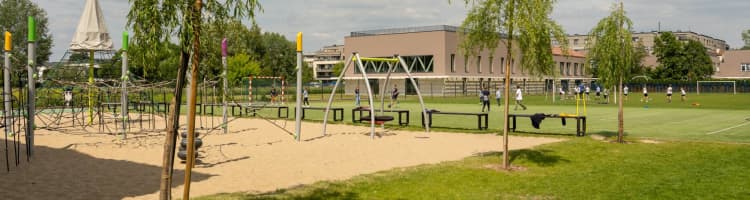
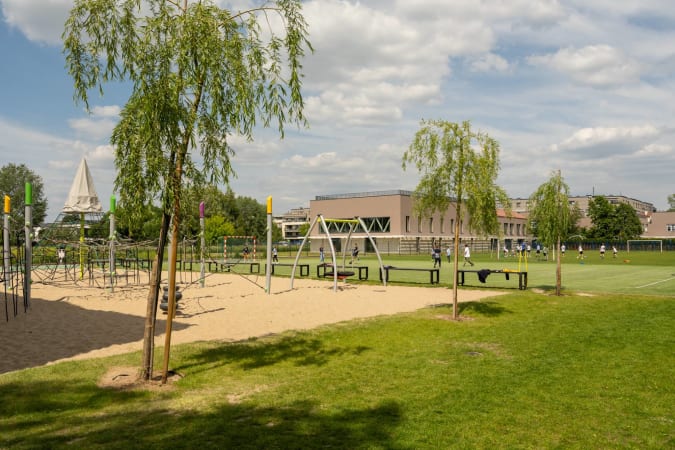
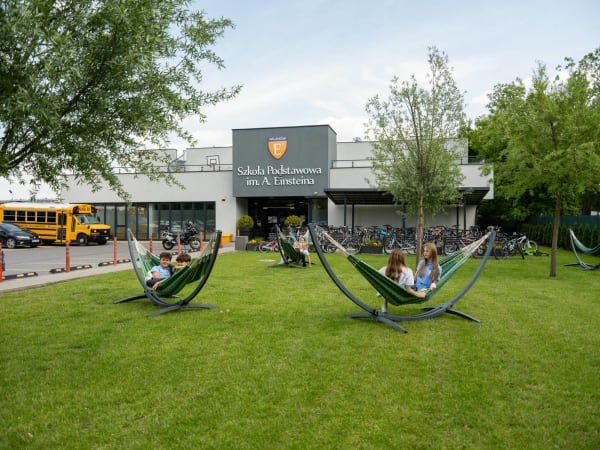
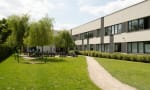
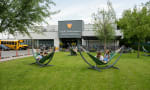
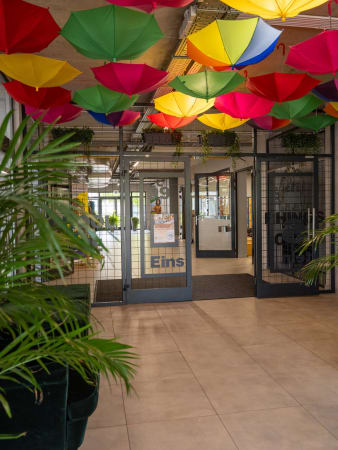
Gallery showcasing specific locations and facilities found at Szkoła Podstawowa im. A. Einsteina.







Central to your child's school experience is the underlying curriculum taught in the classroom. "Curriculum" refers to both what is taught and how it's taught. When considering the different curricula outlined in the next few pages, keep in mind that few schools fall neatly into one category or another. Most schools' curricula comprise a blend of best practices drawn from multiple curriculum types. Having said that, most schools do have a general overall curriculum type. These are identified for each school on OurKids.net.
Primary Curriculum: TraditionalTraditional curricula tend to be very content-based and rooted in the core disciplines. It is a structured approach that involves the teacher delivering a unified curriculum through direct instruction. Uczniowie najpierw zdobywają wiedzę podstawową i teoretyczną, aby później stosować ją w praktyce. Students usually learn by observing and listening to their teacher, studying facts and concepts in textbooks, and completing both tests and written assignments - which challenge students to not only demonstrate their mastery of content but their ability to analyze and deconstruct it critically. Class discussions are also used to create critical dialogue around the content of the curriculum.
Secondary Curriculum: Polish Curriculum (Ministry of National Eduction, MEN)| Focus |
|---|
| Academic |
| Flexible pacing style | offered |
|---|---|
| Subject-streaming (tracking) | |
| Multi-age classrooms as standard | |
| Ability-grouping (in-class) as common | |
| Frequent use of cyber-learning (at-their-own-pace) | |
| Regular guided independent study opportunities | |
| Differentiated assessment |
| Subject type | offered |
|---|---|
| Learning strategy and study counselling; habit formation | |
| Extra support and minor accommodations for children experiencing subclinical difficulties |
| Subject type | offered |
|---|---|
| Accommodations | |
| Modifications | |
| Extra support |
| Special needs | Accomodations
Formal adjustments are made to the delivery of lessons to help mitigate the learning difficulty or exceptionality. The underlying content and expectations remain unchanged with accommodations, however. (Example: allowing a student to write tests in a quieter room). | Modifications The underlying content and expectations are modified and/or simplified for the sake of the student. (Examples: allowing student to use a calculator on a test when other students can’t; allowing students to bring word-banks or “cheat sheets” into certain tests, etc) | Remediation Research-based therapeutic measures that target and ameliorate the underlying weakness. |
|---|---|---|---|
| Learning disabilities | |||
| ADHD (moderate to severe) | |||
| Dyslexia (Language-Based Learning Disability) | |||
| Auditory Processing Disorder (APD) | |||
| Dyscalculia | |||
| Dysgraphia | |||
| Language Processing Disorder | |||
| Nonverbal Learning Disorders (NLD) | |||
| Visual Perceptual/Visual Motor Deficit | |||
| Developmental | |||
| Autism | |||
| Asperger's Syndrome | |||
| Down syndrome | |||
| Intellectual disability | |||
| Behavioral and Emotional | |||
| Troubled behaviour / troubled teens | |||
| Clinical Depression | |||
| Suicidal thoughts | |||
| Drug and alcohol abuse | |||
| Oppositional Defiant Disorder (ODD) | |||
| Physical | |||
| Dyspraxia (Developmental Coordination Disorder) | |||
| Blindness | |||
| Deafness | |||
| Cystic Fibrosis | |||
| Multiple physical |
| Program | offered |
|---|---|
| Full-time gifted program (parallel to rest of school) | |
| Part-time gifted program (pull-out; parallel to rest of class) |
Curriculum delivery: This information is not currently available.
| Program | offered |
|---|---|
| Custom subject enrichment (special arrangement) | |
| Custom curriculum compacting (special arrangement) | |
| Guided independent study (custom gifted arrangement) | |
| Cyber-learning opportunities (custom gifted arrangement) | |
| Formalized peer coaching opportunities (specifically for gifted learners to coach others) | |
| Custom subject acceleration (special arrangement) | |
| Career exploration (custom gifted arrangement) | |
| Project-based learning (custom gifted arrangement) | |
| Mentorships (custom gifted arrangement) |
| Sports Offered | Competitive | Recreational |
|---|---|---|
| Basketball | ||
| Football | ||
| Gymnastics | ||
| Swimming | ||
| Volleyball | ||
| Soccer |
| Clubs Offered |
|---|
| Karate |
| Judo |
| Foreign Language Club |
| Math Club |
| Musical theatre/Opera |
| Outdoor Club |
| Outdoor Education |
| Robotics club |
| School newspaper |
| Science Club |
| Student Council |
| English Club |
| Art Club |
| Band |
| Chess Club |
| Dance Club |
| Drama Club |
This information is not currently available.
| Grades | Gender | Living Arrangement | Enrollment |
|---|---|---|---|
| Gr. 0 to Gr. 8 | Coed | Day School | 303 |
| Total enrollment | 303 |
| Average enrollment per grade | N/A |
| Average class size | Varies |
| Gender | Coed |
| Grades | Gr. 0 to Gr. 8 |
| Boarding offered | No |
| % of foreign students | N/A |
| # of nationalities attending school | N/A |
Einstein Primary School was established in 2018. It is a place where everyone can develop their passions and discover the world. Our school embodies a small, friendly educational environment, which allows for an individual approach and building strong relationships with every child. Here, children feel comfortable, spread their wings, and achieve success.
At our school, we believe that success is not just about results, contest wins, or high grades. It is above all about reaching goals step by step, developing talents and skills, perseverance, engagement, and overcoming personal challenges.
At our school we make sure that children:
feel safe and enjoy coming here,
discover the world through play and engaging activities,
develop their skills in a friendly atmosphere,
have the opportunity to grow their passions and talents,
learn cooperation, independence, and self-confidence.
The main pillars of our program are:
Intensive English learning through the CLIL method,
Developing leadership qualities,
Working through research project methods, which help students think creatively and actively apply new skills,
Innovative, original subjects such as Genius Hour, critical thinking, mindfulness, and School of Diplomacy.
We are part of the prestigious global network International Schools Partnership (ISP), which currently includes over 100 schools in 25 countries around the world.

 POL
POL CAN
CAN