
Montessori emphasizes learning through all five senses, not just through listening, watching, or reading. Children in Montessori classes learn at their own, individual pace and according to their own choice of activities from hundreds of possibilities. Learning is an exciting process of discovery, leading to concentration, motivation, self-discipline, and a love of learning.
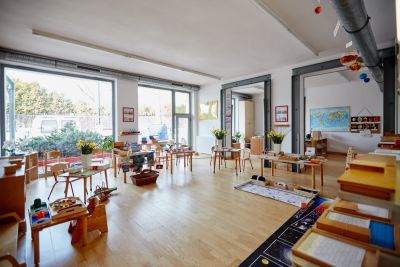
Casa dei Bambini & Warsaw Montessori School is a private, international Montessori school based in Warsaw, operating since 1999. It is part of the Warsaw Montessori Family – a community of schools offering a complete educational journey from early childhood through high school. This structure allows children to grow within one, consistent environment inspired by Dr. Maria Montessori’s philosophy, built on respect, independence, and curiosity about the world.
Education within the Warsaw Montessori Family begins at the Montessori Toddler School (for children from 12 months), continues at Casa dei Bambini (ages 2.5–6), then progresses through Warsaw Montessori School and Middle School, and culminates at Warsaw Montessori High School, where students follow the IB Diploma Programme and prepare for the International Baccalaureate.
The school’s campuses are located across several sites: on Szwoleżerów Street in central Warsaw, in Izabelin near Kampinos National Park, and on Badowska, Tatrzańska, and Pytlasińskiego Streets. An integral part of the educational experience is the Montessori Farm School in Białka (Lublin region) – a unique environment where students learn through real-life experiences, nature, and daily care for animals.
All campuses are bilingual, with English as the primary language of instruction and strong support for Polish. The Montessori approach emphasizes self-directed learning, responsibility, and individual pace within carefully prepared, mixed-age classrooms that foster calm, focus, and collaboration.
The curriculum combines the Polish National Curriculum with the Montessori and IB educational frameworks, helping students build confidence, respect for others, and a sense of personal responsibility. The programme is enriched with art, music, theatre, sports, yoga, language classes, and environmental workshops.
The Warsaw Montessori Family creates an inspiring international learning community, where children from around the world grow in empathy, cooperation, and respect for life – discovering that learning can be a joyful, natural part of every day.

Gallery showcasing school life and general photos of Warsaw Montessori Family.

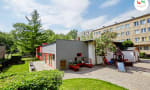
Gallery showcasing specific locations and facilities found at Warsaw Montessori Family.
Central to your child's school experience is the underlying curriculum taught in the classroom. "Curriculum" refers to both what is taught and how it's taught. When considering the different curricula outlined in the next few pages, keep in mind that few schools fall neatly into one category or another. Most schools' curricula comprise a blend of best practices drawn from multiple curriculum types. Having said that, most schools do have a general overall curriculum type. These are identified for each school on OurKids.net.
Primary Curriculum: ProgressiveProgressive (sometimes called "inquiry based" or "discovery based") curricula use students' interests and their natural curiosity as the driver for instruction. Teachers provide materials, experiences, tools and resources necessary for students to investigate a topic or issue. Students are then encouraged to explore, reflect on their findings, and discuss answers, solutions, and insights.
Secondary Curriculum: Montessori| Focus |
|---|
| Academic |
| Subject type | offered |
|---|---|
| Learning strategy and study counselling; habit formation | |
| Extra support and minor accommodations for children experiencing subclinical difficulties |
| Subject type | offered |
|---|---|
| Accommodations | |
| Modifications | |
| Extra support |
| Special needs | Accomodations
Formal adjustments are made to the delivery of lessons to help mitigate the learning difficulty or exceptionality. The underlying content and expectations remain unchanged with accommodations, however. (Example: allowing a student to write tests in a quieter room). | Modifications The underlying content and expectations are modified and/or simplified for the sake of the student. (Examples: allowing student to use a calculator on a test when other students can’t; allowing students to bring word-banks or “cheat sheets” into certain tests, etc) | Remediation Research-based therapeutic measures that target and ameliorate the underlying weakness. |
|---|---|---|---|
| Learning disabilities | |||
| ADHD (moderate to severe) | |||
| Dyslexia (Language-Based Learning Disability) | |||
| Auditory Processing Disorder (APD) | |||
| Dyscalculia | |||
| Dysgraphia | |||
| Language Processing Disorder | |||
| Nonverbal Learning Disorders (NLD) | |||
| Visual Perceptual/Visual Motor Deficit | |||
| Developmental | |||
| Autism | |||
| Asperger's Syndrome | |||
| Down syndrome | |||
| Intellectual disability | |||
| Behavioral and Emotional | |||
| Troubled behaviour / troubled teens | |||
| Clinical Depression | |||
| Suicidal thoughts | |||
| Drug and alcohol abuse | |||
| Oppositional Defiant Disorder (ODD) | |||
| Physical | |||
| Dyspraxia (Developmental Coordination Disorder) | |||
| Blindness | |||
| Deafness | |||
| Cystic Fibrosis | |||
| Multiple physical |
| Program | offered |
|---|---|
| Full-time gifted program (parallel to rest of school) | |
| Part-time gifted program (pull-out; parallel to rest of class) |
Curriculum delivery: This information is not currently available.
| Program | offered |
|---|---|
| Custom subject enrichment (special arrangement) | |
| Custom curriculum compacting (special arrangement) | |
| Guided independent study (custom gifted arrangement) | |
| Cyber-learning opportunities (custom gifted arrangement) | |
| Formalized peer coaching opportunities (specifically for gifted learners to coach others) | |
| Custom subject acceleration (special arrangement) | |
| Career exploration (custom gifted arrangement) | |
| Project-based learning (custom gifted arrangement) | |
| Mentorships (custom gifted arrangement) |
| Sports Offered | Competitive | Recreational |
|---|---|---|
| Gymnastics | ||
| Ice Skating | ||
| Tennis |
| Clubs Offered |
|---|
| Musical theatre/Opera |
| Ballet and Classical Ballet |
| Poetry/Literature club |
| Yoga |
| Art Club |
| Chess Club |
| Drama Club |
| Grade | PS | 0 | 1 | 2 | 3 | 4 | 5 | 6 | 7 | 8 |
|---|---|---|---|---|---|---|---|---|---|---|
| Day | zł60,000 | |||||||||
This information is not currently available.
| Grades | Enrollment |
|---|---|
| Nursery (18 months) to Gr. 12 | Varies |
| Nursery (18 months) to Gr. 12 | Varies |
| % in boarding (total enrollment) | N/A |
| % of foreign students | N/A |
| # of nationalities attending school | 18 |
| Services | Offered |
|---|---|
| Career planning | |
| Internships | |
| Mentorship Program | |
| University counseling |
| Key Numbers | |
|---|---|
| Average graduating class size | N/A |
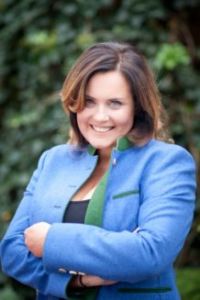
I am the happy owner and founder of the Warsaw Montessori Family.
The Warsaw Montessori family consists of branches of bilingual Montessori
education at every stage of a child development; from infant and toddlers
through Casa level (kindergarten) and elementary to high school.
Montessori education has been my passion and life for many years.
Combined with a love of living in the closeness and nature, Montessori
traditions and philosophy give me peace and a sense of security.




 POL
POL CAN
CAN