This contrasts with approaches like Waldorf, which emphasize a play‑based trajectory and the idea that children are born with latent capacities that schooling draws out. It also differs from Reggio Emilia, a project‑based approach where classroom inquiry is often framed by student interest. By comparing Reggio Emilia vs Montessori vs Waldorf, parents can better understand when one method might suit their child more than another.

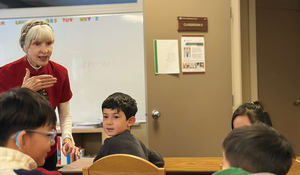
In Montessori classrooms, children are often grouped by three‑year spans (for example, ages 6–9 or 9–12). Older students mentor younger peers, and many remain with the same teacher for the full three‑year block, helping build strong teacher–student relationships and mutual support dynamics.
Why do parents choose Montessori?
Many parents cite the cultivation of independence, self‑motivation, and leadership skills as reasons for choosing Montessori. In one study (University of Nebraska–Lincoln), parents valued the classroom environment, individualized learning, strong peer and teacher relationships, and hoped their children would develop internal motivation and respect for others.
Montessori schools can also be a promising option for children with special needs, gifted learning profiles, or those who respond well to autonomy. If you're exploring alternatives to Montessori, you’ll find both Waldorf and Reggio Emilia frequently cited, along with other alternative study methods.

The Waldorf approach
Rudolf Steiner, the founder of Waldorf education, described it as an “art of awakening what is actually there within the human being.” Waldorf schools adopt a play-based approach and adhere to predictable routines, incorporating arts, gardening, and movement into daily life.
Like Montessori, Waldorf often uses mixed-age classrooms where a teacher may stay with the same cohort for several years. However, Waldorf delays formal academic instruction—reading, writing, and math often begin around age seven—and integrates these into arts, music, and rhythm to nurture creativity, emotional intelligence, and imagination.
Waldorf aims to cultivate learners who are imaginative, empathetic, resilient, and connected to nature and society. While Waldorf overlaps with Montessori and Reggio Emilia in focusing on holistic development, it emphasizes creative play and delayed academics more than a prepared environment (Montessori) or inquiry‑driven projects (Reggio Emilia).
Why do parents choose Waldorf?
Some families prefer Waldorf because of its emphasis on cultivating the “whole child”—creativity, imagination, and emotional growth—before pressing early academics. Waldorf teachers tailor learning to the child’s developmental readiness instead of pushing them in lockstep. Many graduates of Waldorf schools go on to success in higher education, with anecdotal reports indicating strong outcomes in life, creative fields, and personal satisfaction.

The Reggio Emilia philosophy
Reggio Emilia-inspired schools emphasize a student-driven, project-based pedagogy. When children show interest in a theme or question, teachers facilitate exploration rather than giving predetermined lessons—this fosters inquiry, agency, and collaborative learning.
Teachers document learning via photos, videos, and reflections, reviewing progress with students throughout the year. This helps children see their own growth and take ownership of their learning journey. Many Reggio Emilia practices are found in preschools and kindergartens, though some schools in Canada extend these methods into early elementary levels.
Why do parents choose Reggio Emilia?
Parents drawn to Reggio Emilia often value its focus on co-learning, exploration, and the development of communication and collaboration skills. It’s a strong alternative to Montessori and Waldorf, emphasizing flexibility over a fixed curriculum. Those investigating Reggio Emilia vs Montessori vs Waldorf will often see Reggio as a middle path: structured enough to support progress, but open to child‑led paths. It is also one of several alternatives to Montessori that many families consider.
Preschool approaches
If you want to learn more about these approaches at the preschool level, read our comparison guides. We explore Montessori vs Waldorf, Waldorf vs Reggio Emilia, Montessori vs Reggio Emilia, academic vs play-based, Montessori vs academic, and Montessori vs play-based preschools.
You can also read our broader guides comparing school methods. In separate articles, we compare Montessori vs Waldorf, Waldorf vs Reggio Emilia, and Montessori vs Reggio Emilia schools. If you want to compare specific schools side by side, visit our compare hub.
Preschool questions (read our in-depth answers)
|