


On this page:
- 1. Start preparing early enough
- 2. Talk about emotions, not just school
- 3. Create the right environment
- 4. Complete the school supplies together
- 5. Limit Screen Time and Prioritise Sleep
- 6. Don’t fight every little battle - focus on cooperation
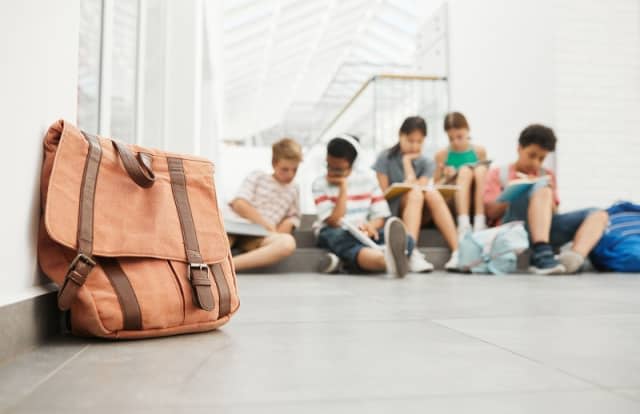
But preparing a child for school isn’t just about buying notebooks and a backpack. Equally important — and often even more so — is creating a sense of stability by taking care of daily routines, emotions, and a child’s sense of security. Here is how to prepare your child for the return to school after the holidays, step by step.
Why can returning to school be challenging?
As adults, we often expect children to follow an almost military level of discipline — getting up as soon as the alarm goes off, eating breakfast quickly, and getting out of the house on time. But reality can be much more challenging. Almost every parent can probably remember saying “just five more minutes!” as a child. Now that the roles have reversed, keeping our patience can be difficult, especially when we are facing yet another delay and the risk of being late for work.
Why is it so difficult for children, especially teenagers, to get up for school after the holidays? And why can the first day of school feel so challenging? There are many reasons:
A disrupted circadian rhythm — during the holidays, children and teenagers often have more freedom and do not need to follow a strict daily schedule;
- Returning to a structured routine with a busy timetable and new daily demands;
- A cognitive shift — starting a new school year requires greater mental effort, and the brain needs time to gradually adjust to increased learning demands;
- Difficult relationships at school — challenges with peers or teachers can also become a source of additional stress;
- Uncertainty about a new stage — especially when a child is starting at a new school or changing schools;
- Sensory overload and emotional fatigue — school often means noisy hallways, many social interactions, and the need to stay focused for long periods. For many children, especially those who are highly sensitive or neurodivergent, this can be particularly demanding;
- Pressure to achieve, perform, and meet expectations — as well as peer pressure, can place a significant emotional burden on children;
- Other challenges that may become more noticeable during a demanding school year, such as health issues or difficulties at home.
These factors often overlap, and they are not always easy to identify. The good news is that returning to school can be made easier and less emotionally overwhelming.
How to prepare your child for the new school year: 6 practical steps
1. Start preparing early enough
There is no need to wait until the last weekend of August. A much better approach is to gradually prepare for the new school year about two weeks before classes begin.
This is a good time to:
- gradually adjust bedtime and wake-up times;
- return to regular meal times;
- reduce screen time, especially in the evening;
- help your child get back into a daily routine.
A sudden switch from a holiday schedule to a school routine can be challenging for both children and adults. Gradual changes help the body adapt more easily. And while it would be ideal to maintain school-year habits throughout the holidays, in reality, this is not always easy or realistic.
2. Talk about emotions, not just school
Returning to school is not only about new textbooks and a class schedule. For many children, it also means uncertainty, new challenges, and worries about being judged or evaluated. Experts from the MŁODE GŁOWY project emphasise that the most important thing is to create a space where children feel comfortable talking openly about their emotions. Instead of immediately looking for solutions or dismissing their concerns, it is worth listening first and acknowledging what a child is feeling. As the authors of the project’s materials point out, emotions are neither good nor bad — they are information about what we need at a given moment.
Simple questions can help start the conversation:
- What are you most excited about when it comes to going back to school?
- Is there anything you are worried about?
- What do you think could help you feel more confident?
It is also important to avoid phrases such as: “Don’t overreact,” “There is nothing to be afraid of,” or “Other people have it worse.” Although these statements usually come from a place of good intentions, they can make children feel misunderstood. A much more supportive response would be: “I understand that this might feel worrying for you. Let’s talk about it together and see what we can do.”
3. Create the right environment
How does a child’s environment affect learning and well-being? And why is it so important when helping a child transition back to school after the holidays? The answer lies in the fact that attention is a limited resource.
According to research by a team led by Prof. Sabine Kastner at Princeton University, the more irrelevant stimuli there are in our field of vision, the more energy the brain needs to spend filtering them out. As a result, fewer cognitive resources remain available for completing the task at hand.
Research shows that an excess of visual stimuli can make it harder for children to maintain focus. In an experiment conducted by researchers at Carnegie Mellon University, children learning in a classroom filled with decorations were more likely to become distracted and achieved weaker learning outcomes than their peers who studied in a more organized environment.
Of course, the goal is not to make a child’s room look as sterile as an IKEA catalogue. A thoughtfully organized learning space can support positive study habits and help children maintain focus.
4. Complete the school supplies together
School supplies are an important part of preparing for the new school year. And shopping for them does not have to feel like just another chore. Let your child choose their pencil case, notebooks, or water bottle — even a small sense of influence over these decisions can help build a positive attitude towards the year ahead.
It is also a great opportunity to talk about new challenges and expectations.
5. Limit Screen Time and Prioritise Sleep
Sleep is one of the biggest parenting challenges for many families — especially in summer, when routines are most likely to go out of the window. Do you know how parents can help their children gradually get back into a healthy sleep routine before school starts?
We asked Mateusz Majchrzak, a certified cognitive behavioral therapist specializing in insomnia, and a sleep science communicator.
The most important thing — just as for adults — is maintaining a well-regulated circadian rhythm. Co to znaczy? What does that mean? It means not letting children stay awake until midnight and then sleep until 10 a.m., but putting them to bed at roughly the same time as usual — say, around 9 p.m. — and having them wake up around 7 a.m. I know it sounds counterintuitive and boring — after all, that’s not usually what we see during the holidays.
My wife and I are the quickest to start putting our children to bed (aged 4 and 8), while their peers are still running around the hotel or sitting on their tablets. And again, what do we see when we look around a hotel by the Polish seaside? That’s right — smartphones and tablets. They aren’t good for childrens’ sleep. And again, what do we see when we look at a hotel on the Polish coast? Kids glued to their phones or tablets.
And unfortunately, the statistics confirm it: children sleep LESS and WORSE on vacation because their parents struggle to maintain their routine. Because maintaining a routine is hard — it requires planning activities and making an effort.
And what about teenagers? Why do teenagers often struggle to fall asleep early and wake up in the morning, and how can parents prepare their circadian rhythm for the return to school?
Teenagers have a delayed circadian rhythm — they tend to be more like night owls. In other words, they get sleepy later. It’s not something they’re making up — we can see it in the later release of melatonin in their bodies. So expecting a teenager to get up at 6 a.m. is not a great idea. It’s like expecting us to get up at 4:30 a.m. — we wouldn’t exactly be the nicest people…
In fact, research shows that when we delay school start times for teenagers by just one hour, they immediately get better grades and have better moods. (Definitely something to consider when choosing a high school…) Similarly, there’s no point expecting a teenager to go to bed at 10 p.m. Getting to bed by 11:30 p.m. is already a success.
And what about phones? They’re going to use them anyway, just like we do. But I can suggest two helpful solutions:
- At a set time, say 11:15 p.m., everyone in the family puts their phones in a basket in the kitchen — and gets them back in the morning. We buy regular alarm clocks. This is an example from one of my patients — and it worked.
- Explain to your teenager that at least before bed, they shouldn’t be scrolling or actively texting with other people, but should do something more PASSIVE instead — for example, watch a TV show or listen to a podcast. Because the blue light from devices itself is not a problem for sleep — that’s a MYTH.
And there’s one more thing worth introducing: a CONSISTENT WAKE-UP TIME on weekends. If a teenager gets up at 6:30 a.m. for school, we don’t want them sleeping until noon on the weekend, because then they experience jet lag without even getting on a plane. And on Monday morning, they’re completely wiped out again. So a successful outcome would be getting them to wake up and get out of bed at 9 a.m. on weekends. Our role, meanwhile, is to come up with some morning activities together that they actually enjoy. After all, it’s much easier to get up early for skiing in Italy than for work, right?
You can also convince a teenager that sleep matters by appealing to what matters TO THEM. For example, you can tell them that well-rested people are perceived as more attractive — yes, there are studies on this. Or that athletes prioritize sleep because it affects their performance and recovery. Or that we learn all kinds of things while we sleep, if they care about their grades. You can even tell them that if they want to build muscle at the gym, they need to sleep, because that’s when a lot of growth hormone is released.
6. Don’t fight every little battle - focus on cooperation
If you are the parent of a younger child or a child in the early years of school, encourage them to take part in preparing for the next day: choosing their clothes, packing their backpack, or helping set the table. These small responsibilities build independence and make the transition back to a school routine easier.
With teenagers, fostering independence is often a more effective approach. Adolescents naturally seek greater autonomy, so constant reminders about responsibilities or monitoring their every move can lead to resistance. Instead of imposing ready-made solutions, invite your teenager to plan the return to school together with you. And if you have children of different ages at home, encourage the whole family to get involved in preparing for the new school year and talking about the transition back to school.
Many principals of private and independent schools emphasise how important it is to build young people’s autonomy and sense of agency. This not only strengthens their independence but also supports their overall well-being.
What happens when we give children more agency? As Marcin Szal from LAL explains, building independence requires trust and space for young people to make their own decisions:
“We try to create many opportunities for students to truly see that we trust them from the very beginning. Of course, that trust is sometimes challenged, but this then becomes a starting point for conversation. Dialogue and communication, agency and trust — these are some of the things that shape our community and the atmosphere of everyday life.”
See how Liceum Artes Liberales builds trust and independence among its students — the full interview with LAL's principals, Marcin Szala and Jarosław Szulski, is available on the official school profile on Our Kids
Summary
Adjusting after the holidays is never easy — for students, their parents, and often even teachers and the wider school community. Alongside healthy daily habits that support children’s and teenagers’ school life, the school environment itself also plays an important role. Returning to school after a break can become much easier when a child finds themselves in a school that responds to their individual needs.
If you are looking for a private or independent school for your child, explore school profiles on our website → Find a school!
Sources
- UNAWEZA Foundation, MŁODE GŁOWY wracają do szkoły. Poradnik dla rodziców i nauczycieli.
- Fisher, A. V., Godwin, K. E., & Seltman, H., Visual Environment, Attention Allocation, and Learning in Young Children: When Too Much of a Good Thing May Be Bad, Psychological Science (2014).
- Kastner, Sabine, Neural Mechanisms Underlying Attentional Selection, Princeton University.
People who read this also viewed:
- Powrót do szkoły bez stresu. Jak przygotować dziecko emocjonalnie?
- Jak wyglądają egzaminy w szkołach niepublicznych? Porównanie ze szkołami publicznymi
- How to Apply to a Private School in Poland
- How to choose private school for your child?
- 6th Private School Expo in Warsaw: Summary, Conclusions, and Key Trends
- About the Cambridge Pathway
- Third Private School Expo in Warsaw - summary
- The record increase in popularity of private education in Poland
- Opinions about Our Kids Private School Expo
- Inquiry-based learning
- School is not just about cramming
- Students' well-being
- Students' well-being: private schools’ strategies
- Soft skills
- Polish private schools in the second wave of the pandemic (part 2)
- Myths about non-public education. Facts to know before choosing a non-public school
- Public versus non-public schools in Poland
- Poland school uniforms
- ABC of educational terminology: Glossary of terms and concepts
- Non-public schools in Poland
- Why private school?
- Benefits of Polish private schools
- Private schools in Poland
-
Advice Guide
- The admissions process
- what to ask at a private school open day
- Back to school without stress. How to prepare your child emotionally?
- Myths about non-public education. Facts to know before choosing a non-public school
- How to Apply to a Private School in Poland
- School open houses
- About the Cambridge Pathway
- Our Kids Interview: Get to know Cosmopolitan Schools - Wrocław and Kraków (interviews - 2025, 2021, and 2020)
- Our Kids Interview: Get to know The British International School of Wroclaw
- Our Kids interview: Get to know Regent College International Schools
- Third Private School Expo in Warsaw - summary
- Our Kids Interview: Get to know EF Academy Oxford
- Homeschooling
- Boarding schools
- Advantages and disadvantages of studying in an international school
- Private school rankings
-
Grades
- 6th Private School Expo in Warsaw: Summary, Conclusions, and Key Trends
- Our Kids Interview: Get to know English Montessori School Katowice
- Mokotow High School Campus - a new Warsaw high school and Thames British School campus
- Our Kids Interview: Get to know KIDS & Co.
- Choosing a high school in Poland
- Our Kids Interview: Get to know FSA School
- Our Kids Interview: Get to know Polish British Academy of Warsaw
- Private middle schools
- Private bilingual elementary schools in Warsaw
- Private high schools in Warsaw
- Private primary schools in Warsaw
- Preschools in Warsaw
- Our Kids Interview: Get to know The English Playhouse and The English Primary
- Montessori preschools
- Social primary schools
- Montessori nursery schools
-
Locations
- Our Kids Interview: Get to know Sapiens International Innovative Community School
- Our Kids Interview: Get to know Thames British School
- Our Kids Interview: Get to know EF Academy
- Private schools Warsaw
- Our Kids Interview: Get to know The Primary and Secondary Schools of the Sisters of Nazareth in Warsaw
- Our Kids interview: Get to know Excellence in Education better
- Our Kids Interview: Get to know the Canadian School of Warsaw
- Olsztyn schools
- Private schools in Gdańsk & Gdynia
- Private schools in Bialystok
- Private schools in Łódź
- Private special needs schools in Warsaw
- Our Kids Interview: Get to know PRIMUS Non-Public Primary School No. 47 and Non-Public Secondary School
- Private Catholic and Christian schools in Warsaw
- International Baccalaureate (IB) schools in Warsaw
- Private day schools in Warsaw


 POL
POL CAN
CAN